

AI CERTS
3 hours ago
AI bathroom monitors spark privacy debate in schools
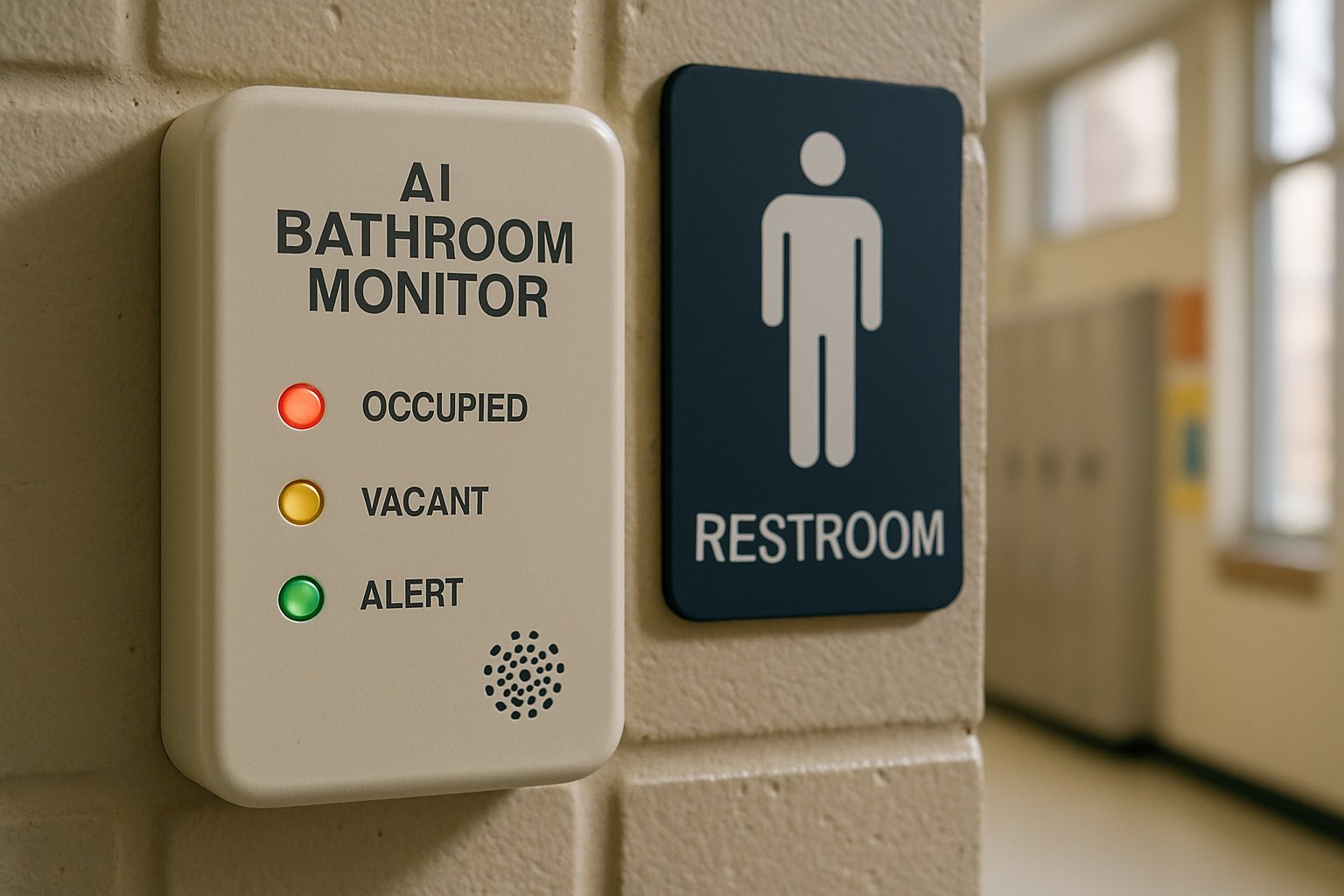
Recent data from a Minneapolis pilot logged over 45,000 alerts in seven months, overwhelming staff. Meanwhile, security researchers hacked a popular unit and exposed live-audio eavesdropping risks.
This article distills findings, policy context, and expert commentary for technology leaders and administrators. Furthermore, professionals can enhance decision-making skills with the AI Educator certification.
In contrast, students say constant monitoring erodes trust and discourages legitimate restroom use. Consequently, balanced approaches are urgently required.
Restroom Sensor Basics Covered
Smart restroom sensors combine air-quality, sound, and network modules inside a ceiling-mounted unit. They sample particulates to spot nicotine or THC aerosols and flag abnormal acoustic patterns.
Some configurations trigger hallway cameras or staff apps seconds after detection. Moreover, microphone algorithms can listen for keywords like “help” while claiming not to store audio.
Manufacturers position the devices as compliant with privacy rules because no video is recorded inside stalls. Nevertheless, each sensor still gathers contextual data that can map student behavior over time.
Many market brochures brand the units as AI bathroom monitors rather than simple air detectors. Districts cite AI bathroom monitors when requesting funding from tobacco settlement accounts.
These technical features deliver rapid alerts but also expand data collection within intimate spaces. Stakeholders must understand the trade-offs early. Mounting adoption trends illustrate those stakes at scale.
Mounting Adoption Data Trends
Procurement records show hundreds of U.S. schools purchasing sensors at roughly $1,000 per unit. Lincoln Public Schools used Juul settlement funds for dozens of devices during 2024.
Minneapolis Public Schools installed 29 units across four campuses, generating about 412 daily alerts. Furthermore, 74% of alerts involved vaping, while 25% related to cigarette smoke.
The following numbers underscore operational pressure:
- 45,000 total alerts over seven months at Minneapolis pilot.
- Peak day recorded 755 alerts across four campuses.
- Approximate pilot cost exceeded $100,000 including integration fees.
Frequent pings force staff to investigate, reducing instructional time. Consequently, AI bathroom monitors may shift discipline patterns rather than prevention outcomes.
Data reveal escalating alert volumes after installation. Yet causal links to reduced vaping remain unproven. Security vulnerabilities compound these operational challenges.
Security Flaws Exposed Publicly
In August 2025, researchers at Defcon compromised a HALO 3C unit within minutes. They disabled detection, generated fake alerts, and streamed restroom audio through its speaker.
Moreover, the team retrieved admin credentials, proving weak default security in many deployments. Motorola Solutions rushed firmware patches, yet districts must still apply them promptly.
Such findings alarm privacy advocates who already question microphone placement in sensitive areas. Therefore, AI bathroom monitors can transform into covert bugs if networks remain misconfigured.
Security lapses threaten the very safety narrative vendors promote. Districts need rigorous audits and continuous patching cycles. Discipline outcomes further complicate the equation.
Discipline And Equity Concerns
The 74 analysis showed suspensions for vaping increased after sensors went live in Minneapolis. Meanwhile, few alerts translated into counseling or cessation referrals.
Student organizer Cameron Samuels argues surveillance only diagnoses symptoms rather than solving root causes. In contrast, public-health experts recommend combining detection with robust prevention and education programs.
Critics stress that AI bathroom monitors can disproportionately impact minority communities already over-disciplined. Therefore, ethics reviews should accompany procurement decisions to anticipate unintended harms.
Early data link sensors to harsher discipline, not support. Equity conversations must inform next steps. Legal frameworks shed additional light on oversight gaps.
Legal And Policy Landscape
U.S. privacy regulation for public schools remains fragmented across states. Consequently, disclosure practices and parental consent differ widely.
Some Canadian lawmakers have demanded guidelines before approving restroom sensor budgets. Furthermore, civil-liberties groups urge transparent data retention limits and independent audits.
District contracts often lack detailed service-level clauses covering firmware updates or breach notifications. Ethics committees rarely review technical specifications before board votes.
In absence of uniform rules, AI bathroom monitors operate under patchwork compliance standards. Regulatory uncertainty exposes districts to litigation and reputational risk. Robust governance models are overdue. Balancing safety goals with privacy principles demands deliberate strategies.
Balancing Safety With Privacy
Administrators face pressure to curb vaping while maintaining student trust. Moreover, alternative interventions include education campaigns, anonymous reporting apps, and targeted counseling.
Experts advise layered defenses: policy reform, staff training, and calibrated sensor settings. Professionals can refine such competencies through the AI Educator credential.
AI bathroom monitors should remain one tool, not the pillar of health strategy. Nevertheless, clear metrics must evaluate whether alerts drive treatment rather than punishment.
Balanced frameworks respect privacy and promote genuine wellness. Continuous stakeholder dialogue supports adaptive improvements. The following steps provide a practical roadmap.
Actionable Steps Moving Forward
District leaders can adopt five concrete actions.
- Conduct annual security audits with independent testers.
- Publish aggregated alert, discipline, and counseling statistics each semester.
- Engage student panels during procurement and review cycles.
- Integrate ethics impact assessments before feature expansions.
- Allocate funds for prevention education alongside hardware purchases.
Moreover, contracts should mandate vendor patch timelines and incident disclosure clauses. Consequently, AI bathroom monitors will operate within accountable and transparent frameworks.
Practical governance measures convert abstract principles into enforceable practice. Stakeholders then focus resources on student wellbeing. The discussion now turns to overarching lessons.
AI bathroom monitors promise rapid detection yet deliver complex challenges. Data show relentless alerts, security gaps, and equity concerns alongside health ambitions.
However, responsible adoption is possible with strong governance, transparent metrics, and regular audits. Furthermore, leaders should pair sensors with robust prevention education and counseling investments.
Professionals seeking deeper expertise can pursue the AI Educator certification. Ultimately, students deserve safety that respects privacy and nurtures trust. Take decisive, informed steps today.


