

AI CERTS
4 months ago
AI Automations Reshape Retail Operations for Next-Gen Efficiency
Against this backdrop, Retail Operations strategies are transforming at record speed. This article examines the technologies, vendors, benefits, and pitfalls shaping the next decade. Furthermore, it offers actionable insights for CIOs planning large scale rollouts. Every section links developments back to bottom-line impact and workforce realities. Let us start with the numbers driving boardroom urgency.
Retail Automation Market Momentum
Global retail automation hit $29 billion in 2024, according to Precedence Research. Forecasts place the figure near $72 billion by 2034, reflecting sustained investor confidence. Therefore, capital flows toward technologies that streamline Retail Operations and shrink costs.
Computer-vision platforms alone carry mid-20 percent CAGR, Grand View Research says. Meanwhile, Gartner predicts half of cross-functional Supply Chain systems will use agentic AI by 2030. Such projections push boards to prioritize Efficiency metrics in every business case.
- Retail Operations saw inventory costs drop by 40% after Automations.
- Supply Chain forecast accuracy improved fifteen points in pilot cases.
- Checkout Automations lifted revenue by single-digit percentages during early deployments.
These data points confirm automation's momentum. However, leadership still demands hard ROI proof before greenlighting massive deployments. Consequently, attention is shifting to agentic solutions within the Supply Chain itself.
Agentic Supply Chain Shift
Agentic AI stitches forecasts, inventory, and logistics into closed-loop decision cycles. Blue Yonder's 2025 Cognitive Solutions lineup illustrates the idea clearly. Additionally, the vendor offers migration programs that activate live agents within weeks.
CEO Duncan Angove claims machine speed decisions improve Efficiency and resilience simultaneously. In contrast, legacy tools required manual planners to chase exceptions across spreadsheets. Retail Operations teams report replenishment errors falling by up to forty percent after deployment.
Many Retail Operations chiefs pilot agents in limited categories before scaling. Autonomous ordering also frees staff for higher value Operations such as vendor negotiations. Therefore, Supply Chain leaders increasingly view agents as foundational, not optional. This shift sets the stage for deeper warehouse robotics integration.
Robotics Boost Warehouse Throughput
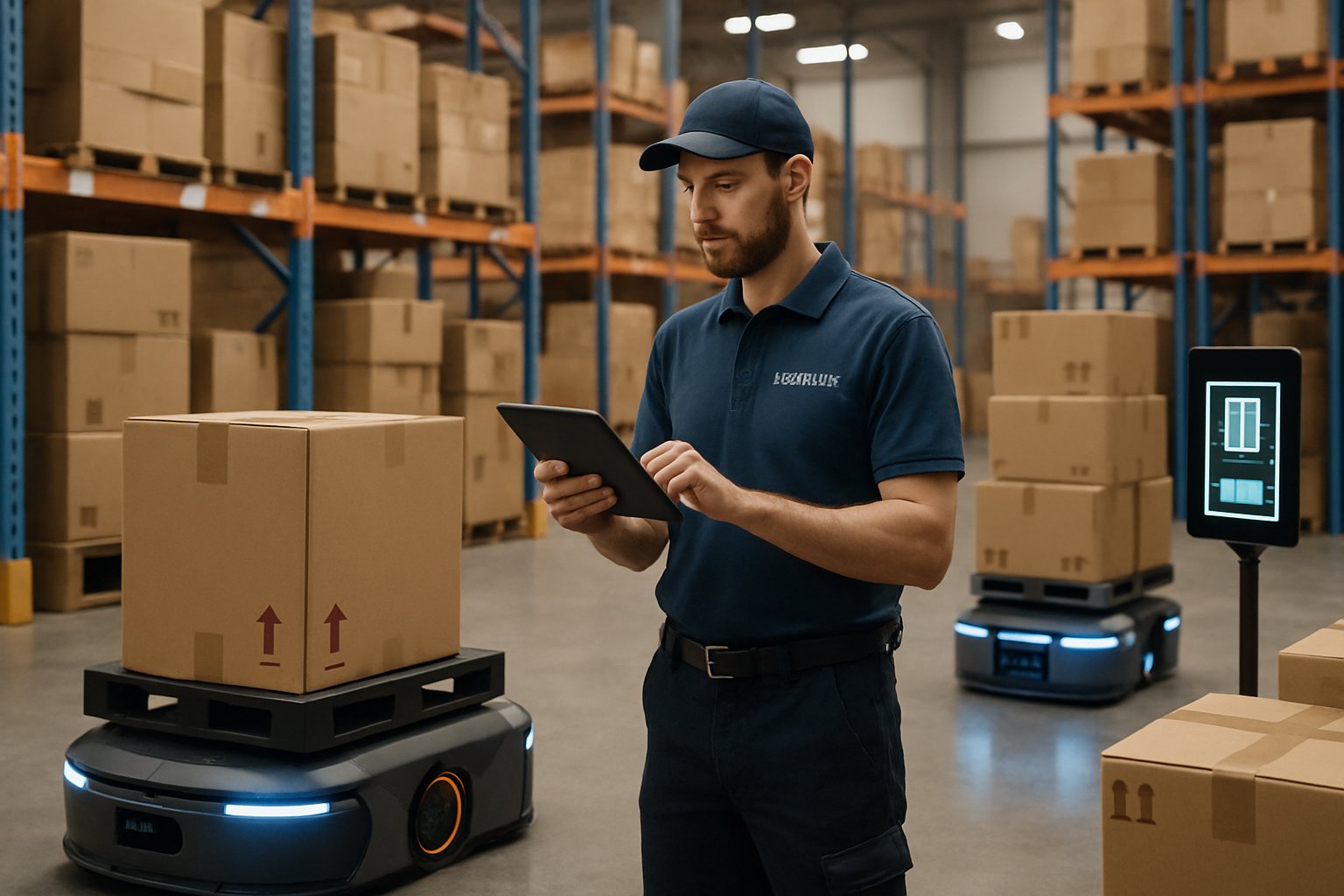
Amazon's new Vulcan robot demonstrates tactile gripping powered by generative planning. Moreover, Shreveport facilities show measurable throughput gains versus older manual centers. Generative AI orchestrates traffic, optimizing pathing for hundreds of mobile units.
Consequently, pick speed rises while worker injuries decline, advancing both Efficiency and safety goals. Other vendors, including Locus Robotics and AutoStore, report similar Automations across clients. Warehouse Operations must still coordinate humans and robots safely to maintain standards. Retail Operations executives track cost per order closely to validate each robotics budget.
Performance data encourages continued capital investment. However, front-of-store innovation remains equally critical. Hence, vision technologies now target checkout lines.
Vision Checkout Store Futures
European grocers lead large-scale cashierless pilots with Trigo and Aldi collaborations. Meanwhile, U.S. retailers test hybrid zones mixing smart carts and staffed lanes. Computer vision detects picks, manages loss prevention, and feeds item data back into Operations systems.
Grand View values this segment at $1.66 billion, growing rapidly. Nevertheless, privacy concerns and capital outlays slow broad North American rollout. Retail Operations leaders mitigate risks through opt-in programs and clear signage.
Hybrid models preserve consumer choice while sustaining Efficiency targets. Next, attention turns to employee experience with generative copilots.
Workforce Copilot Productivity Gains
Generative assistants answer product questions, draft content, and schedule shifts in seconds. Deloitte notes double-digit service Efficiency improvements when agents support call centers. Furthermore, in-store associates gain guided selling scripts personalized from live inventory data.
Early pilots show customer wait times dropping and upsell rates climbing. Consequently, Retail Operations managers witness revenue lifts alongside happier staff. Professionals can upskill through the AI Supply Chain™ certification.
Employee enablement completes the technology stack. However, unresolved challenges could stall broader Transformation. Let us review those hurdles next.
Risks Challenge Retail Transformation
Data silos remain the leading obstacle to scaled Automations. Moreover, integration work often exceeds initial budgets, extending payback periods. Smaller chains struggle with capex, delaying their modernization ambitions.
Privacy regulations also tighten camera usage, requiring careful consent workflows. In contrast, workforce anxieties around displacement intensify public scrutiny. Therefore, leaders invest in reskilling programs and transparent communication.
Vendor stability adds another risk because startup failures can strand pilots. Nevertheless, disciplined vendor selection and phased rollouts mitigate exposure. These challenges underscore the need for holistic Transformation strategies. Strategic planning now guides the next steps.
Strategic Next Steps Forward
AI investments are moving from pilot demos to hardened production across global chains. Retail Operations now blend agentic decisions, robotics, and vision tools into coherent workflows. Consequently, companies enjoy faster fulfillment, safer facilities, and richer customer interactions. However, success still hinges on high quality data, staged Automations, and thoughtful change management. Leaders must protect privacy, upskill staff, and measure Transformation impact with consistent KPIs. Moreover, certifications sharpen internal talent and accelerate program returns. Explore the highlighted credential and start designing your next intelligent retail blueprint today.


