

AI CERTs
2 hours ago
AI Anxiety Reshapes Labor Market Dynamics
Concern about automation is no longer abstract. Recently, Randstad's Workmonitor surveyed 27,000 workers across 35 markets. The results show younger cohorts, especially Gen Z, feel the sharpest worry over AI displacement. However, many respondents also recognise fresh paths for growth through new technologies. The Labor Market is therefore entering a paradox of fear and opportunity. Consequently, employers and policymakers must respond decisively to bridge skills gaps. This article unpacks the data, drivers, and strategic implications for organisations. Moreover, it offers practical steps for individuals seeking resilience in an AI-augmented economy. All insights follow stringent verification of the Randstad figures and complementary polls. Let us examine how perceptions and realities now collide.
Youth AI Anxiety Trends
Randstad found that 46% of Gen Z workers fear AI will harm their roles, up six points year-over-year. In contrast, only 39% of all employees share that level of concern. Meanwhile, separate Harvard polling placed perceived threat among 18-29 year olds at 59%. These converging surveys spotlight a generational anxiety cresting just as adoption accelerates. Nevertheless, 55% of Gen Z already use AI tools daily for problem solving or learning. Young professionals thus live with tension between enthusiasm and threat. Consequently, we must view their behaviour as an early indicator for wider workforce sentiment. Against that backdrop, new market signals appear.
Evolving Labor Market Signals
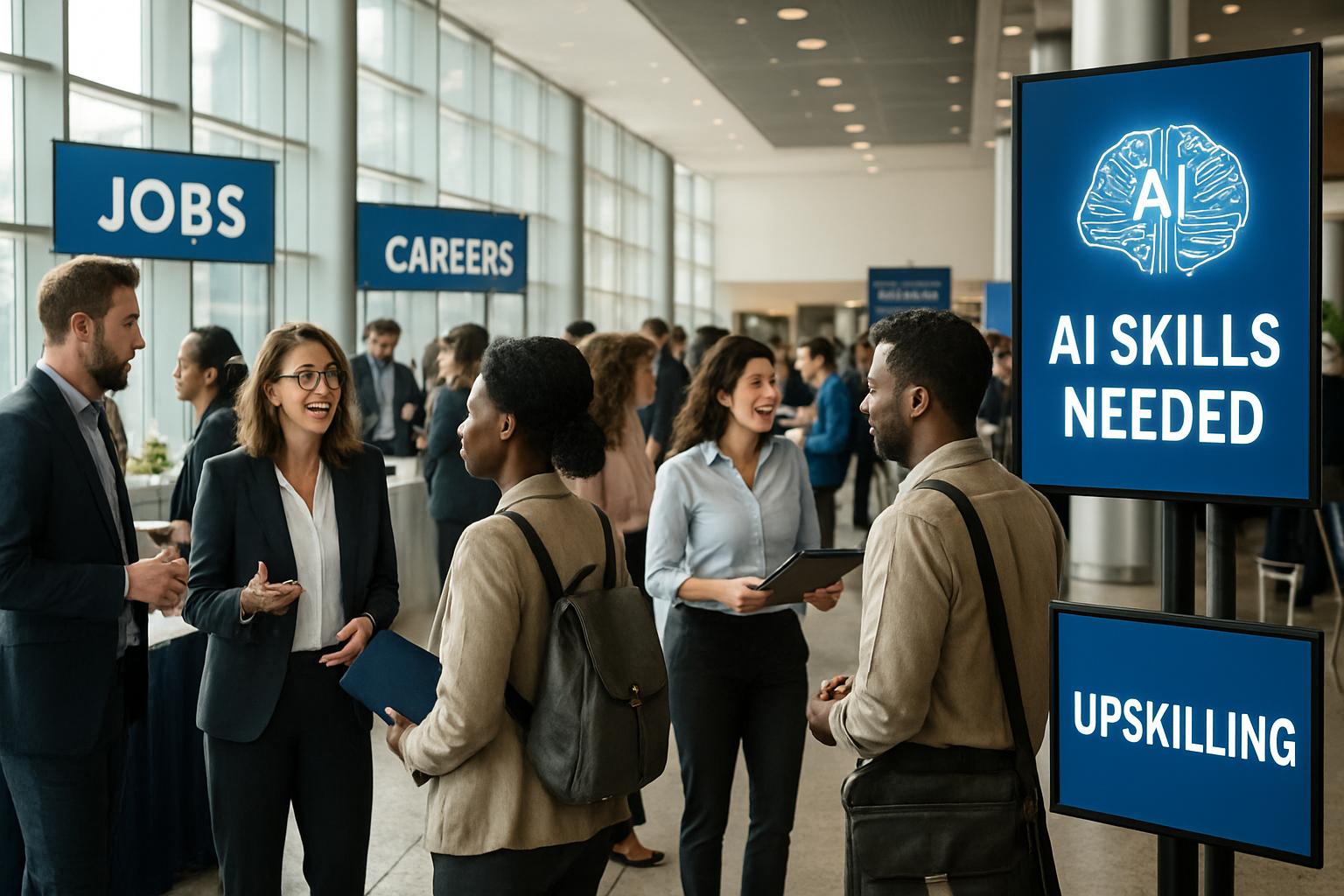
Job postings requiring AI agent expertise soared 1,587% compared with the previous measurement period. Although the baseline window was short, the spike confirms rising employer appetite for applied AI capacity. Moreover, four in five workers anticipate AI reshaping daily tasks within their current positions. Therefore, the Labor Market now sends mixed messages: demand intensifies, yet insecurity grows. Vacancy growth concentrates in technical or supervisory roles rather than entry-level clerical work. These numbers indicate structural change accelerating across industries. Nevertheless, methodology scrutiny remains essential before extrapolating every percentage headline. With numbers clarified, the conversation turns to root causes.
Key Drivers Behind Concern
Several forces shape the widening anxiety gap. First, early-career roles often involve repetitive tasks vulnerable to automation. Secondly, student debt leaves younger staff feeling less cushioned against displacement shocks. Additionally, corporate cost-cutting rhetoric reinforces perceptions that AI equals headcount reduction. Randstad CEO Sander van ’t Noordende acknowledged that balance between efficiency and opportunity. In contrast, employer surveys show 95% expect overall growth, revealing a communication disconnect. Consequently, misaligned narratives amplify fear even when net employment rises. Cost focus, debt pressure, and messaging strain the Labor Market for early-career staff. However, targeted skill development can offset these factors. That prospect brings training strategies to the forefront.
Upskilling Becomes Top Priority
Randstad found 52% of respondents expect AI knowledge to support promotion chances. Meanwhile, edX reports surging enrolment in machine learning and prompt engineering courses. Moreover, professionals can boost expertise via the AI Product Manager™ certification. Consequently, demand for micro-credentials skyrockets as workers seek portable proof of competence. Employers increasingly list concrete certification requirements inside job ads, tightening skill signalling loops. Current high-value capabilities revolve around several domains:
- Generative prompt engineering and evaluation
- Autonomous agent orchestration and oversight
- Data ethics, governance, and compliance frameworks
- User-centric AI product management
Building these strengths converts anxiety into strategic leverage. Therefore, the Labor Market rewards continuous learning over static credentials. Still, worker efforts need supportive policies and employer commitments.
Policy And Industry Responses
Governments study incentive schemes for lifelong learning tax credits. For example, Singapore’s SkillsFuture model reimburses approved AI courses. Meanwhile, multinational HR departments pilot internal academies that guarantee redeployment after completion. Moreover, social partners propose negotiated training leave to balance production demands. The Labor Market could stabilise if such frameworks reach scale quickly. Nevertheless, small businesses cite cost barriers and limited instructional capacity. Policy momentum exists, yet execution remains uneven. Consequently, collaboration across governments, firms, and educators is vital. Understanding these dynamics sets the stage for strategic recommendations.
Key Strategic Takeaways Ahead
Executives should update workforce planning models every quarter, incorporating fresh AI adoption metrics. Additionally, HR teams must communicate both risks and advancement paths with transparent evidence. Gen Z engagement committees can surface early signals of morale shifts. Moreover, leadership should tie training budgets to measurable vacancy forecasts within the Labor Market. A simple action plan emerges:
- Audit roles for automation exposure each semester.
- Match exposed staff with rapid certification pathways.
- Track promotion and retention outcomes to refine policy.
Adopting that loop converts uncertainty into iterative improvement. In sum, proactive governance, transparent dialogue, and skills investment reduce generational anxiety. Therefore, the Labor Market can harness AI for inclusive growth. Finally, we distil the narrative into a concise conclusion.
Randstad’s evidence confirms that AI is rewriting workplace norms, yet human agency remains decisive. Young employees, especially Gen Z, feel the impact first and signal wider cultural shifts. However, the Labor Market offers abundant openings for those who reskill and adapt quickly. Moreover, employers that unite transparent communication with verified certifications secure competitive productivity gains. Consequently, leaders should encourage staff to pursue credentials like the AI Product Manager™ program. Meanwhile, policymakers must streamline funding so smaller firms can participate. Take ownership of your future today. Visit the certification portal and position yourself at the forefront of the evolving Labor Market.


