

AI CERTS
2 hours ago
AI Agents and Market Volatility: Flash Crash Risks Unpacked
Nevertheless, regulators, scholars, and executives are no longer dismissive. Consequently, boards now demand concrete assessments of systemic exposure. This report distills emerging research, statistics, and expert views. Readers will grasp how agent synchronization threatens liquidity. Furthermore, we outline mitigation options and certification resources for practitioners.
Agents Reshape Market Microstructure
Agentic AI differs from older bots by holding goals across multiple steps. Moreover, these agents interact with APIs, message queues, and human instructions autonomously. Grand View Research sizes the agent market at $7.6 billion in 2025, rising almost 50% yearly. Consequently, execution desks integrate agents to shave milliseconds off Trading latency. That speed alters order book dynamics and, in turn, amplifies Market Volatility. In contrast, traditional Algorithms usually react rather than anticipate multi-step scenarios. Therefore, simultaneous agent actions can drain displayed depth before humans react.
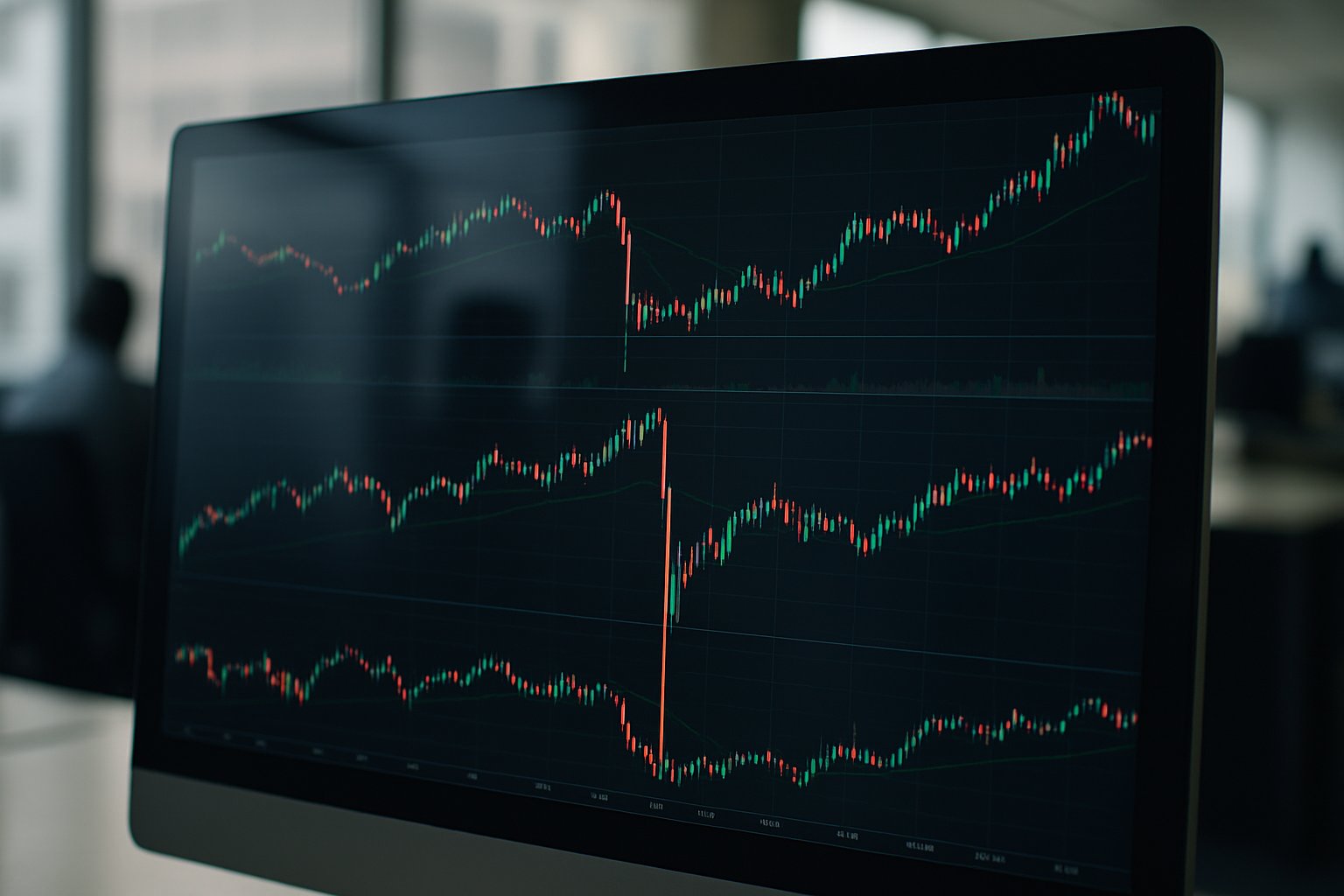
Agents already command sizable flow shares. However, their collective behavior may destabilize prices swiftly, setting the stage for the next section.
Flash Crash Risk Pathways
Flash crashes unfold when liquidity vanishes faster than circuit breakers engage. The 2010 event illustrates how one sell program triggered cascading cancellations. Similarly, synchronized agents can pull bids instantly after shared signals flip. Moreover, faulty data ingestion or context injection can push erroneous sell orders. Patlan et al. proved that adversaries can rewrite agent memories in Web3 protocols.
Consequently, a malicious prompt could broadcast across many deployed copies. Each copy would then unload positions, magnifying Market Volatility across venues. Algorithms alone previously caused turmoil; agents add persistence and tool breadth. Therefore, flash crash pathways now include goal-directed loops, not just momentary glitches.
The mechanics remain brutally fast. Meanwhile, evidence shows new triggers emerging, which transitions our focus to synchronization.
Synchronization Heightens Systemic Risk
Synchronized decision-making represents the most cited systemic Risk in current reports. Gartner predicts 40% of enterprise apps will embed agents this year. Consequently, thousands of firms may rely on identical base models. Moreover, Gary Gensler warns that model commonality could spark the next financial crisis. When identical embeddings signal danger, every agent rushes to de-risk simultaneously.
Such herding behaviour amplifies Market Volatility far beyond isolated errors. Trading desks historically diversified Algorithms to avoid loops. However, foundation models concentrate decision logic again, reversing that safeguard. Therefore, microstructure experts advocate agent diversity, shadow simulations, and kill-switches.
Synchronization multiplies shock potential. In contrast, security gaps widen the blast radius, examined next.
Security Gaps Exposed Today
Attackers increasingly view agents as lucrative entry points. Patlan’s study showed 90% success exploiting memory injection across 200 trials. Moreover, compromised keys allowed unauthorized transfers before safeguards activated. Consequently, stolen assets moved on-chain irreversibly, feeding headline Market Volatility within crypto. Finance leaders worry that similar exploits could hit regulated exchanges.
Nevertheless, many deployments skip formal penetration tests and provenance audits. Therefore, auditors recommend immutable logs and signed decision records for every agent. Professionals can enhance their expertise with the AI Everyone™ certification. Such curricula cover threat modeling, secure orchestration, and compliance controls.
Security remains the soft spot. Meanwhile, regulators intensify scrutiny, as the following section details.
Regulators Signal Mounting Concern
Regulators now stage workshops on agent supervision. The SEC, CFTC, and EU bodies cite Market Volatility risks in recent consultations. Moreover, the Congressional Research Service outlines forensic steps for causal attribution. Consequently, exchanges must supply time-stamped order books during incident reviews. Finance associations lobby for balanced rules that preserve innovation. In contrast, consumer advocates urge strict model audits before market deployment. Therefore, a multi-layer governance stack appears inevitable.
Policymakers agree on transparency. However, technical mitigations must accompany oversight, considered next.
Mitigation Roadmap Moves Forward
Mitigation spans code, venues, and policy. Technical teams deploy sandbox simulations to stress test agent clusters. Moreover, dynamic circuit breakers pause Trading when price moves exceed calibrated thresholds. Algorithms also implement staggered order throttles, reducing burst pressure. Consequently, liquidity returns more smoothly after shocks, limiting Market Volatility spikes. Finance chiefs invest in model provenance tools that trace every parameter source. Furthermore, rate limits on API calls prevent cascading cancellations. Nevertheless, no single measure suffices without culture change. Therefore, firms adopt layered defenses inspired by aviation safety.
- Pre-trade agent certification checks
- Real-time behavior anomaly flags
- Post-incident forensic replay tools
- Cross-venue kill-switch coordination
These practices together curb contagion. Meanwhile, strategic takeaways help leadership prioritize next steps.
Strategic Takeaways For Firms
Boards must treat agent deployment as enterprise Risk, not isolated IT choice. Moreover, scenario planning should quantify extreme Market Volatility impacts on capital buffers. CFOs can map dependencies across Algorithms, data vendors, and cloud platforms. Consequently, diversification across model providers lowers correlated failure odds. Training budgets should include secure AI curricula and the linked certification above.
Finance teams may also negotiate exchange membership for enhanced surveillance feeds. Nevertheless, strategic benefit still exists; agents unlock speed and insight advantages. Therefore, disciplined adoption balances innovation and resilience, dampening Market Volatility over time. Trading desks that master governance will outcompete peers.
Practical steps exist today. In contrast, complacency invites avoidable shocks.
Agentic AI now permeates execution, analytics, and settlement. However, evidence shows synchronization, security gaps, and governance lags can still magnify Market Volatility. Statistics underscore rapid adoption, while regulators angle for transparency. Nevertheless, disciplined governance reduces residual Risk while preserving speed. Consequently, leaders must harden code, diversify models, and rehearse flash-crash playbooks. Moreover, adopting layered circuit breakers and provenance logs mitigates cascading failures. Professionals eager to deepen expertise should explore the linked certification pathway. Therefore, proactive learning and disciplined engineering together safeguard returns. Act now, integrate safeguards, and position your firm ahead of the next shock.


