

AI CERTS
3 hours ago
AGI Stalling Fears: Limits, Risks, and Industry Responses
Meanwhile, advocates such as Sam Altman dismiss any imminent slowdown, citing continued efficiency gains. In contrast, Yoshua Bengio draws parallels to dot-com exuberance, cautioning against faith in perpetual Progress. These diverging narratives shape boardroom decisions daily. Furthermore, central bankers now reference potential market Crash scenarios linked to a sudden deflation of AI expectations. We explore the evidence behind the possible Wall, the financing exposure, and the strategic responses emerging.
Evaluating AGI Stalling Fears
Yoshua Bengio’s January remarks anchor the recent flare-up. He warned that researchers could soon hit a performance Wall despite escalating compute budgets. Moreover, he linked any stall to a systemic Crash because valuations depend on rapid Progress. The warning landed amid record Nvidia capitalization and unprecedented datacentre orders.
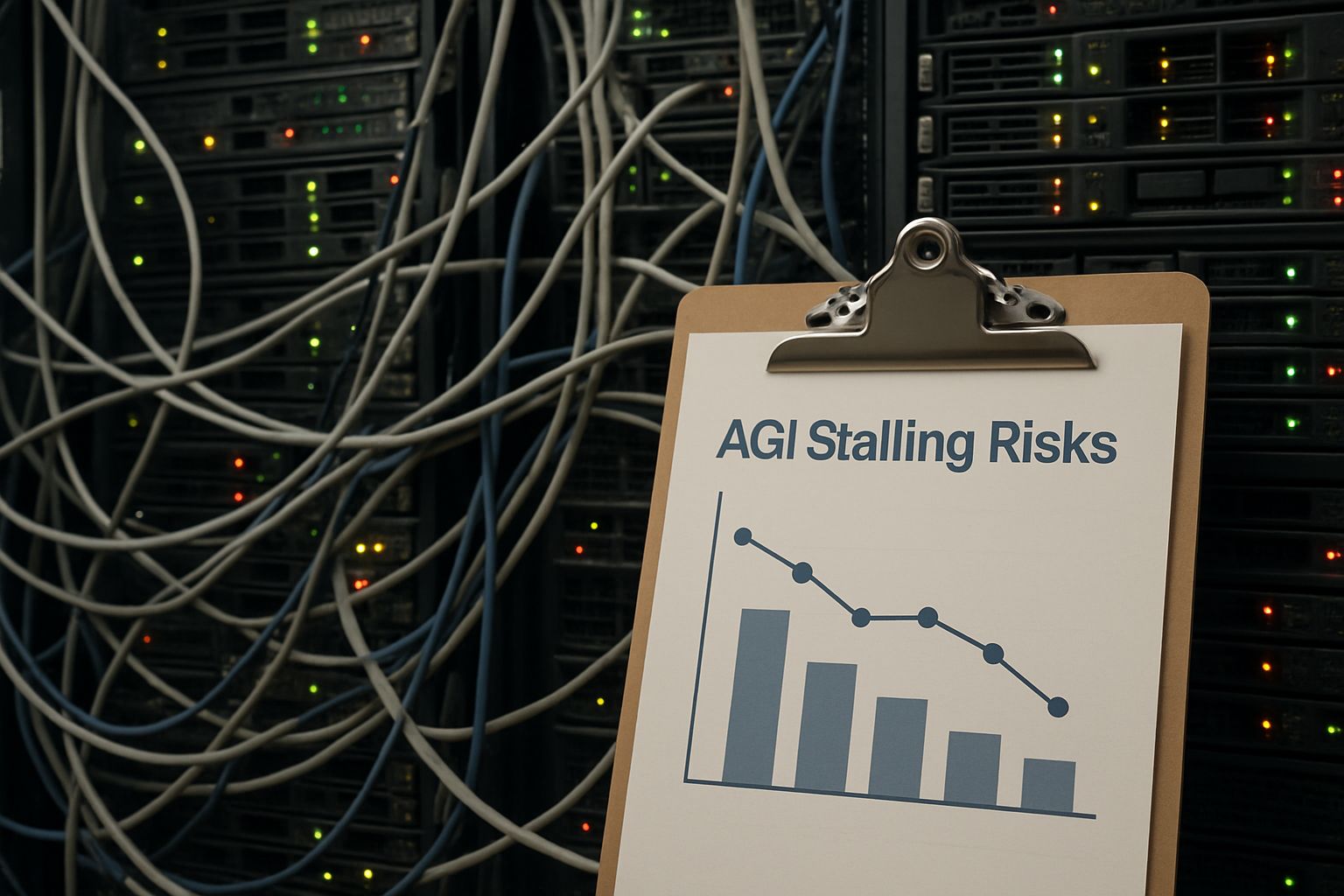
Consequently, AGI Stalling Fears moved from academic panels to trading desks within days.
These early signals highlight the fragile confidence underpinning AI valuations. However, the financial exposure picture looks even starker when numbers surface.
Mounting Market Exposure Concerns
Morgan Stanley estimates $2.9 trillion in datacentre capex through 2028. Additionally, JP Morgan reports that AI-linked sectors now comprise 15 percent of its investment-grade index. Consequently, any significant stall could reverberate across credit markets.
- Nvidia peak valuation: $4 trillion market cap
- Meta Louisiana build: $29 billion private-credit facility
- IMF labour impact headline: 60 percent of advanced-economy jobs affected
Banks have already stress-tested scenarios where AGI Stalling Fears trigger a sudden repricing. Meanwhile, the Bank of England warned of a sharp correction if sentiment flips. Such statements reinforce Crash expectations among cautious investors.
The credit data underline large downside stakes. Therefore, technical uncertainties deserve equal scrutiny.
Technical Limits Debate Intensifies
LLM performance historically followed smooth scaling laws. Nevertheless, recent benchmark updates reveal plateauing accuracy gains per additional parameter. Researchers attribute slow Progress to data exhaustion, rising energy costs, and architecture saturation.
Sam Altman counters that optimized training pipelines and novel mixture-of-experts models will restore momentum. In contrast, Bengio argues human intelligence emerged from new paradigms, suggesting transformers may soon hit a rigid Wall.
Dario Amodei remains cautiously optimistic yet acknowledges bottlenecks. He notes that compute scarcity, not fundamental theory, may dictate timelines.
Amid this debate, AGI Stalling Fears fuel wider scepticism about the scale-will-solve-all narrative.
Technical signals are mixed and often nuanced. However, supply constraints could tip the balance toward a slowdown.
Supply Chain Headwinds Loom
January reports confirmed Chinese customs blocking Nvidia H200 shipments despite conditional U.S. licenses. Consequently, suppliers paused output, threatening multi-month delays for hyperscalers.
Moreover, electricity shortages and grid permit queues already limit datacentre rollouts in several regions. These combined forces heighten AGI Stalling Fears among operators who depend on predictable compute deliveries.
Investors view prolonged logistics friction as a potential Crash catalyst. Meanwhile, policy makers weigh further export controls that could intensify the Wall possibility.
Supply disruptions amplify technical risk factors. Therefore, financing assumptions require fresh examination.
Financing Structures Under Scrutiny
Many new server farms rely on private-credit deals secured by projected inference revenues. Subsequently, any stall could pressure covenant ratios and trigger forced asset sales.
Furthermore, datacentre receivables increasingly back asset-backed securities distributed across pension funds. A systemic shortfall would echo 2008 narratives, though on different collateral.
AGI Stalling Fears therefore shape credit-rating outlooks. Analysts debate whether diversified workloads can offset slower Progress at the frontier.
- Private credit share: rising faster than bank lending
- Average power contract length: 15 years, fixed prices
- Typical leverage for hyperscaler shells: 65 percent debt
Complex financing could magnify shocks beyond tech balance sheets. Consequently, strategic responses now dominate executive agendas.
Strategic Industry Responses Emerging
Some firms pursue vertical integration to secure chips and energy. Google invests in nuclear micro-reactors, while Amazon negotiates long-term foundry slots.
Meanwhile, policymakers explore joint compute reserves to cushion supply shocks. The European Commission even floated public-private datacentre insurance pools.
Skills investment also rises. Professionals can enhance their expertise with the AI Researcher™ certification.
Advocacy groups urge phased spending until AGI Stalling Fears resolve. Nevertheless, bullish executives argue delaying could surrender market share if Progress resumes quickly.
Strategic hedging shows the debate’s maturity. Moreover, transparent metrics could help boards navigate the next inflection point.
Despite exuberant headlines, evidence suggests the path to general intelligence may prove bumpier than assumed. Consequently, AGI Stalling Fears will likely persist through the next investment cycle. Regulators, bankers, and researchers must therefore collaborate on stress tests, compute access policies, and alternative architectures. Nevertheless, breakthroughs remain possible, and cautious optimism can coexist with prudent risk management. Organizations that upskill staff and diversify revenue streams will navigate volatility better. Therefore, consider fortifying your knowledge through the AI Researcher™ certification. AGI Stalling Fears need not paralyze action when informed strategies guide decision-making.


