

AI CERTs
1 month ago
Aggressive AI Marketing: AI Tools Bypass Ad Blockers
Publishers lost billions when early ad blockers spread across browsers. However, Aggressive AI Marketing now promises to reclaim that revenue. Emerging platforms blend detection, message optimization, and server-side delivery to slip ads past even sophisticated filters. Consequently, a fierce technological and ethical debate has erupted. Billions of users employ blockers to avoid intrusive Ads and Tracking scripts. Meanwhile, vendors argue that free content needs sustainable funding. Privacy advocates counter that forced reinsertion ignores explicit consumer choice and may violate emerging regulations. Additionally, media buyers fear brand damage when impressions appear without consent. The landscape has therefore become an arms race in which machine learning both attacks and defends. This article examines how Aggressive AI Marketing tools bypass blockers, where Personalization fits, and which risks still loom.
Ad Blocking Arms Race
Statista estimates nearly one billion users run ad blockers today. Consequently, publishers see vast inventory vanish before sellers can monetize. Early countermeasures relied on simple DOM checks, which AdGuard and uBlock quickly neutralized.
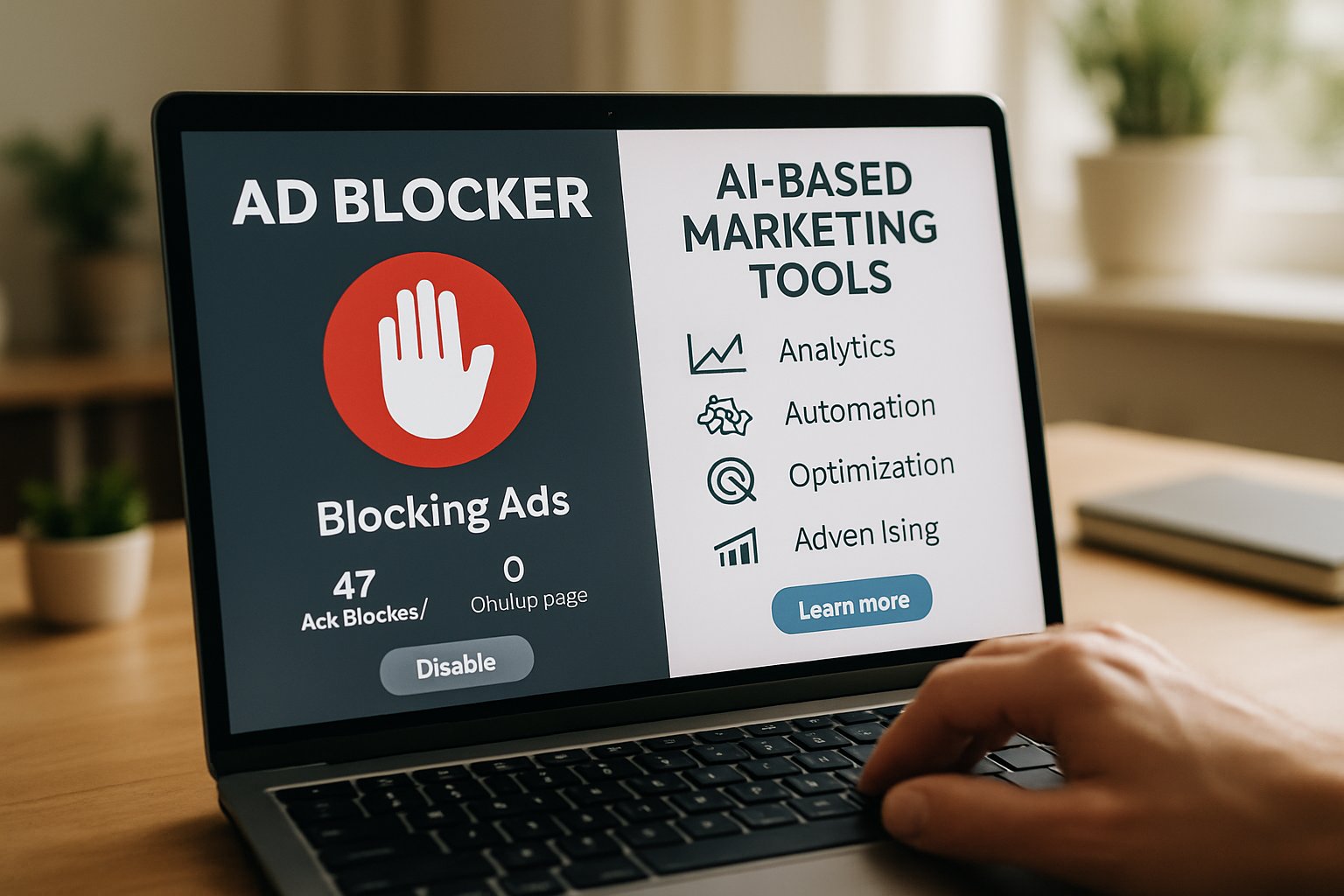
Now, Aggressive AI Marketing vendors deploy machine learning detectors that monitor network behavior, canvas calls, and script mutations. Therefore, detection survives cosmetic hiding rules and filter updates. Blockers respond with perceptual classifiers, yet adversarial perturbations have already undermined those models.
Academic papers such as AdVersarial and A4 confirm an escalating cycle of evasion and defense. In contrast, compliance frameworks like the Coalition for Better Ads urge restraint and transparency.
Technical escalation defines this arena, but strategy matters as well. Nonetheless, understanding specific reinsertion methods clarifies what comes next.
AI Reinsertion Techniques Rise
Reinsertion replaces blocked ad requests with fresh creative delivered through alternate paths. Moreover, server-side ad insertion stitches Ads into video streams before delivery, leaving blockers powerless without blocking content itself.
Aggressive AI Marketing platforms like Admiral advertise AI stacks that choose which impressions merit recovery. Additionally, heuristic models decide whether to serve a whitelist prompt, paywall, or silent reinserted unit.
Ad-Shield case studies tout revenue lifts between two and five times compared with Acceptable Ads programs. Nevertheless, independent audits remain scarce, so marketers should treat these numbers cautiously. Such claims typify Aggressive AI Marketing rhetoric.
Evidence shows growing technical sophistication coupled with bold vendor marketing. However, Personalization remains the lever that often converts reluctant visitors.
Personalization Drives Conversion Gains
Personalization tailors language, format, and incentive based on contextual and behavioral signals. Consequently, an AI engine may show softer messages to loyal readers yet enforce a hard wall for strangers.
Vendor A/B tests claim personalized copy doubles whitelist rates. Meanwhile, deep language models generate micro-copy that resonates with different segments. Those capabilities underpin many Aggressive AI Marketing campaigns.
Professionals can enhance expertise via the AI+ UX Designer™ certification. The program, delivered online, teaches ethical interface design for reinsertion journeys.
Personalized experiences also adjust ad format, Tracking pixels, and Cookies frequency to respect privacy settings while preserving performance.
Tuning messages for each segment explains many recovery wins. Nevertheless, not every stakeholder applauds these tactics.
Buyer And User Pushback
GroupM publicly refuses to buy impressions served through forced reinsertion. Therefore, brands worry about appearing disrespectful toward consumer choices.
Users install blockers precisely to stop Ads and Tracking beacons. In contrast, silent reinsertion undermines that preference, eroding trust and provoking social media backlash.
Regulatory pressure compounds the issue. GDPR and CCPA already limit Cookies use, and covert delivery may breach consent clauses.
Brand Safety Concerns Grow
Advertisers fear misleading metrics when recovered impressions bypass viewability verification. Additionally, measurement discrepancies create billing disputes between agencies and publishers.
The Media Rating Council urges transparent disclosure of reinsertion flows. Consequently, some vendors now integrate buyer dashboards to detail inventory provenance.
Buyer skepticism underscores the need for openness and standards. However, uncertainty extends beyond brand perception.
Technical And Legal Uncertainty
Adversarial research proves no model remains invulnerable. Subsequently, minor CSS noise can mislead a detector, while pixel reshaping fools perceptual blockers.
Meanwhile, privacy laws reinterpret device fingerprints as personal data. Therefore, Aggressive AI Marketing that relies on fingerprint Tracking could trigger heavy fines.
Legal scholars debate whether bypassing explicit user settings violates unfair-practice statutes. Nevertheless, case law remains immature.
Risk profiles may shift quickly as policy clarifies. Consequently, publishers should prepare adaptable strategies.
Strategic Steps For Publishers
Publishers should audit audience composition before pursuing Aggressive AI Marketing. Moreover, segmenting blocker users by loyalty and location refines expected returns.
Experts recommend a layered approach:
- Offer lightweight Acceptable Ads first.
- Present value exchange messages next.
- Deploy reinsertion only after consent efforts fail.
- Continuously test engagement models to avoid fatigue.
- Log analytics events for independent auditing.
Additionally, align with agencies to secure demand for recovered inventory. Aggressive AI Marketing reports should be shared with agencies for verification.
Finally, invest in staff education. Courses like the linked certification deepen understanding of AI ethics and design.
A thoughtful roadmap maximizes revenue while limiting fallout. Nevertheless, success depends on ongoing measurement and dialogue.
Aggressive AI Marketing has become the latest frontier in the endless publisher-blocker struggle. Vendors now combine detection, Personalization, Ads delivery, Tracking control, and Cookies management inside unified stacks. Consequently, early adopters report promising revenue recovery. Nevertheless, brand safety, legal exposure, and user trust present real obstacles. Technical research shows the advantage may remain temporary as adversaries evolve. Therefore, leaders must couple bold experimentation with transparent reporting and respectful user experiences. Professionals seeking competitive edge should pursue the AI+ UX Designer™ program to master ethical deployment. Commit to balanced strategies today, and revenue gains can coexist with lasting audience relationships.


