

AI CERTS
3 hours ago
Agentic AI Meets Regulatory Standards in Pharma
Consequently, vendors now embed compliance features directly into agent platforms. Executives sense opportunity; PwC reports 79% adoption among surveyed companies. Nevertheless, full production rollouts remain early due to validation hurdles. This article explores how agentic platforms can align with Regulatory Standards without stifling innovation.
Evolving Pharma Compliance Landscape
Global rules for AI are tightening quickly. In January 2025, IMDRF finalized GMLP principles. Furthermore, FDA released PCCP guidance covering adaptive models. The European AI Act layers additional obligations on high-risk systems. Consequently, Pharma manufacturers must document risk management and algorithm change control. Regulators now expect life-cycle evidence beyond traditional CSV.
Moreover, 21 CFR Part 11 still governs electronic records inside GxP environments. Agentic systems must therefore generate immutable audit trails and e-signatures. Industry platforms respond by integrating role-based controls and ALCOA+ provenance. For example, Veeva plans Vault AI Agents with validated traceability. These moves illustrate early momentum toward scalable Compliance Automation. However, aligning with Regulatory Standards demands more than feature lists.
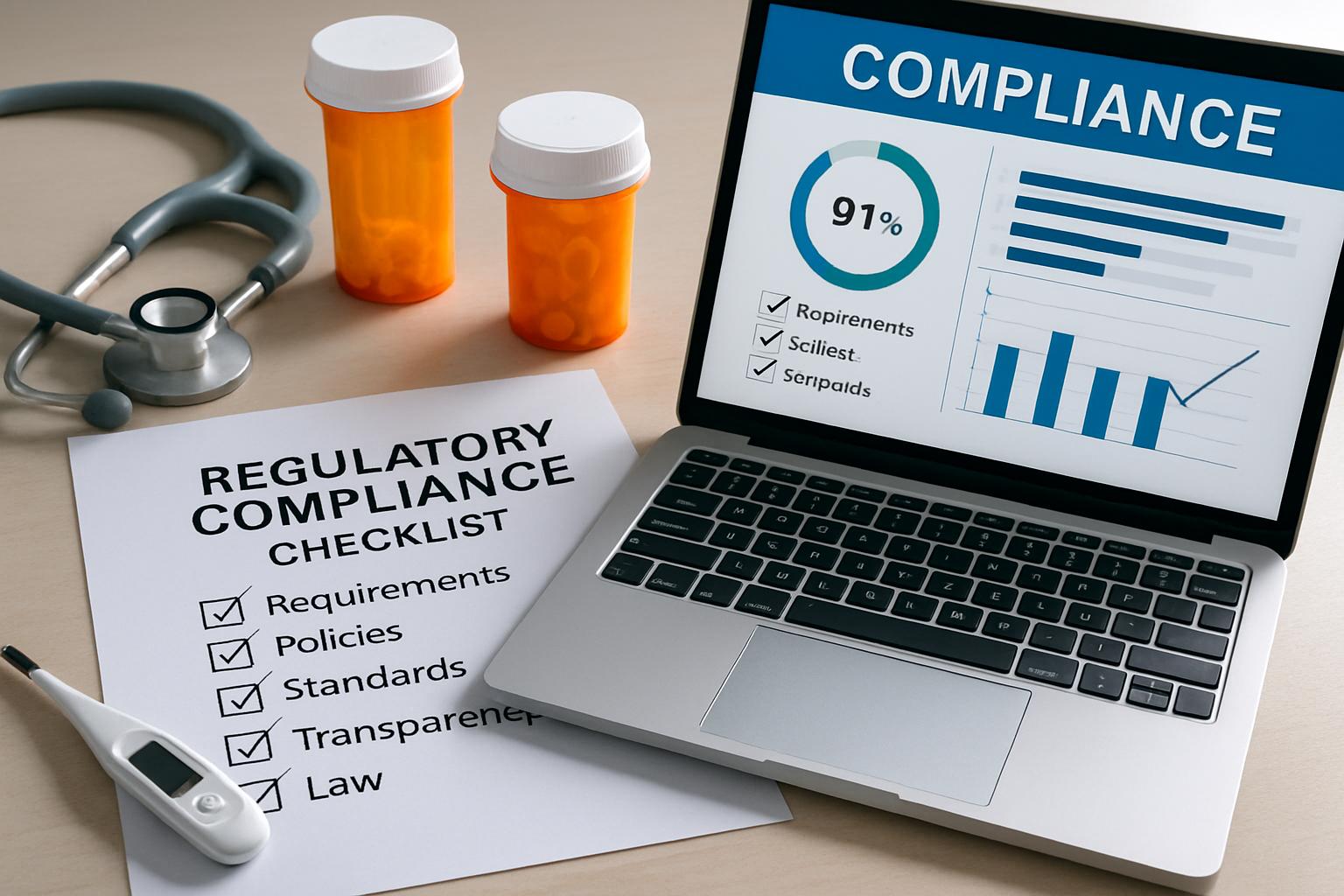
Effective governance frameworks are now mandatory for agents. Therefore, understanding the new signals guides strategic investment.
Key Regulatory Signals Emerging
Several signals show regulators studying agents closely. FDA reviewers reference PCCP during pre-submission meetings, according to consultants. Additionally, Health Canada and MHRA endorse IMDRF GMLP wording. EMA workplans flag autonomous decision support as high-risk. These documents repeatedly emphasize transparency, monitoring, and change traceability. Consequently, companies must embed these expectations early in design. Gartner predicts many projects will be canceled without such controls.
Meanwhile, academic authors warn regulation lags behind technical capability. Nevertheless, lifecycle language within PCCP offers a practical bridge. Teams demonstrating monitored retraining see smoother reviewer interactions. Vendors support that need by shipping validation test suites. These suites promise quicker evidence generation against Regulatory Standards.
Clear regulatory signals reduce ambiguity. Consequently, proactive alignment mitigates costly redesigns.
Agentic Adoption Metrics Rise
Market metrics reveal accelerating interest. PwC found 79% of surveyed executives already trial agents. Moreover, 88% plan higher budgets in the coming year. Approximately 66% report measurable productivity gains. Separately, 168 ML devices received FDA clearance during 2024. Radiology dominated approvals, yet process lessons apply broadly. Furthermore, analysts forecast agentic markets surpassing USD 80 billion by 2032.
These forecasts, while optimistic, influence board-level decisions. In contrast, Gartner expects 40% of agentic projects to fail without governance. Therefore, adoption metrics must be weighed against validation progress. Pharma leaders increasingly request Compliance Automation capabilities to offset resource gaps. Vendors highlight compliance dashboards as differentiators against rivals.
Adoption metrics show momentum but caution. Subsequently, risk-aware investment becomes the smarter path.
Challenges For Validation Teams
Validation remains the toughest hurdle. Traditional CSV covers software, not self-learning models. Consequently, teams must extend protocols to monitor model drift. ALCOA+ provenance adds another complexity. Moreover, agent actions can span multiple systems within seconds. Automated test harnesses facilitate Compliance Automation during regression cycles. Each step requires attributable audit entries. Security threats also multiply with autonomous web calls. Gartner recommends deploying guardian agents to oversee operations. Data integrity risks grow when agents compile synthetic reports. Therefore, explainability and human checkpoints become essential. Legal liability remains unclear if an agent misclassifies clinical data. Nevertheless, Regulatory Standards provide a structured baseline for mitigation. Professionals can enhance their expertise with the AI Security Compliance™ certification. This credential deepens knowledge of defensive architectures and audit design.
Validation challenges are significant yet solvable. Consequently, skilled practitioners armed with proper tooling can overcome obstacles.
Operational Checklist Summary Guide
Teams seeking practical steps can follow a structured checklist. Moreover, the list aligns directly with Regulatory Standards expectations.
- Classify use cases by risk level.
- Request vendor evidence of validated controls.
- Embed PCCP and GMLP into design plans.
- Preserve provenance and ALCOA+ integrity.
- Insert human checkpoints and guardian agents.
- Harden security and sandbox external calls.
- Engage regulators early during development.
Additionally, many leaders create steering committees to track progress. Pharma organizations pair quality experts with data scientists for balanced oversight. Consequently, cross-functional alignment accelerates Compliance Automation maturity. The checklist also supports global Standards harmonization goals. These disciplined actions reduce inspection surprises.
Following a clear checklist fortifies governance. Therefore, companies gain confidence to scale agent pilots.
Forward Looking Timeline Roadmap
Roadmapping prevents unrealistic launch dates. Short-term efforts, zero to six months, focus on sandbox pilots. Furthermore, teams update quality management systems during this phase. Medium-term windows, six to eighteen months, target PCCP integration. Consequently, validated agents start writing GxP records with oversight. Long-term plans extend beyond eighteen months into EU AI Act enforcement.
Moreover, regional audits will verify conformity against Regulatory Standards. Scalable dashboards support ongoing Compliance Automation at enterprise level. Pharma manufacturers prepare dossiers detailing monitoring metrics and retraining triggers. Guardian agents will mature alongside core agent capabilities. Therefore, investment in observability tooling continues. The roadmap keeps stakeholders aligned and resourced.
Timelines translate strategy into actionable sprints. Subsequently, disciplined execution transforms pilots into production value.
Conclusion And Outlook Ahead
Agentic platforms have moved from concept to practical pilots. However, enduring success hinges on alignment with Regulatory Standards. Furthermore, leaders must embed lifecycle monitoring, provenance, and security from day one. Pharma innovators who embrace disciplined validation will outpace slower rivals. Mature automation will free experts for strategic science. Vendor ecosystems already simplify conformance to Regulatory Standards through turnkey validation suites. Nevertheless, human oversight remains indispensable under those same Regulatory Standards. By following the checklist and timeline, organizations can scale agents confidently. Explore the linked certification to sharpen skills and lead safe AI transformation.


