

AI CERTS
7 hours ago
Africa’s Global Digital Potential Rises with AI Infrastructure
Contrast that with projections of a $1 trillion GDP lift by 2035. Therefore, scaling secure data, compute, and talent has become a strategic race. Meanwhile, hyperscalers, regional operators, and governments scramble to deploy new Data centers. Reliable connectivity and stable power remain stubborn obstacles across many markets. Nevertheless, experts believe collaborative financing can unlock Africa’s share of Global Digital Potential. This article examines drivers, challenges, and solutions behind the evolving infrastructure push. Subsequently, it outlines practical steps for stakeholders seeking inclusive growth.
Infrastructure Momentum Accelerates Regionwide
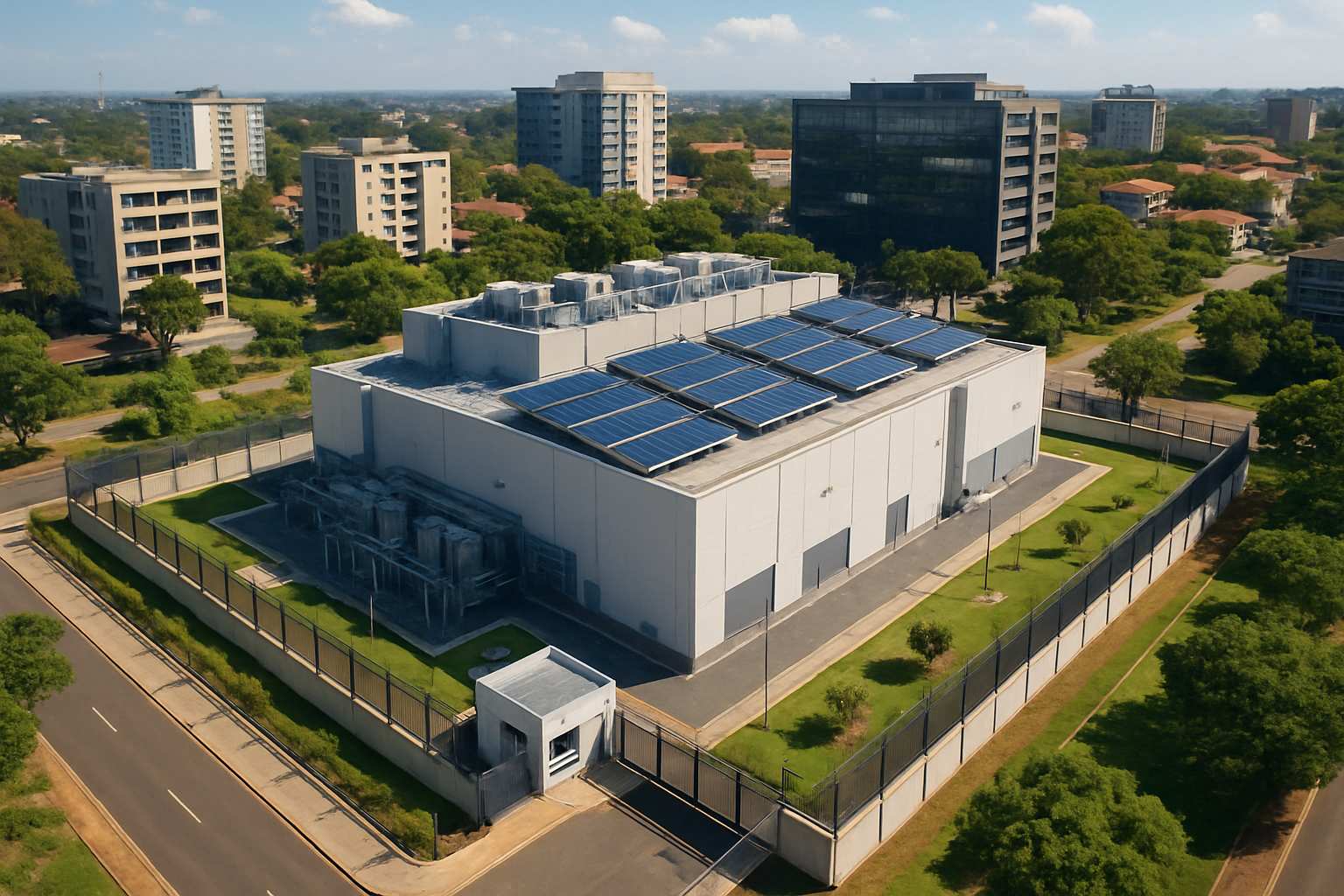
Demand for AI-ready facilities surged after the African Development Bank released its continent roadmap. Consequently, operators announced dozens of high-density builds in Johannesburg, Nairobi, Lagos, and Cairo to capture Global Digital Potential. Google’s cloud region went live, while Teraco, IXAfrica, and Rack Centre expanded footprints. Moreover, research shows Africa hosts roughly 223 active Data centers across 38 countries. Almost half sit inside the ‘big four’ economies, deepening regional concentration.
- AfDB forecasts $1T GDP boost by 2035.
- AU reports 83% of startup funding in four nations.
- Africa holds under 1.3% of global compute.
In contrast, Africa still controls under 1.3% of worldwide compute and storage. Therefore, builders prioritise scalable power, liquid cooling, and renewable sources from day one. Meanwhile, Gulf investor e& joined G42 to finance new GPU campuses in Kenya. Industry voices argue such cross-border capital accelerates Global Digital Potential realisation for local innovators. These investments expand capacity quickly. However, power constraints still threaten timelines.
Edge And Hyperscale Mix
Many providers blend hyperscale training hubs with edge nodes near users. Consequently, services can operate where connectivity remains intermittent yet latency sensitive. This architecture supports agriculture analytics and mobile health diagnostics across rural zones. Momentum is undeniable, yet distribution remains uneven. Next, we examine the power and cooling bottlenecks limiting further expansion.
Power And Cooling Constraints
Africa’s grid reliability varies widely. In contrast, AI workloads demand stable megawatt streams and resilient cooling. Moreover, GPU racks generate heat densities exceeding many legacy facilities' specifications. Operators increasingly adopt liquid immersion and direct-to-chip designs. Consequently, energy efficiency becomes both cost and sustainability imperative. South Africa leads with solar-augmented campuses; Kenya pilots geothermal-backed facilities. Nevertheless, diesel generators still bridge frequent outages, raising emissions and operating expenses. AfDB urges coordinated investment in renewable corridors and shared power purchase agreements. Such actions are vital to capture more Global Digital Potential amid rising demand. These constraints underscore the need for diverse energy strategies. Subsequently, we turn toward Africa’s pressing talent shortage.
Talent And Skills Gap
AI success requires local scientists, engineers, and product leaders. Yet, the AU reports Africa holds barely 3% of global AI talent. Furthermore, funding and job opportunities cluster in four nations. Brain drain undermines Africa’s claim to Global Digital Potential if left unchecked. Therefore, governments and industry collaborate on scholarships, bootcamps, and university labs. Professionals can enhance their expertise with the AI Foundation certification to validate core competencies. Additionally, e& sponsors regional hackathons and mentorship programs. Microsoft’s AI Diffusion study shows adoption lagging Global North by ten percentage points. Consequently, AfDB’s roadmap allocates funds for skilling 250,000 practitioners by 2027.
- National fellowships nurture underserved talent.
- Incentives encourage diaspora researchers' return.
- Joint research centers colocate with AI infrastructure.
These measures address capability gaps. However, progress remains uneven across smaller economies. Next, we explore shifting investment patterns shaping infrastructure finance.
Investment Landscape Shifts Rapidly
Capital inflows accelerated through 2025 as foreign investors chased emerging returns. Moreover, hyperscalers placed anchor commitments that de-risked regional projects. UAE conglomerate e& joined sovereign funds to back multi-country GPU parks. In contrast, multilateral lenders structure concessional loans for rural edge nodes. AfDB signaled readiness to finance pilot clusters conditional on governance reforms.
Consequently, industry watchers expect the African data-center construction market to triple by 2030. However, analysts warn that concentration in four hub countries could widen inequality. Broader participation remains essential for unlocking continent-wide Global Digital Potential. These financing trends reshape incentives for policymakers. Subsequently, regulatory choices become decisive.
Policy And Governance Balance
Data sovereignty debates dominate ministerial meetings. Therefore, countries draft localization rules that require sensitive data to stay onshore. Such mandates stimulate domestic Data centers while complicating cross-border cloud operations. In contrast, regional harmonization could attract larger hyperscale zones and cheaper services. Moreover, regulators must balance privacy, security, and open innovation. African Union advisers recommend agile sandboxes for testing AI systems safely. Additionally, connectivity spectrum reforms can lower costs for rural networks. Robust governance ultimately determines whether Global Digital Potential becomes inclusive or extractive. These policy debates set the stage for practical implementation paths. Now, we outline ways to align stakeholders toward equitable outcomes.
Paths Toward Inclusive Growth
Africa’s AI journey will succeed only through coordinated action. Consequently, experts propose a phased plan linking finance, infrastructure, skills, and governance. Phase one focuses on fast-tracking AI-ready Data centers in underserved capitals. Meanwhile, operators must extend reliable connectivity along power and fibre corridors. Phase two scales edge clusters that support language models in local dialects. Furthermore, universities should integrate applied AI modules into engineering curricula. Professionals will sustain momentum by pursuing recognized credentials and ongoing mentorship. Such steps will convert promises into tangible Global Digital Potential benefits for citizens. Key actions include:
- Standardize open datasets for key sectors.
- Create joint ventures between e&, hyperscalers, utilities.
- Deploy renewables to power next-generation Data centers.
These steps form an actionable roadmap. Consequently, Africa can begin closing the opportunity gap.
Africa stands at an inflection point for AI infrastructure. Investments, policies, and skills programs are converging faster than ever. However, power reliability, funding concentration, and talent shortages still threaten progress. Therefore, stakeholders must coordinate across finance, energy, and education. By acting collectively, the continent can unlock its promised Global Digital Potential within a decade. Professionals should deepen expertise now to ride the coming wave. Consequently, consider earning the AI Foundation certification and staying engaged with regional initiatives. Together, we can build an inclusive digital future for Africa.


