

AI CERTS
2 hours ago
Advocacy Groups Target YouTube Kids AI Slop Epidemic
Furthermore, Fairplay has corralled more than 100 specialists into a loud coalition. Their letter presses YouTube and Google to label, throttle, or ban synthetic kids content. Industry leaders promise action, yet critics see slow, fragmented enforcement. Therefore, this feature unpacks the numbers, stakes, and next steps behind YouTube Kids AI slop. Readers will find legal context, creator economics, and practical guidance. Each section ends with concise recaps for fast scanning.
Rising YouTube Slop Crisis
Researchers at Kapwing sampled 15,000 trending channels across 150 nations. In contrast, 278 channels delivered nothing but AI slop loops. Moreover, a fresh Shorts feed showed 21% AI-generated and 33% brainrot videos.
Consequently, tens of billions of views flow toward low-quality uploads every month. The Guardian estimated 63 billion historical views and $117 million annual ad revenue. Meanwhile, YouTube reports Shorts now average 200 billion daily views worldwide.
- YouTube Kids AI slop now surfaces in 21% of sampled Shorts, according to Kapwing.
- Slop channels hold 221 million subscribers across global markets.
- Estimated yearly ad take reaches $117 million for those channels.
Data confirm that low-effort videos already command enormous reach. However, public awareness still trails the scale of the threat. Consequently, campaigners decided to escalate the conversation. The next section profiles how Fairplay organized that push.
Fairplay Leads Coalition Push
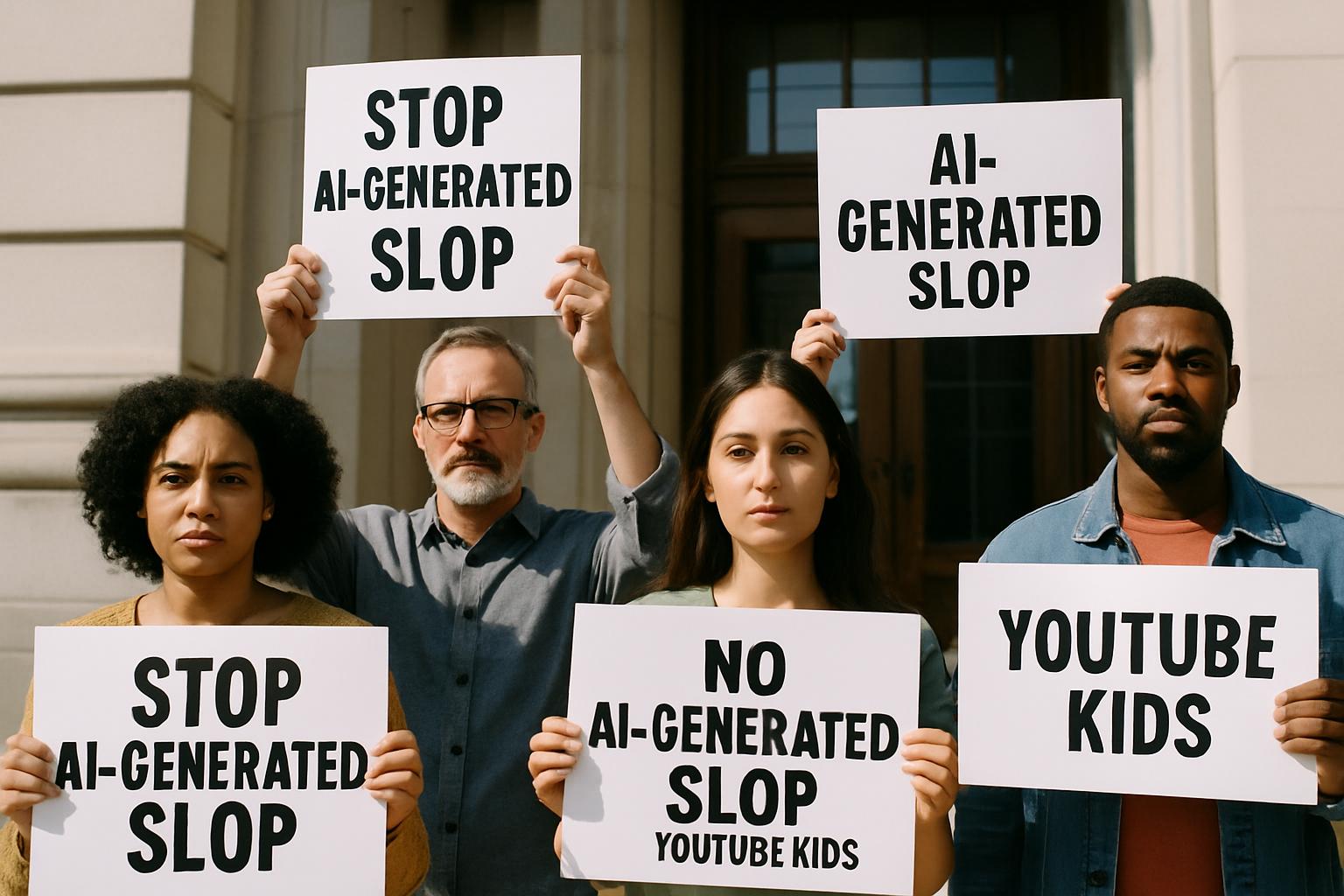
Fairplay released its open letter on April 1, 2026. Additionally, 135 organizations and 100 experts endorsed the demands within hours. These groups call for clear AI labels, a YouTube Kids AI slop ban, and parental toggles.
Rachel Franz of Fairplay warned that hypnotic loops keep toddlers staring. Moreover, she argued that kids content must prioritize development, not advertising yield. Nevertheless, YouTube replied that existing spam systems already reduce repetitive uploads.
Fairplay also urged stronger enforcement against channels flooding feeds with pure slop. In contrast, some studios claimed AI helps accelerate high-quality kids content production. Animaj, recently funded by Google, cited its editorial oversight as proof.
Advocates framed a clear agenda: label, limit, and let parents opt out. However, the company has not set concrete dates for every promise. Platform roadmaps and investments reveal why timelines remain uncertain.
Platform Responses And Investments
Neal Mohan’s January letter acknowledged the YouTube Kids AI slop problem directly. He pledged improved detection, creator tools, and expanded labeling for realistic synthetic media. Furthermore, policy updates from July 2025 already target inauthentic, mass-produced uploads.
Google’s AI Futures Fund complicated the narrative by backing Animaj with $1 million. Critics say the investment contradicts promises to curb the trend. Meanwhile, Animaj argues studio oversight distinguishes its catalogue from random algorithmic mashups.
Key platform steps so far:
- Enhanced spam classifiers for slop detection in 2025.
- Beta labels for AI on main app, excluding YouTube Kids.
- New creator appeals for false positives.
The roadmap mixes enforcement and empowerment in equal measure. Nevertheless, advocates doubt speed and coverage across regional markets. Legal pressure may force firmer deadlines.
Legal And Policy Context
March verdicts in social-media addiction lawsuits intensified scrutiny. Consequently, juries found YouTube and Meta partly liable for youth harms. Lawyers now cite YouTube Kids AI slop as evidence of negligent design.
State attorneys general explore whether deceptive recommendations breach consumer-protection statutes. Meanwhile, EU regulators weigh stricter age gates under the Digital Services Act. Policy watchers expect fresh guidance on AI labeling for kids content this summer.
Court findings raise financial stakes for slow platform reform. However, litigation timelines still stretch for years. Economic factors motivate creators just as strongly.
Business Impact On Creators
Kapwing calculates that slop channels channelled $117 million in annual advertising. Consequently, human creators report declining CPMs as supply balloons. In contrast, some entrepreneurs see opportunity in scalable automation.
Creator advocacy groups argue that revenue siphoned by YouTube Kids AI slop undermines sustainable careers. Moreover, demonetization fears rise when genuine channels trigger false inauthentic flags. Fairplay suggests a separate revenue pool reserved for verified educators.
Professionals can enhance credibility through the AI Customer Service™ certification. Such credentials help creators negotiate policy changes and diversify income. Additionally, corporate teams gain structured knowledge on ethical deployment.
Earnings volatility pressures creators to adopt safer, differentiated strategies. Nevertheless, parents remain the ultimate gatekeepers of screen time. Practical guidance for families follows next.
Practical Steps For Parents
Parents cannot yet disable all YouTube Kids AI slop recommendations with one setting. However, several actions reduce exposure today.
- Use Restricted Mode and manual playlist curation to filter slop.
- Set watch-time limits on mobile devices and smart TVs.
- Co-view videos and discuss synthetic versus human storytelling cues.
- Report obviously automated uploads through the flag icon immediately.
Meanwhile, dedicated media-literacy lessons help children spot algorithmic tricks. Furthermore, browser extensions can hide Shorts panels entirely.
These tactics mitigate harm until platform-level fixes arrive. However, they demand consistent parental engagement. The conclusion recaps the broader picture and next steps.
The evidence shows a vast, lucrative market for automated entertainment. Consequently, regulators, creators, and parent groups converge on the same warning signs. Fairplay’s campaign crystallizes resistance against YouTube Kids AI slop at a critical moment. Meanwhile, YouTube pledges detection upgrades yet declines to ban YouTube Kids AI slop outright. Legal verdicts suggest that delay could prove costly. Therefore, creators should invest in verifiable quality, parents should apply safeguards, and policymakers should sustain oversight.
Professionals seeking structured guidance can pursue the previously noted AI Customer Service™ credential. Ultimately, collaborative action will decide whether young audiences flourish or drown in algorithmic noise. Act now: share the data, demand transparency, and explore certifications to shape a healthier digital future.


