

AI CERTs
3 hours ago
Abu Dhabi’s AI Gambit Reshapes Global Investment Landscape
The race to finance artificial intelligence infrastructure has reached a dramatic inflection point.
Abu Dhabi’s new strategy positions itself as a pivotal capital provider.
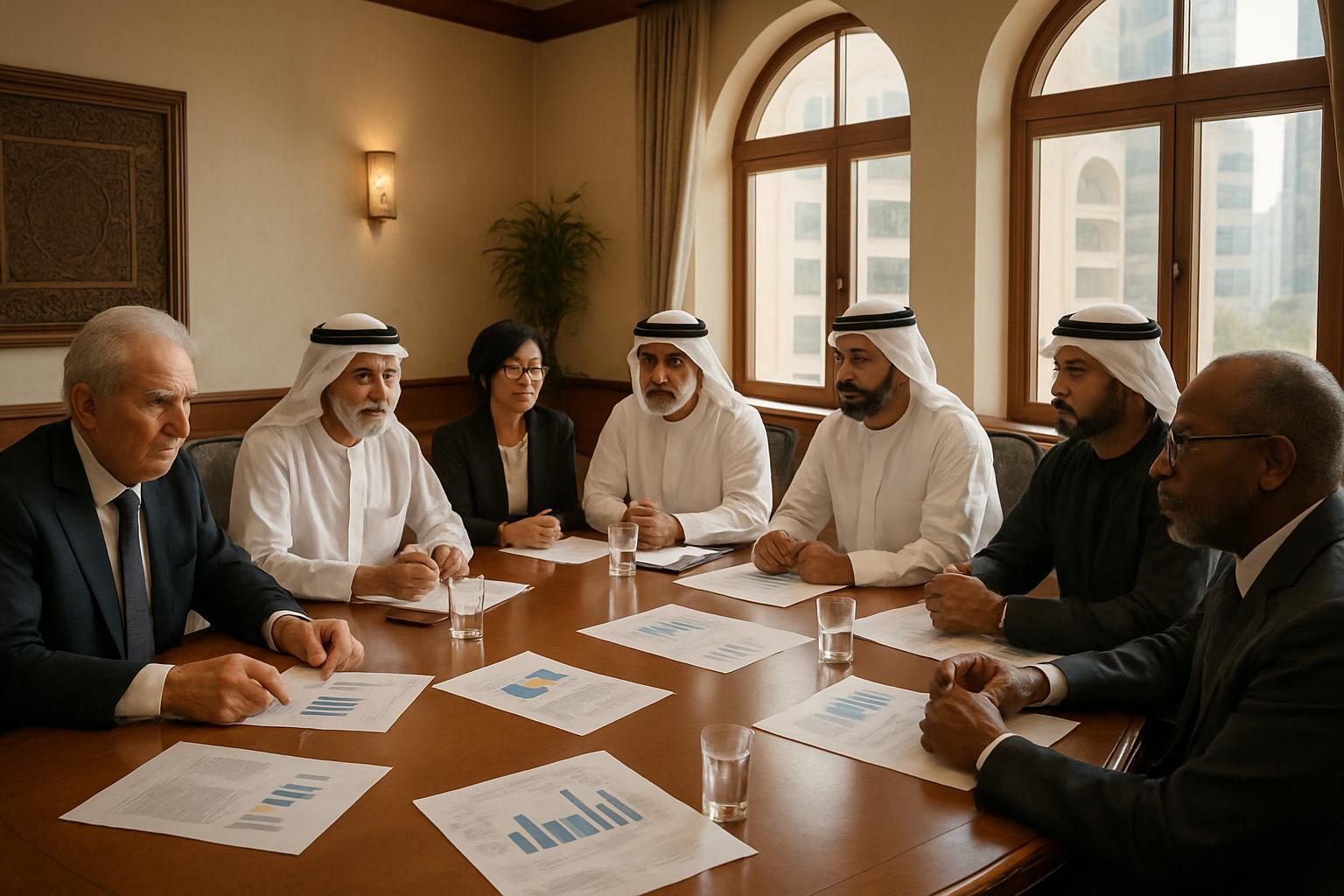
At the center stands MGX, a technology vehicle pursuing unprecedented scale.
Bloomberg reports MGX is racing toward more than $100 billion in assets under management.
Consequently, partners like Microsoft, BlackRock, and NVIDIA have joined large infrastructure consortiums.
These alliances target data-center builds, semiconductor supply chains, and renewable power projects worldwide.
Analysts describe the initiative as a bold Global Investment experiment with far-reaching implications.
However, capital alone cannot guarantee success; governance, energy, and market risks remain significant.
This article dissects the vision, mechanics, benefits, and pitfalls behind the hundred-billion wager.
Readers will gain actionable insights into partnership structures and credential paths that enhance professional credibility.
Global Investment Vision Explained
MGX signals strategic intent by setting a $100 billion assets milestone.
Moreover, the figure functions more as aspiration than immediate liquidity, according to Bloomberg.
Industry observers note the rhetoric aligns with Abu Dhabi’s push to diversify beyond hydrocarbons.
Therefore, the vision frames capital mobilisation as both economic hedge and diplomatic instrument.
GAIIP complements that target by pooling $30 billion equity with ample debt capacity.
Consequently, the partnership advertises potential mobilisation of another $100 billion for tomorrow’s AI factories.
This dual narrative fuels media headlines yet sometimes blurs the difference between assets and levered commitments.
Sheikh Tahnoun bin Zayed summarised the ambition, stating that today’s investments secure a sustainable human future.
Nevertheless, translating narrative into bricks, chips, and power cables requires disciplined execution.
Stakeholders recognise that such Global Investment scale demands transparent governance and rigorous project pipelines.
The vision hinges on credibility and scale.
Subsequently, partnership mechanics reveal how organisers intend to reach those numbers.
Partnership Mechanics Unpacked Today
BlackRock and Global Infrastructure Partners anchor the equity tranche alongside MGX.
Meanwhile, Microsoft supplies cloud demand forecasts and engineering know-how.
NVIDIA contributes GPU roadmaps, while energy majors evaluate grid upgrades and renewable hookups.
The structure resembles a private equity fund with extended horizons.
However, non-recourse project finance layers additional debt, boosting headline capacity without equal cash outlay.
This device explains why press releases cite $100 billion mobilisation from only $30 billion equity.
Funding commitments flow in stages, tied to construction milestones and contract awards.
Furthermore, limited partners obtain downside protection through diversified regional portfolios.
Such terms seduce pension managers seeking stable yields from digital infrastructure.
A dedicated steering committee arbitrates site selection, vendor approval, and emissions metrics.
In contrast, many tech ventures rely solely on venture capital boards.
Therefore, this blended governance bridges Sovereign prerogatives with commercial discipline.
These mechanics convert political will into executable projects.
Consequently, scale projections rest on infrastructure economics, which we explore next.
Infrastructure Scale And Costs
Industry data place current global data-center capacity above 70 gigawatts.
Analysts expect demand could hit 300 gigawatts within fifteen years.
Moreover, a single gigawatt AI factory may require up to $35 billion capital.
Stargate UAE sketches a practical test case.
The planned cluster begins with 200 megawatts, expanding toward one gigawatt by 2030.
Abu Dhabi aims to host that cluster, leveraging desert land and growing renewable portfolios.
Power procurement drives most costs, thus energy partners like GE Vernova gain prominent seats.
Subsequently, project finance must bundle long-term offtake contracts for carbon-free electricity.
Such structures reassure credit committees assessing Funding risk.
- Land acquisition: roughly 2% of total project cost.
- Electrical infrastructure: about 40%, including substations and grid interconnects.
- Compute hardware: nearly 35%, dominated by GPU clusters.
- Cooling and water systems: the remaining 23% on average.
Overall, capital intensity dwarfs most traditional utilities.
Therefore, only vast Global Investment pools can shoulder such bills.
The next section details stakeholder upsides.
Key Benefits For Stakeholders
The emirate seeks economic diversification away from oil volatility.
Consequently, data-center exports may generate high-margin service revenue and skilled employment.
Global partners secure early capacity for model training, mitigating chip shortages.
Investors anticipate steady cash flows backed by long-term compute contracts.
Moreover, depreciation schedules produce attractive tax shields for institutional portfolios.
Sovereign funds gain geopolitical influence by controlling essential digital infrastructure.
Engineers and policy makers also highlight environmental upside from bundled renewable build-outs.
Furthermore, carbon-free electrons can later serve broader industrial clusters.
- Job creation across construction, operations, and research.
- Exportable AI expertise strengthening regional Wealth ecosystems.
- Diversified returns for pension funds seeking inflation hedges.
These benefits explain rising Global Investment interest despite uncertainties.
Nevertheless, material risks warrant close scrutiny, as discussed below.
Critical Risks And Constraints
Export controls remain the loudest geopolitical headwind.
United States regulators continue restricting advanced GPU shipments to certain foreign buyers.
In contrast, partners insist compliance frameworks will satisfy security agencies.
Governance critics warn that state controlled platforms could enable surveillance misuse.
Wired raised alarms about potential rights abuses within regional data regimes.
Consequently, transparent oversight boards and independent audits appear essential.
Energy grids face strain because AI loads rarely align with solar output peaks.
Therefore, simultaneous investment in storage and flexible gas assets may prove unavoidable.
Such additions elevate Funding requirements and carbon footprints.
Market analysts also question overbuilding risk if demand projections falter.
Nevertheless, staged capacity ramps can moderate that exposure.
Sovereign backers bear reputational stakes, so prudent phasing protects their Wealth claims.
In sum, governance, energy, and demand uncertainties demand vigilant management.
Subsequently, we assess forward milestones and actionable next steps.
Next Steps And Outlook
Executives expect firm equity closes for GAIIP’s first tranche by late 2026.
Meanwhile, initial Stargate construction should break ground once export licences clear.
Professionals can enhance credibility through continuous education.
For instance, network architects may pursue the AI Network Security™ certification.
Moreover, such credentials align with anticipated talent shortages across AI infrastructure projects.
Investors should track updated asset under management figures from MGX and debt leverage ratios.
Analysts also monitor Abu Dhabi legislative measures supporting renewable procurement.
The most important metric remains project commissioning speed.
Consequently, any delays in power interconnection could jeopardise Global Investment returns.
Nevertheless, diversified geographic portfolios may offset single jurisdiction slippage.
Stakeholders should prepare contingency budgets and governance safeguards.
Therefore, diligent oversight converts grand visions into operating assets.
Conclusion And Action
Abu Dhabi’s hundred-billion AI plan illustrates how Global Investment ambitions reshape digital infrastructure.
MGX, alongside Western partners, has engineered scalable Funding pipelines that blend equity and debt.
Moreover, Sovereign sponsors gain strategic leverage by exporting compute capacity rather than crude.
Nevertheless, environmental, geopolitical, and execution risks could erode projected Wealth dividends.
Consequently, rigorous governance, transparent metrics, and skilled talent remain vital to protect Global Investment returns.
Professionals should monitor milestone disclosures and pursue advanced credentials to stay competitive.
Explore the certification above and join the conversation on responsible Global Investment in AI infrastructure.


