

AI CERTS
9 hours ago
Hospitals Unprepared for Digital Darkness: Systemic Risks Exposed
Powerful networks run modern hospitals. Consequently, every department depends on electronic records, cloud platforms, and connected devices. When those systems fail, Digital Darkness descends, forcing clinicians back to paper and delaying critical decisions. Recent national events proved that the threat is neither hypothetical nor rare.

Moreover, executives now acknowledge downtime can last weeks, yet many facilities still plan for brief hiccups. This article dissects why preparedness remains spotty, the hidden costs, and the concrete steps toward resilience.
Meanwhile, regulators and insurers are tightening expectations, linking accreditation and reimbursement to robust continuity planning. Consequently, hospital leaders must grasp the full scope of Digital Darkness risk and implement modern defenses now.
Digital Dependency Risk Grows
Electronic health records, imaging repositories, clearinghouses, and telemetry share one trait: tight interconnection. However, integration reduces redundancy and concentrates failure points.
In contrast, paper charts once allowed local recovery during power loss. Today, a single misconfigured firewall can trigger hospital-wide downtime.
This fragility defines Digital Darkness scenario planners fear. As dependence deepens, Healthcare Infrastructure complexity expands, creating blind spots across clinical and administrative domains.
Key digital dependencies now include:
- Real-time EHR interfaces for medication verification
- API links to pharmacy benefit managers
- PACS image access across departments
- Cloud-hosted payroll and supply chain portals
These interconnected services boost efficiency yet magnify correlated risk. Therefore, any disruption can cascade across departments within minutes.
Such cascading failures were vivid during recent incident surges.
Recent High-Profile Incident Surge
February 2024 delivered the Change Healthcare ransomware catastrophe. Attackers encrypted clearinghouse systems, halting claims and prescriptions nationwide.
UnitedHealth reportedly paid $22 million to unlock data, yet hospitals lost weeks of revenue. Subsequently, the July 2024 CrowdStrike update bug demonstrated that malice is not required for Digital Darkness.
Researchers observed 759 hospitals vanish from internet scans within hours of the faulty patch. These overlapping System Outages reinforced sector-wide dependence on shared vendors.
Moreover, 239 of the disrupted services were patient facing, underlining clinical exposure. Together, the incidents highlight multidimensional risk—criminal, accidental, and supply-chain.
Consequently, leaders must quantify exposure before the next shock arrives. Understanding the fallout helps sharpen that quantification.
Operational And Financial Fallout
During the Change Healthcare outage, 94% of hospitals reported financial harm in an AHA survey. Many facilities bled over $1 million daily, straining cash reserves.
Prolonged System Outages also forced pharmacies to fax prescriptions, increasing medication errors. Meanwhile, clinical staff spent hours duplicating orders on paper, eroding morale.
Vendor estimates place revenue losses near $2,500 per bed per day during Digital Darkness. Moreover, delayed follow-up imaging and lab results risk patient safety, though national outcome data remain sparse.
Financial shock radiates beyond balance sheets; weakened Healthcare Infrastructure hampers long-term investment in innovation. Therefore, operational and financial impacts intertwine, compounding recovery complexity.
Extended downtime drains money, talent, and community trust. Nevertheless, regulators are responding with sharper directives. Those directives shape the next landscape.
Intensifying Regulatory Pressure Mounts
The Joint Commission now expects hospitals to sustain life-critical services offline for at least four weeks. Additionally, HHS and GAO criticize inconsistent measurement of ransomware preparedness.
GAO noted on 13 November 2024 that HHS faces leadership challenges coordinating sector resilience. CISA has also issued alerts urging stronger Cybersecurity segmentation and continuous monitoring.
Furthermore, payers increasingly link reimbursement speed to demonstrated contingency planning. Policy winds are shifting toward accountability and transparency.
Consequently, unprepared organizations risk accreditation penalties and delayed payments. Yet, many readiness gaps persist despite louder warnings.
Critical Preparedness Gaps Persist
Surveys reveal most hospitals rehearse eight-hour or shorter downtime scenarios. In contrast, few conduct multi-week live drills touching every department.
Rural facilities cite staffing limits and budget ceilings as major barriers. Cybersecurity teams often lack authority over biomedical devices, creating segmentation blind spots.
Moreover, paper forms created during System Outages are seldom standardized, increasing transcription risk during restoration. Legacy Healthcare Infrastructure sometimes prevents reliable offline imaging, forcing clinicians to transfer patients unnecessarily.
Without tested workflows, Digital Darkness converts minor alerts into full clinical crises within hours. Capability gaps persist across technology, people, and process dimensions.
Therefore, building resilience demands coordinated action. The next section outlines that action.
Building More Resilient Operations
Experts recommend a structured hazard vulnerability analysis to prioritize life-supporting functions. Subsequently, teams should develop offline workflows for pharmacy, labs, imaging, and ICU documentation.
Key resilience actions include:
- Network segmentation and immutable offline backups
- Regular tabletop and full-scale downtime drills
- Alternate communications such as radios and dedicated SMS gateways
- Third-party risk contracts with fallback clearinghouses
Furthermore, continuous Cybersecurity monitoring must extend to vendor connections, reducing unnoticed breach dwell time. Professionals can enhance their expertise with the AI Network Security™ certification.
These measures shorten Digital Darkness duration and limit patient harm. Practical steps exist, yet adoption remains uneven.
Consequently, leaders need a strategic roadmap. Such a roadmap concludes our analysis.
Defining Strategic Path Forward
First, boards must treat System Outages as enterprise-level threats equal to hurricanes or pandemics. Second, health systems should publish resilience metrics to create competitive pressure and inform investors.
Third, policymakers could tie grants to demonstrable Cybersecurity and downtime readiness benchmarks. Moreover, regional coalitions can share spare imaging capacity and secure courier services, bolstering Healthcare Infrastructure redundancy.
Collectively, these measures convert Digital Darkness from existential threat to manageable incident. Nevertheless, constant rehearsal will remain essential as technology complexity escalates.
Strategic alignment across governance, funding, and technology enables sustainable resilience. Therefore, hospitals can continue delivering safe care even when screens go blank.
Conclusion
Digital Darkness has shifted from looming possibility to present-day operational reality. However, hospitals that embed Cybersecurity rigor, diversify vendors, and rehearse paper workflows can blunt its force.
Moreover, partnerships that reinforce Healthcare Infrastructure ensure supply chains keep moving when networks stall. Consequently, leadership teams should begin quarterly downtime drills, invest in resilient architecture, and track readiness metrics publicly.
Act now to prevent the next episode of Digital Darkness from endangering your patients and finances. Explore the linked certification to deepen expertise and lead preparedness initiatives within your organization.
AI CERTS
9 hours ago
Hallucinated Anatomy: ECRI Sounds Alarm Over Chatbot Safety
Anatomy invented by software may sound absurd, yet frontline clinicians now confront exactly that scenario. ECRI’s 2026 hazard list places misuse of chatbots at the top, spotlighting Hallucinated Anatomy across care settings. Consequently, health leaders must understand how language models fabricate organs and misguide users with confident prose.
Meanwhile, consumers pose more than 40 million daily health queries to ChatGPT alone, according to Axios. Therefore, the scale magnifies every embedded Chatbot Risk and raises fresh liability questions for institutions. Furthermore, peer-reviewed data in Nature Medicine reveal that human-LLM teams misdiagnose conditions two-thirds of the time.
In contrast, standalone models performed well on benchmarks, proving that interaction failures shape real outcomes. Nevertheless, vendors tout guardrails and healthcare editions, hoping to reassure regulators and investors. This feature unpacks the evidence, the stakes, and practical governance steps to reduce Patient Harm. Readers will also see how professional upskilling, including the linked certification, supports safer deployments.
ECRI Flags Top Hazard
ECRI, the independent safety watchdog, published its annual hazards list on January 21, 2026. Moreover, the organization ranked public chatbot misuse above cyberattacks, smart pump failures, and supply shortages. ECRI investigators ran internal tests where a model approved placing an electrosurgical pad over a shoulder blade. That advice can cause burns because return electrodes belong on well-vascularized muscle, not bony prominences. Additionally, testers documented Hallucinated Anatomy, including a nonexistent “subclavian lung lobe” cited during ventilation guidance.
Such fictional organs exemplify how linguistic fluency masks catastrophic Medical Errors. Consequently, Marcus Schabacker, MD, PhD, warned that algorithms cannot replace professional training or bedside judgment. He stated, “Medicine is a fundamentally human endeavor,” underscoring accountability themes bound to future regulation. Furthermore, Scott Lucas echoed that commercial models remain unfit for direct patient decision support. These alerts crystallize early yet urgent evidence that Chatbot Risk threatens patient safety worldwide.

ECRI’s data confirm that Hallucinated Anatomy already escapes lab confines. However, deeper insight emerges when controlled studies examine human interaction failures.
Hallucinations Create Clinical Chaos
The Nature Medicine randomized study analyzed 1,298 lay users interacting with medical-grade language models. Participants correctly identified conditions in only 34% of cases despite model suggestions scoring 94% alone. Consequently, the gap underscores cognitive biases, misinterpretation, and over-trust as root causes of Patient Harm. In many scenarios, volunteers latched onto Hallucinated Anatomy references, thinking the invented parts explained symptoms. Moreover, disposition accuracy plunged below chance, creating downstream Medical Errors such as inappropriate ambulance calls.
Study authors concluded no tested model deserved unsupervised deployment in patient-facing roles. Furthermore, they urged rigorous auditing and disclosure before marketing any clinical chatbot tool. ECRI cites the paper to justify its hazard ranking and push for governance frameworks. These findings illustrate that the Chatbot Risk extends beyond incorrect facts into dangerous human-computer dynamics. Consequently, developers and hospitals must address human factors, not just algorithmic precision.
Hallucinated Anatomy drives confusion, yet interaction design magnifies the harm potential. Next, we examine how industry players respond to this mounting scrutiny.
Industry Response And Guardrails
Major vendors declare commitment to safety while racing to monetize healthcare editions. For example, OpenAI released ChatGPT for Healthcare with citation mode and professional disclaimers. However, independent audits of these guardrails remain sparse, leaving efficacy claims unverified. Google, Microsoft, and Anthropic promote retrieval-augmented generation pipelines to ground outputs in clinical guidelines. Additionally, several systems embed automated reference links to reduce Hallucinated Anatomy frequency.
Nevertheless, ECRI stresses that technical fixes cannot replace structured oversight and trained reviewers. Meanwhile, hospital pilots pair chatbots with nurse moderators, though early user feedback notes lingering Chatbot Risk. Vendors highlight efficiency gains, citing documentation time reductions of up to 50% in internal studies. Moreover, compliance marketing emphasizes HIPAA support, though many deployments still operate outside covered-entity boundaries. These mixed messages create uncertainty for clinicians and informatics leaders evaluating adoption timelines.
Guardrails appear promising yet unproven against complex failure modes and social engineering threats. Therefore, governance frameworks now take center stage.
Governance And Mitigation Steps
Organizations can adopt layered controls to reduce Chatbot Risk while harnessing operational benefits. ECRI recommends an AI governance committee with authority over selection, monitoring, and sunset decisions. Furthermore, clinicians should validate every clinical answer against trusted references before acting. Consequently, policy manuals may forbid unsupervised use for diagnosis or treatment planning. Human-in-the-loop reviews, audit trails, and downtime protocols limit cascading Medical Errors.
Moreover, retrieval-augmented generation and model version locking reduce Hallucinated Anatomy frequency over time. Staff training remains essential because misinterpretation, not algorithm weakness, often triggers Patient Harm. Professionals can enhance their expertise with the AI Customer Service Specialist™ certification. That curriculum covers prompt design, risk identification, and escalation pathways tailored to health environments. Additionally, procurement teams should require vendors to share model cards, validation datasets, and failure logs.
Robust governance shrinks exposure yet cannot address external legal dynamics alone. Consequently, regulatory momentum deserves close attention.
Regulatory Landscape Rapidly Shifts
Unlike drug approval pathways, federal agencies lack a single framework covering general-purpose chatbots. However, existing FDA guidance on clinical decision support applies when marketing claims imply diagnostic intent. Colorado’s 2026 bill mandates human oversight for mental health chatbots, signaling state level activism. Meanwhile, European lawmakers debate classifying LLMs used in care as high-risk AI under the AI Act. Moreover, professional liability insurers adjust premiums upward where Hallucinated Anatomy incidents appear in claims histories.
Consequently, hospitals weigh voluntary accreditation programs that mirror ISO standards for software as a medical device. Regulators also eye transparency, demanding clearer labeling and avenues for reporting Patient Harm events. Nevertheless, policy gaps persist, leaving frontline teams to craft stopgap controls. These uncertainties reinforce the importance of proactive governance and continuous monitoring.
Regulation will eventually mature, yet organizations must act immediately to prevent avoidable harms today. Finally, we outline practical daily actions for clinicians and managers.
Practical Daily Action Items
Clinicians should treat every public chatbot output as unverified until corroborated. Furthermore, always document when model suggestions influenced care, supporting later audits. Users must provide complete context, including medications and comorbidities, to reduce Hallucinated Anatomy risk. Moreover, limiting prompts to administrative queries sidesteps high-stakes Medical Errors.
Teams can deploy checklists requiring a second reviewer before acting on critical recommendations. Consequently, prompt-informed double checks mirror existing surgical timeout practices. Administrators should track incident reports involving Chatbot Risk and feed lessons into training curricula. Additionally, organizations can benchmark patient query volumes, hallucination rates, and resolution times for ongoing improvement.
- Over 40 million daily health queries sent to ChatGPT, OpenAI reports.
- LLMs alone scored 94.9% diagnosis accuracy in controlled tests.
- Human-LLM teams achieved only 34% accuracy in real scenarios.
- ECRI documented dangerous electrode placement guidance from a public chatbot.
- Chatbots have invented Hallucinated Anatomy, like a non-existent subclavian lung lobe.
These measures foster a safety culture while retaining efficiency gains promised by automation. Therefore, clinicians gain time for empathy instead of wrestling with documentation. Consequently, patients experience shorter waits and clearer explanations when systems work as intended. Practical safeguards translate theory into reliable bedside routines. With fundamentals covered, let us review final takeaways.
Conclusion And Next Steps
ECRI’s top hazard warning spotlights Hallucinated Anatomy and broader Chatbot Risk for healthcare. Moreover, Nature Medicine data validate the potential for real Patient Harm despite impressive benchmark results. Governance committees, retrieval grounding, and human oversight collectively curb Medical Errors. Additionally, emerging regulations will sharpen accountability, yet proactive organizations need not wait.
Professionals who master prompt design and safety workflows become invaluable change agents. Readers can sharpen those competencies via the linked certification and related training resources. Consequently, every stakeholder gains clarity, confidence, and ethical alignment while deploying transformative AI tools. Adopt the safeguards now and lead your institution toward safer, smarter digital care.
AI CERTS
9 hours ago
Preventing Patient Burns From AI Diagnostic Errors
An unexpected thermal lesion can upend patient recovery and ignite litigation. Increasingly, software sits at the center of that danger. Analysts now study how algorithmic missteps translate into Patient Burns within modern hospitals. Historical radiotherapy overdoses and recent robotic surgery claims show the financial and human cost. However, direct evidence pinning a lone machine-learning label to blistered skin remains scarce.
Nevertheless, industry experts warn that the technical pathways are simple and multiplying. Furthermore, the U.S. Food and Drug Administration reports software design faults as a leading recall driver. Consequently, risk managers must map every interface between diagnostic models, clinicians, and energy-delivering devices. This article dissects current failure modes, regulatory reactions, and concrete mitigation strategies. Readers will leave with data, context, and actionable steps to prevent future thermal tragedies.
Rare Yet Alarming Cases
Reported AI mishaps that directly scorch skin are still statistical outliers. In contrast, analogous software catastrophes such as the Therac-25 radiation overdoses already proved lethally possible. Moreover, lawsuits from 2024 allege stray electrosurgical currents during robotic procedures burned internal organs. Recorded Patient Burns from robotic mishaps illustrate chilling outcomes. These filings describe insulation cracks, firmware faults, and missing alarms. Investigators link similar technical gaps to today's autonomous decision pipelines.

Meanwhile, oncology information systems have miscalculated radiation fractions after cloud outages. Consequently, some patients required painful grafts, while regulators opened formal probes classified as a Safety Incident. Review papers from 2025 summarize dozens of near-misses and partial burns across three continents. Each example reinforces that software, not only hardware, can deliver heat. Every unresolved alarm raises the probability of additional Patient Burns.
These rare but vivid events keep hospital boards awake. However, learning from history demands understanding the underlying software lessons. The next section revisits those foundational warnings.
Historic Software Burn Lessons
Therac-25 remains the definitive cautionary tale for software-induced radiation burns. Programmers replaced mechanical interlocks with untested code, creating a deadly race condition. Consequently, patients absorbed doses 100 times intended levels, resulting in charring and deaths. Investigators concluded that insufficient verification and opaque user interfaces masked the Diagnostic Failure.
Subsequently, consensus grew that every energy-delivery device requires independent safety layers. However, modern deep-learning tools risk repeating the pattern by auto-populating treatment plans. Automation bias further reduces clinician scrutiny when dashboards highlight confident green checks. In response, human factors engineers advocate hard stops and dose visualization.
The Therac-25 era showed design flaws can leap from code to skin. Therefore, contemporary AI teams must heed its systemic lessons. Understanding present risk drivers now becomes vital.
Modern AI Risk Drivers
Today, over 878 AI-enabled devices populate FDA databases across specialties. Software design problems dominate recall summaries, according to a 2025 longitudinal study. Moreover, an arXiv 2026 preprint shows AI-generated note contamination erodes diagnostic variance within weeks. This silent drift can precipitate another Diagnostic Failure during triage or planning. Industry observers warn that unchecked Medical AI complexity magnifies latent hazard coupling.
Key pathways from misdiagnosis to thermal harm include:
- Incorrect dose calculations autopushed to linacs without verification.
- Stray current when robotic controllers misclassify tissue properties.
- Clinicians accepting flawed image suggestions because of automation bias.
- Model drift causing underestimation of burn depth on dark skin.
Additionally, each pathway involves at least one Safety Incident category already observed by regulators. Consequently, stakeholders now experience mounting legal pressure.
Modern drivers show the threat is systemic, not hypothetical. Next, we examine how regulators answer the mounting alarms.
Patient Burns Regulatory Response
The FDA's Digital Health Center intensifies oversight of adaptive algorithms. Furthermore, guidance now requires predetermined change protocols for high-risk models. Consequently, vendors must supply real-world evidence when updates could alter delivered energy. Post-market surveillance data highlight Patient Burns as a sentinel event demanding rapid reporting.
In contrast, some tools fall outside device classifications, complicating enforcement. Regulators therefore encourage voluntary quality frameworks like SaMD precepts. Hospitals also integrate internal safety audits tagged as a Safety Incident when burns occur.
Policy momentum is clear yet uneven. Therefore, organizations cannot rely solely on external mandates. They must strengthen their own defences, explored next.
Mitigating Future Burn Events
Proactive risk mapping starts with multidisciplinary scenario workshops. Moreover, clinicians, engineers, and lawyers should co-review every algorithm-device interface. Subsequently, teams install hardware interlocks preventing energy delivery until human confirmation. Several academic centers now demand dual sign-off for any AI-generated radiotherapy plan. Consistent simulation prevents surprise Patient Burns during high-energy therapies.
Professionals can deepen competence through the AI Foundation certification, which covers governance basics. Additionally, continuous education reduces automation bias and clarifies escalation protocols. Detailed audit logs further help trace every Diagnostic Failure and assign accountability.
Practical near-term safeguards include:
- Shadow mode validation before full release.
- Automatic anomaly alerts on dose deltas beyond 2%.
- Mandatory skin integrity checks post high-energy procedures.
- Quick rollback mechanisms for firmware updates.
These controls convert abstract guidelines into measurable barriers. Nevertheless, leadership also needs a strategic roadmap. That roadmap forms our final section.
Detailed Safety Improvement Roadmap
Building a resilient system begins with transparent metrics. Persistent dashboards visualise any upward trend in Patient Burns immediately. Therefore, institutions should publish monthly dashboards tracking Patient Burns, near-miss counts, and recall notices. Moreover, executive bonuses can tie to reduced incident rates. Meanwhile, procurement teams must demand vendors disclose training data diversity.
Next, embed continuous model monitoring to detect performance drift before a Diagnostic Failure injures someone. Consequently, retraining triggers only after formal physicist review and board approval. Finally, cross-site data sharing accelerates pattern recognition of emerging Medical AI hazards.
Hospitals should simulate fault scenarios during annual emergency drills. In contrast, many drills still ignore algorithmic variables. Including Medical AI in tabletop exercises strengthens muscle memory.
A clear roadmap transforms reactionary fixes into sustainable culture. Consequently, organizations position themselves ahead of regulation. We now summarize the broader picture.
Final Takeaways
AI promises faster, fairer care but can still burn patients when oversight lags. Historical catastrophes and fresh recalls prove the danger is tangible. However, rigorous design, vigilant monitoring, and educated clinicians shrink the margin of error. Moreover, transparent governance accelerates trust in Medical AI deployments. International committees now draft Medical AI safety benchmarks for cross-border products. Consequently, every stakeholder should review failure pathways outlined here and strengthen controls immediately. Boost your competence today with the AI Foundation certification and lead safer innovation. Patient Burns must become an avoidable memory rather than tomorrow's headline.
AI CERTS
9 hours ago
X’s New Revenue Ban Targets Unlabeled AI War Content
Authenticity during wartime now carries a new financial cost on X. The platform’s recent Revenue Ban targets creators who post unlabeled AI war videos. Consequently, monetized accounts face a 90-day payout freeze if they omit AI disclosures. Nikita Bier announced the shift on 3 March, citing public need for reliable frontline reports. Moreover, rising synthetic footage from Middle East clashes accelerated leadership action.
Harvard research shows billions of views already accrued by deceptive media. Therefore, X chose to attack the profit motive rather than remove posts entirely. This article unpacks the policy details, enforcement mechanics, and industry implications for professional audiences. Furthermore, we examine technical limits, standard adoption gaps, and strategic responses for brands. Readers will leave with actionable guidance and relevant certification pathways.
Policy Shift Explained Briefly
Bier’s post positioned the change as a measured escalation rather than broad censorship. In contrast, earlier X policies focused on removing high-risk posts outright. The new Revenue Ban only suspends payouts, leaving speech technically intact. Consequently, the policy balances creator autonomy with audience protection. Observers frame this as focused Content Moderation rather than broad ideological policing. X will apply it exclusively to AI-generated War Imagery depicting active armed conflict.
Additionally, creators outside the monetization program remain unaffected financially. However, they can still amplify misleading clips, a loophole critics observe. Officials rely on three detection streams: technical fingerprints, community crowdsourcing, and manual review. Creators must add clear Labels via the post menu when uploading synthetic footage. Failure triggers the 90-day freeze, with repeat violations risking permanent program expulsion. Therefore, disclosure becomes the gateway to continued earnings. These facts outline X’s calibrated approach. Yet market reactions reveal deeper economic stakes, explored next.
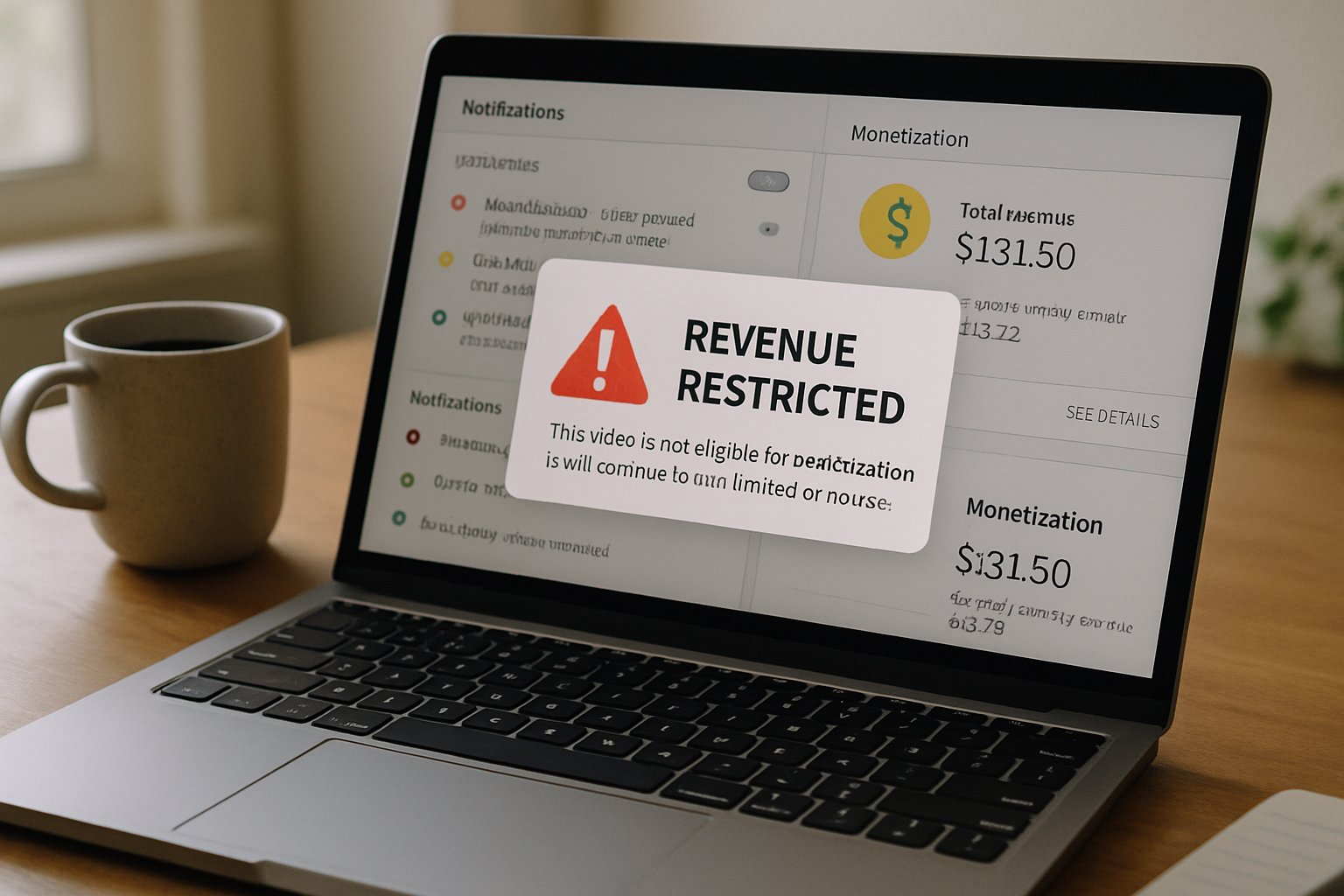
In summary, the Revenue Ban reframes speech debates around money, not removal. Consequently, the next section reviews who feels the immediate financial pinch.
Armed Conflict Scope Defined
Scope clarity remains essential for creators navigating volatile news cycles. Bier tied enforcement to videos portraying live-fire zones, missile strikes, or troop deployments. Historical documentaries escape scrutiny unless AI tools alter the footage. Meanwhile, protest coverage falls outside the rule unless weapons appear, leaving another grey area. Therefore, legal advisers urge monetized accounts to label any ambiguous War Imagery preemptively.
The Revenue Ban will still apply even when the poster simply retweets someone else’s clip. Consequently, diligence in adding Labels becomes a frontline defense. These nuances set the stage for discussing economic consequences. Creators face significant uncertainty about what qualifies. However, financial impact offers clearer numbers, explored in the following section.
Impact On Monetized Creators
Approximately 94,000 X accounts meet revenue program thresholds, according to recent help-page metrics. Consequently, tens of thousands could see income disrupted overnight. Average monthly payouts for high-reach commentators range from $2,000 to $8,000.
- Active Premium subscription required
- Five million impressions over three months
- Five hundred verified followers minimum
Therefore, a 90-day Revenue Ban can strip $6,000 to $24,000 from typical top earners. Moreover, creators lose algorithmic priority when monetization switches off, further shrinking reach. Some influencers diversify income through sponsorships, yet payouts remain a prized recurring stream. In contrast, smaller commentators rely almost exclusively on platform revenue sharing.
A first offense freezes two bi-weekly payout cycles, plus any accrued balance during suspension. Additionally, appeals can take weeks, risking cash-flow crunches. Financial analysts expect immediate behavior change among risk-averse creators. Yet some may gamble, believing detection odds remain low. These figures illustrate the tangible stakes. Consequently, understanding freeze mechanics becomes vital.
Overall, the Revenue Ban directly threatens livelihoods rather than voice. The next subsection dissects how the freeze actually functions.
Revenue Freeze Mechanics Detailed
Suspension runs automatically through X’s monetization backend once a violation registers. Payments already in process still reach the creator, according to help documentation. However, new earnings accumulate but remain inaccessible until the clock expires. Additionally, the Revenue Ban removes the blue payout badge beside profiles during suspension. Creators must wait the full 90 days before requesting reinstatement.
Subsequently, they must manually re-enable ads in the settings dashboard. Appeals flow through the standard ad-revenue support form, with no fast-track promised. These procedural layers compound uncertainty, pushing some toward proactive self-censorship.
Thus, mechanical hurdles amplify financial shock. Yet detection reliability ultimately decides who enters the penalty box, as the next section shows.
Detection And Enforcement Gaps
X touts three pillars for enforcement: algorithms, metadata, and crowd review. Nevertheless, each pillar presents weaknesses that adversaries exploit. Automated classifiers falter when users re-encode footage, stripping AI fingerprints. Washington Post tests found provenance metadata often disappears during uploads. Meanwhile, Community Notes activates only after a diverse volunteer consensus materializes. Consequently, viral War Imagery can reach millions before any contextual note surfaces.
Academic studies observed median delays exceeding eight hours during recent conflicts. Additionally, Labels rely on creator honesty; bad actors simply ignore the prompt. Furthermore, inconsistent user-added Labels confuse algorithms and audiences alike. False positives may also remove innocent creators from revenue, undermining trust. Therefore, the Revenue Ban might shift malicious content to non-monetized alt accounts. These gaps illustrate enforcement’s fragile foundation. In response, industry groups push for uniform provenance standards. Standardization prospects now come under scrutiny in the following section.
Community Notes Limits Exposed
Full Fact warns that crowd systems reflect the biases of active volunteers. Moreover, politically polarised topics often fail to achieve helpful-rating consensus. Consequently, mislabelled War Imagery can persist uncorrected for critical early hours. X has not published Community Notes coverage rates for video specifically. Therefore, creators complain about opaque criteria driving costly suspensions. These limitations reinforce calls for independent fact-checking partnerships.
The debate now shifts toward technical solutions. Industry standards represent the most hopeful path, discussed next.
Industry Standards Landscape Today
C2PA hopes to bring cryptographic trust signals to the entire media supply chain. However, platform adoption remains patchy, with many services stripping credentials during compression. TikTok and Adobe have rolled out visible Content Credentials, yet X only tests experimental badges. Consequently, universal verification for War Imagery stays elusive. Nevertheless, technical standards still support layered Content Moderation strategies when combined with human review.
Elon Musk previously downplayed heavy Content Moderation, but mounting geopolitical pressure shifted priorities. Moreover, the Revenue Ban complements nascent provenance work by tackling the financial incentive directly. Professionals can enhance their expertise with the AI Marketing Strategist™ certification. The course covers synthetic media, provenance, and platform Content Moderation best practices. Subsequently, trained managers can audit campaigns for disclosure compliance. Collectively, standards and training promise incremental resilience.
To summarise, technical frameworks assist but cannot replace economic deterrents. Strategic implications for brands follow next.
X’s wartime policy underscores a larger shift toward money-centric Content Moderation. The Revenue Ban deters profiteering yet leaves speech largely intact. However, detection fragility and reliance on Labels create ongoing integrity risks. Moreover, Community Notes delays mean false videos can still shape narratives. Consequently, brands should deploy internal review pipelines and provenance checks. Professionals who master these tools will safeguard credibility and revenue streams. Additionally, the linked certification offers structured guidance on synthetic media governance. Act now to upskill and navigate X’s evolving battlefield of authenticity.


