

AI CERTS
3 months ago
Snowflake Bets On Policy Grounded AI
However, analysts label the philosophy more directly: Policy Grounded AI inside a governed perimeter. Snowflake’s latest announcements, including Cortex AISQL and a $200 million Anthropic deal, turn philosophy into shippable software. Moreover, early usage metrics suggest the gamble resonates with regulated industries.
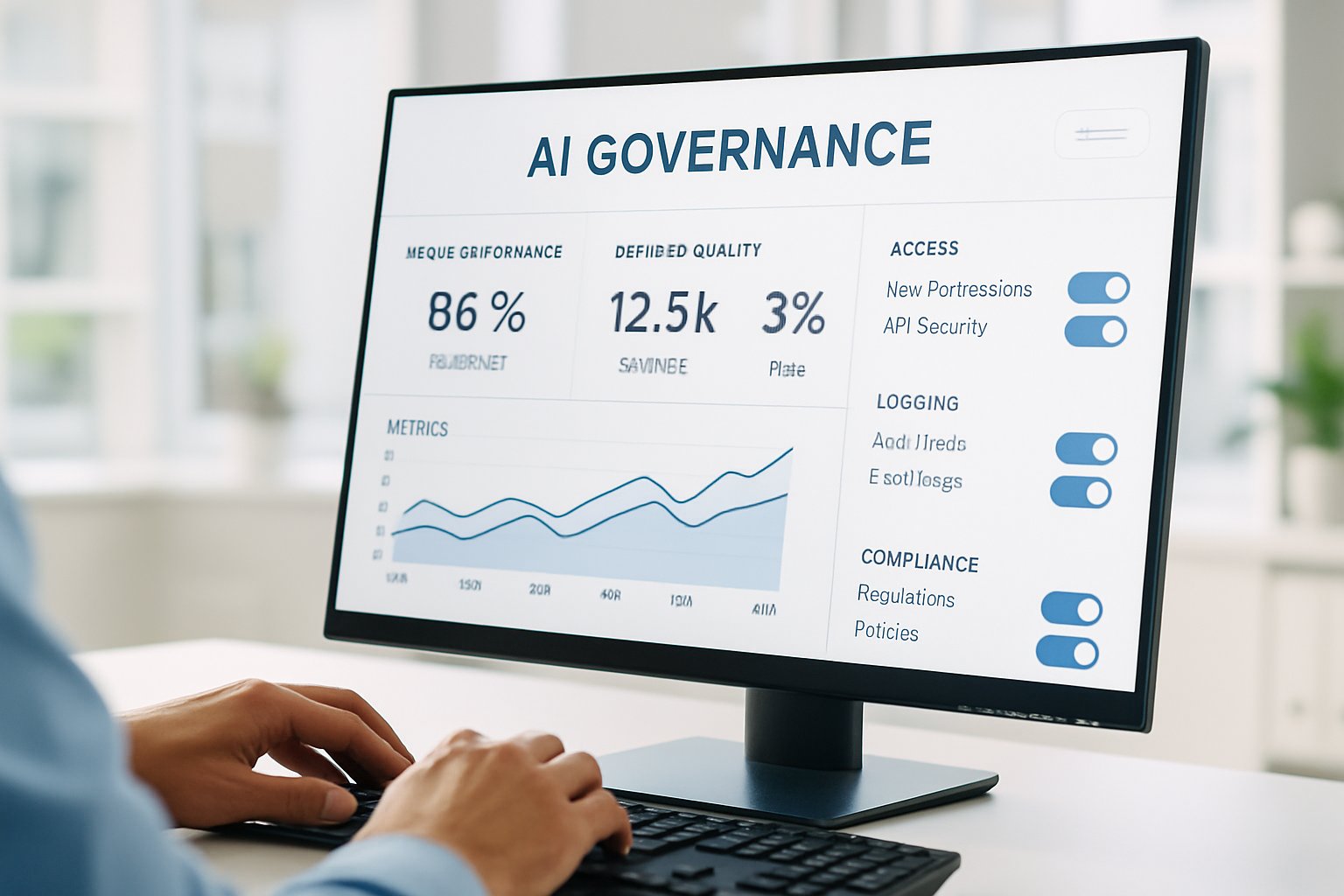
This article unpacks how the approach works, which numbers support the story, and where unresolved gaps remain. Readers will gain tactical insight into constrained architecture, business traction, and emerging governance debates. The discussion stays grounded in verifiable releases, independent reporting, and formal research.
Policy Grounded AI Vision
Snowflake frames its mission around Policy Grounded AI, a term that blends technical constraints with explicit governance demands. The philosophy insists models never leave the warehouse; instead, models run adjacent to customer information assets. Therefore, access controls, lineage logs, and masking rules operate unchanged, preserving existing Safety envelopes.
Snowflake executives argue the vision mirrors how cloud shifted storage economics a decade ago. In interviews, CEO Sridhar Ramaswamy says the company is ‘bringing the computer to the information vault’. Furthermore, partner Anthropic endorses the stance, noting enterprises already invested billions constructing secure environments.
Consequently, the vision aligns commercial incentives with rising regulatory pressure for transparent Policies. The vision roots AI in existing control planes, reducing new audit surface. Next, we examine how Snowflake operationalizes that philosophy across sequential releases.
Constrained Safety Approach Explained
At the engineering layer, Policy Grounded AI materializes through several enforcement tiers. Firstly, models, including Claude, Llama, and Mistral, execute beside sensitive Data inside Snowflake’s managed runtime. Secondly, row-level RBAC and column masking follow every inference call automatically.
Moreover, the MCP server supplies vetted context, preventing uncontrolled exfiltration. Together, these controls create layered Safety boundaries without routing queries to public endpoints. Analysts describe the architecture as 'bring compute to information' rather than 'ship information outward'.
Consequently, organizations avoid renegotiating cross-border transfer Policies every time a prompt leaves the region. Nevertheless, residual model hallucination risk persists, so observability dashboards flag questionable outputs for human review. This approach illustrates constrained Grounding mechanics that convert theory into deployable workflows.
Snowflake enforces multilevel controls to satisfy auditors. Subsequently, those controls surfaced through rapid product iterations.
Recent Product Rollouts Timeline
Snowflake accelerated releases to make Policy Grounded AI tangible for customers. June 2025 introduced Cortex AISQL and SnowConvert AI during the annual Summit. AISQL embeds semantic functions inside SQL, letting analysts interrogate text and semi-structured Data without exporting information.
Later that year, the MCP server, vector indexes, and managed fine-tuning reached public preview. Additionally, SwiftKV and Snowflake-Llama shipped to cut inference latency by half in vendor tests. December saw a $200 million partnership bringing Anthropic’s Claude family directly into the perimeter.
Furthermore, Snowflake Intelligence debuted, promising agentic workflows that 'show their work' for compliance. Reuters reports 1,200 customers tried Intelligence within the first month. The timeline illustrates relentless iteration toward a full constrained stack. Next, we inspect the business traction these launches generated.
Key Market Impact Metrics
Numbers reveal whether promises convert into revenue. Snowflake closed Q3 FY26 with $1.21 billion in product revenue, a 29 percent annual lift. Consequently, Wall Street saw constrained architecture as an upsell lever despite macro headwinds.
Meanwhile, weekly platform engagement surpassed 7,300 businesses, with Intelligence pilots rapidly expanding. Consider the most telling highlights:
- More than 12,600 customers now qualify for Anthropic Claude inside perimeter.
- $2 billion transacted through AWS Marketplace tied to Snowflake offerings.
- SwiftKV claims 50 percent throughput improvements and 75 percent cost reductions in tests.
- AISQL research shows up to 70× speedups for semantic joins.
Investors increasingly attribute these metrics to accelerating Policy Grounded AI adoption. Nevertheless, analysts caution that vendor speed gains may not replicate across heterogeneous Grounding workloads. Donald Farmer warns that unpredictable bills could offset any headline efficiency win.
Market metrics indicate momentum yet reveal questions about sustained margins. Technical claims deserve deeper scrutiny, so we next analyze engineering benchmarks.
Core Technical Performance Claims
Snowflake positions performance tuning as essential for Policy Grounded AI viability at scale. SwiftKV compresses key-value caches, lifting LLM throughput by roughly 50 percent in internal measurements. Additionally, Snowflake-Llama variants exploit quantization and smaller context windows to lower GPU cost.
AISQL applies model cascades and AI-aware planning, delivering up to eightfold latency reductions. Moreover, semantic join rewriting achieved 70× speedups on internal corpuses. In contrast, independent analysts urge broader benchmarks across real enterprise Data shapes.
Farmer notes that heterogeneous document structures often erode cascade efficiency. Nevertheless, early adopters like Intercom cite lower invoice totals after fine-tuning compute reservations. Technical claims appear promising but await open benchmarking. Understanding both upside and limitations sets context for the benefits discussion.
Primary Benefits And Drawbacks
Organizations highlight four major upsides from the Policy Grounded AI constrained model. Firstly, existing RBAC extends unchanged, simplifying compliance certifications. Secondly, a single audit trail spans analytics and inference, improving Safety posture.
- RBAC continuity eases compliance.
- Unified audit trail strengthens Safety.
- Multi-model flexibility supports strategic Policies.
- Cost controls stabilize budgets.
Thirdly, vendor choice persists because multiple partners integrate within the perimeter. Finally, cost optimizations like SwiftKV lower run-rate variability. Nevertheless, several drawbacks surface for cautious buyers.
Residual hallucinations can leak sensitive Grounding signals despite confinement. Moreover, some executives worry about vendor lock-in if migration paths prove expensive. CEO references also attract scrutiny; rivals claim Snowflake bundles compute margins with storage.
Benefits revolve around governance, while drawbacks relate to maturity and flexibility. Evaluating future governance shifts becomes the logical final step.
Governance And Future Outlook
Regulators worldwide draft rules that align closely with Policy Grounded AI principles. EU AI Act proposals emphasize clear model provenance, a native feature of Snowflake’s catalog. Meanwhile, U.S. agencies push incident reporting Policies for automated Data systems.
Consequently, vendors offering auditable guardrails may gain procurement preference. Snowflake plans ongoing SOC attestation releases and possible open benchmarking to reinforce Safety commitments. Furthermore, CEO Ramaswamy hinted at federated learning experiments that respect Grounding boundaries while enabling customization.
Professionals can enhance governance expertise with the AI Cloud Architect™ certification. Regulation and certification pressure will shape adoption velocity. We conclude with key reflections for technology leaders.
Snowflake’s constrained posture offers a credible middle road between open experimentation and locked vaults. Consequently, early revenue and adoption metrics show encouraging momentum. Nevertheless, technical performance claims await independent validation under heterogeneous workloads.
Regulators will intensify scrutiny, yet Policy Grounded AI already aligns with many draft requirements. Technology leaders should pilot constrained workflows, benchmark costs, and invest in staff accreditation. Therefore, consider pursuing the AI Cloud Architect™ program to deepen governance fluency. Measured steps today will shape resilient, compliant AI stacks tomorrow.


