

AI CERTS
5 months ago
Factorial’s $25M Startup Venture Fund Targets AI Builders
Founder and General Partner Matthew Hartman argues that technical diligence is vital at this stage. Moreover, Factorial embeds active builders as sourcing partners, including Hugging Face co-founders and Venmo’s Iqram Magdon-Ismail. These operators surface nascent ideas long before pitch decks circulate. Industry observers see the strategy as a sharp contrast to pattern-matching spreadsheets. Meanwhile, Fund I results strengthen credibility. Modal, an infra startup, recently crossed a billion-dollar valuation, validating the model. Therefore, LPs extended support, allowing Hartman to scale his experiment. The following analysis unpacks the structure, mechanics, and implications for AI founders evaluating their first institutional checks.
Factorial Fund II Overview
Factorial Capital announced the final close on December 15. Moreover, the firm raised $25 million from family offices and select institutions. The amount doubles the $10 million proof-of-concept Fund I. Therefore, the team now commands more reserves for subsequent support.
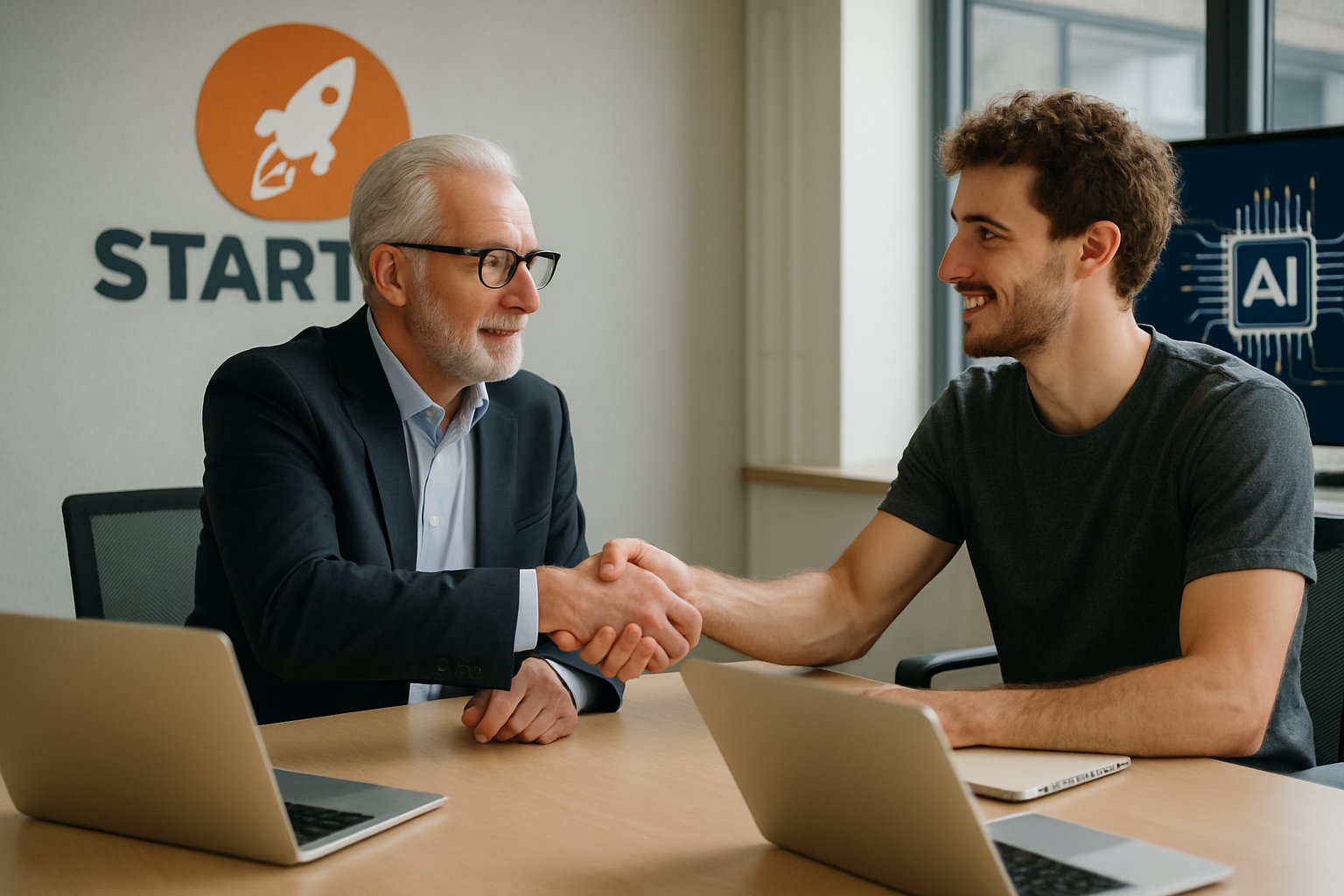
Hartman explained that typical checks remain near $500,000. However, he can deploy up to $1 million when signal is strong. Consequently, ownership targets hover between 5 and 10 percent. Such numbers align with lean portfolio management.
- Fund size: $25 million
- Check size: ~$500k initial, up to $1M follow-on
- Target stage: angel, pre-seed, seed
- Headquarters: New York City
These statistics outline Factorial’s current capacity. Consequently, readers see where the Startup Venture Fund sits within seed economics. With basics covered, we can assess the unique sourcing approach.
Distributed Partner Model Explained
Factorial’s structure departs from traditional venture firms. Instead, the fund enlists active operators as sourcing partners who remain embedded in product work. Consequently, proprietary deal flow surfaces earlier than demo days.
Each partner contributes technical diligence and mentors portfolio teams. Meanwhile, economics are aligned through a 20 percent carry split. Partners receive 10 percent of the upside on companies they originate, while the general partner retains the other half.
Iqram Magdon-Ismail noted, “Entrepreneurs love working with entrepreneurs, and Factorial enables that.” Furthermore, Hartman argues that genuine technical depth counters hype driven evaluations. Through this Startup Venture Fund, partners back ideas they personally understand.
This collaborative model promises rapid, informed decisions. However, governance complexity remains a consideration, leading us to wider market context.
Comparative AI Market Context
Global AI funding has surged across 2025. Nevertheless, most capital pools into late-stage mega vehicles exceeding $500 million. In contrast, Factorial’s $25 million strategy resembles a precision instrument.
Radical Ventures, Lightspeed, and Index all announced enormous AI sidecars this year. Moreover, corporate venture arms from cloud providers joined the race. Such abundance lifts headline numbers yet often overlooks pre-product teams.
The Startup Venture Fund therefore addresses a gap between angel syndicates and institutional Series A investors. Additionally, Factorial’s small size enables quick deployment without lengthy committees.
These market dynamics suggest complementary positioning. Consequently, understanding the mechanics behind those quick deployments becomes essential.
Investment Mechanics In Detail
Within the Startup Venture Fund framework, deal selection begins inside closed research channels where sourcing partners share technical notes. Subsequently, partners and Hartman grade durability, defensibility, and talent quality.
When consensus forms, the firm wires an initial seed check within two weeks. Furthermore, follow-on rights secure proportional ownership until Series A.
The fund reserves roughly 40 percent of committed capital for follow-ons. Therefore, $10 million remains available to double down on breakout performers.
Such discipline mirrors the proof-of-concept physics of Fund I. Through the same playbook, Modal and Pika attracted larger funding rounds led by global venture brands.
These mechanics illustrate deliberate capital pacing. However, they only matter if early founders actually benefit, a topic the next section addresses.
Opportunities For Early Founders
Technical founders often struggle to translate laboratory breakthroughs into investable narratives. Moreover, crowded demo days reward flashy traction over architecture quality. The Startup Venture Fund flips that incentive by valuing deep code insight first.
Because sourcing partners remain builders, they relate to debugging sessions, hiring needs, and road-map pivots. Consequently, portfolio companies gain access to informal standup reviews rather than generic board meetings.
Additionally, Factorial offers structured resources. Professionals can enhance their expertise with the AI Project Manager™ certification. Such upskilling prepares operators to manage multidisciplinary AI product teams.
Teams also welcome introductions to potential design partners. Furthermore, the firm organizes closed demo days where cloud providers and seed investors observe progress early.
- Slack channels for peer code reviews
- Weekly office hours with sourcing partners
- Preferred pricing on compute credits
These benefits shorten feedback loops and extend runway. Consequently, the Startup Venture Fund becomes more than capital, though risks still exist.
Risks And Open Questions
No strategy escapes trade-offs. Limited fund size restricts follow-on capacity beyond the seed stage. Therefore, larger venture outfits may eventually lead growth rounds for winning companies.
Moreover, sourcing partners juggle operating roles and investment duties. Governance frameworks must prevent conflicts when two portfolio startups compete. Factorial states that clear allocation policies mitigate overlap, yet public details remain sparse.
Critics also note that distributed decision making can slow consensus during busy product cycles. Nevertheless, Hartman insists that short investment memos keep momentum high.
These uncertainties invite continued scrutiny of the Startup Venture Fund model. However, measured execution could convert perceived weaknesses into competitive advantages, as concluding insights reveal.
Strategic Insights And Takeaways
Factorial Capital’s approach underscores a broader shift toward specialized micro funds. Consequently, technical diligence now rivals market sizing as an early predictor of success.
The Startup Venture Fund that just closed positions the firm as an influential scout for larger capital providers. Furthermore, previous wins like Modal demonstrate that accurate signal drives later funding velocity.
For entrepreneurs, alignment with practitioner investors offers unique coaching at the riskiest stage. Additionally, certifications such as the AI Project Manager™ help teams institutionalize project discipline quickly.
In summary, Factorial advances a model where community, code, and capital intersect. Therefore, observers should watch forthcoming seed rounds to judge scalability.
Prospective entrepreneurs should evaluate fit and prepare concise technical demos. Consequently, analysts may treat Factorial as a canonical Startup Venture Fund case study.
Disclaimer: Some content may be AI-generated or assisted and is provided ‘as is’ for informational purposes only, without warranties of accuracy or completeness, and does not imply endorsement or affiliation.


