

AI CERTS
3 months ago
Texas State AI Legislation Meets Federal Challenge
Consequently, lawyers, investors, and engineers are mapping possible outcomes before the law takes effect on January 1, 2026. Meanwhile, Texas officials vow to defend their statute, while the White House prepares new tools. The coming legal fight could reshape investment, compliance budgets, and public trust nationwide. Therefore, professionals need a clear briefing to navigate the emerging conflict. This article delivers that roadmap, integrating facts, timelines, and certification resources. Ultimately, the precedent will steer future State AI Legislation efforts coast to coast.
Texas AI Law Timeline
Texas Governor Greg Abbott signed HB 149 on June 22, 2025. The measure, formally named TRAIGA, becomes enforceable on January 1, 2026. Furthermore, the statute reaches any company selling or deploying AI that touches Texas residents. Penalties escalate from $10,000 for curable violations to $200,000 for uncurable acts. In addition, daily fines may reach $40,000 until compliance. Consequently, TRAIGA already influences product design conversations far beyond Austin.
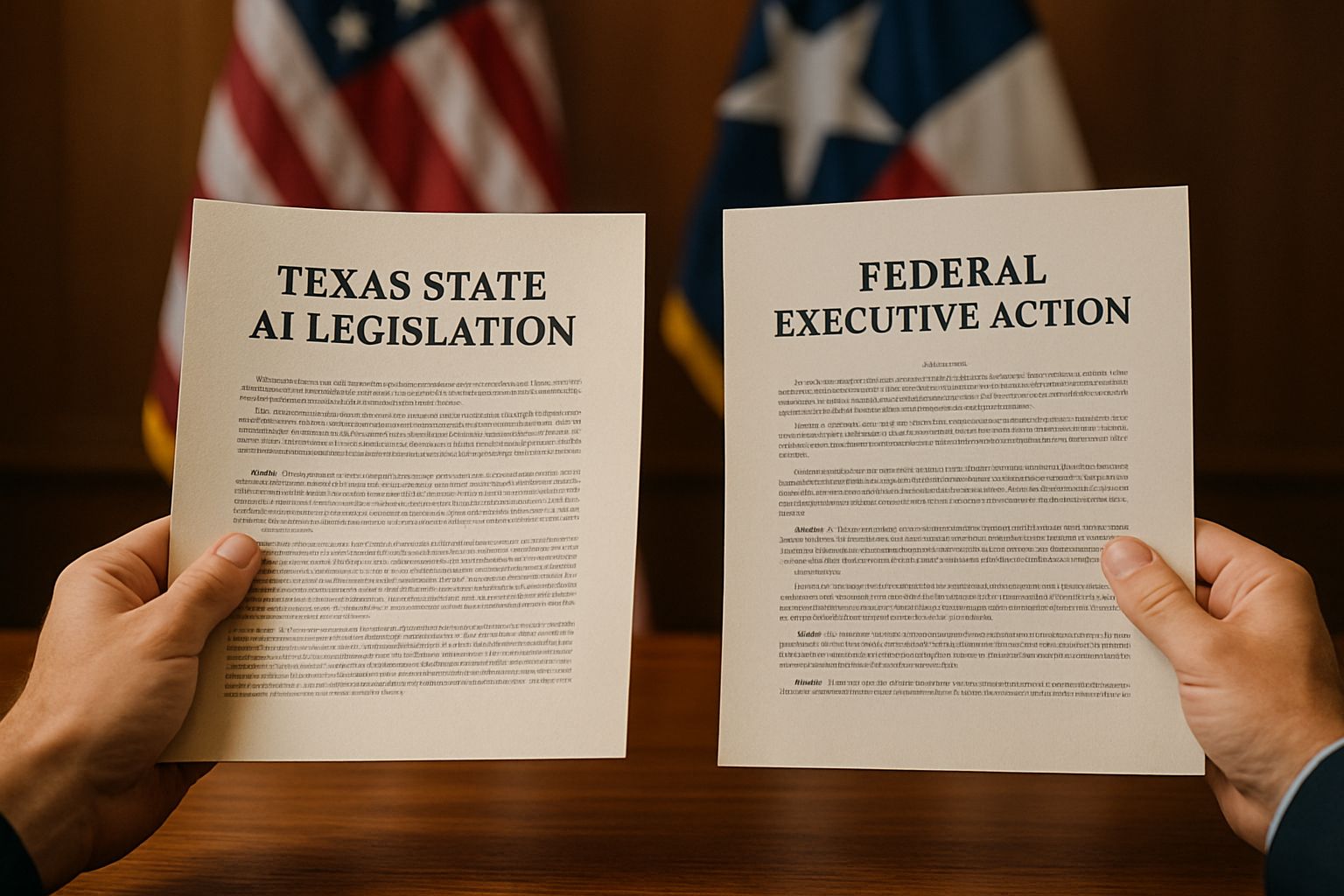
Developers must also avoid intentional discrimination, self-harm inducement, and unauthorized biometric identification. Moreover, government agencies face transparency duties when deploying machine learning models. A new Artificial Intelligence Council will oversee a regulatory sandbox for experimental systems. Those features make the Texas package one of the most detailed pieces of State AI Legislation to date.
Texas has built an expansive, penalty-backed framework. However, the Federal government now questions that authority.
Federal Response Overview Now
President Donald J. Trump signed an Executive Order on December 11, establishing a national AI policy framework. The directive orders the DOJ to create an AI Litigation Task Force within 30 days. Additionally, the Commerce Department must flag “onerous” state rules within 90 days and link funding eligibility to that list. Consequently, broadband grants like BEAD could become leverage against resistant states. Meanwhile, the FCC and FTC will study disclosure standards and potential preemption doctrines. Therefore, agency machinery is moving faster than typical legislative cycles.
The Executive roadmap signals assertive Federal involvement. Subsequently, a direct conflict with Texas law appears inevitable. At the heart lies a debate over State AI Legislation consistency.
Anticipated Legal Clash Ahead
Legal scholars predict lawsuits invoking the Supremacy Clause and the dormant Commerce Clause. In contrast, Texas leaders argue that an Executive Order cannot override duly enacted legislation. Ken Paxton, the state Attorney General, holds exclusive enforcement powers under TRAIGA. Consequently, his office will likely become a defendant and a plaintiff simultaneously. Courts must balance interstate commerce burdens against the historic police powers reserved to states. Therefore, precedent set during data privacy fights, such as CCPA cases, could guide rulings.
Core Legal Theories Used
DOJ briefs will probably spotlight preemption implied by sector-specific telecom laws. Moreover, litigators may allege that Texas imposes extraterritorial controls on interstate services. Nevertheless, Texas can cite health, safety, and anti-discrimination interests to justify its rules. Conflict rulings could rise quickly to appellate courts, due to the national importance.
Litigation paths are narrowing toward inevitable motion practice. This looming test will clarify whether State AI Legislation can coexist with national standards. Next, reactions from industry and advocacy groups may sharpen political pressure.
Stakeholder Reactions In Focus
Industry associations applauded the Executive push for uniformity, claiming compliance Money would drop sharply. Conversely, Public Citizen warned that a single weak rule could sacrifice consumer protections. Furthermore, bipartisan Texas legislators released statements rejecting any funding threats from Washington. Governor Abbott has not yet issued detailed guidance, yet aides promise a vigorous defense. Meanwhile, venture capitalists worry that prolonged uncertainty will freeze Money earmarked for Lone Star startups.
Civil rights advocates point to historic discrimination cases to illustrate why local guardrails matter. In contrast, some technologists prefer rapid experimentation and cite sandbox provisions as a compromise. Consequently, messaging wars on social media already frame the upcoming court battle as federal overreach or state obstruction. Advocates argue robust State AI Legislation reflects community values that broad rules may ignore.
Positions are hardening across political and commercial lines. The financial and strategic stakes merit closer review.
Economic And Policy Stakes
BEAD grants represent billions in broadband Money that Texas counties hope to secure. Should Commerce restrict access, rural deployment projects could stall or collapse. Moreover, multinational vendors may redirect research spending toward jurisdictions with clearer rules. Consequently, Texas faces both legal and economic pressure if funding lines tighten.
- Grant Delays: Federal reviews could slow Money flow for infrastructure upgrades.
- Compliance Overhauls: Companies might rewrite code bases to satisfy dual regimes.
- Litigation Costs: Ongoing Conflict drains budgets and distracts leadership teams.
Therefore, boardrooms seek scenario plans covering both outcomes. Some executives already reference similar privacy showdowns when estimating downside exposure.
Analysts at KPMG estimate compliance upgrades could cost major cloud providers $35 million during the first year alone. Moreover, smaller startups fear that simultaneous audits from Federal and state teams would exhaust limited capital. Consequently, some founders are delaying product launches until the Conflict clarifies legal risk.
Economic models reveal costly uncertainty during protracted litigation. Professionals now require practical guidance.
Roadmap For AI Professionals
Firstly, monitor DOJ and Commerce press rooms for Task Force and evaluation updates. Secondly, assess contract clauses for potential Federal funding contingencies. Additionally, update model documentation to show compliance with both regimes until courts decide. Professionals can enhance their expertise with the AI Engineer™ certification.
Furthermore, schedule internal audits against TRAIGA’s discrimination and transparency provisions. Meanwhile, prepare talking points for investors concerned about Money disruption. Subsequently, track state legislative sessions, because more State AI Legislation may appear. Finally, join industry coalitions to shape any emerging Federal standard.
Texas and Washington now steer toward a courtroom showdown that will test the balance of powers. Because dollars, innovation, and reputations hang in the balance, no participant can afford complacency. Nevertheless, disciplined preparation can reduce shocks regardless of outcome. Therefore, review statutes, adjust governance playbooks, and pursue recognized credentials immediately. Explore the linked certification, stay alert to Executive updates, and revisit budgets before January deadlines arrive. Continued coverage will explore how State AI Legislation evolves post-verdict.


