

AI CERTS
3 months ago
Geopolitical Chip Review: US Reassesses Nvidia H200 Exports
Meanwhile, inter-agency reviewers have only 30 days to advise Commerce on pending licenses. Analysts note that a single policy tweak could shift billions in quarterly revenue. Additionally, Beijing continues to push domestic alternatives while tracking every American statement. Investors, engineers, and diplomats therefore watch each filing, leak, and press release with equal intensity. These dynamics demand clear analysis and practical insight. This article delivers that clarity.
Policy Timeline Key Events
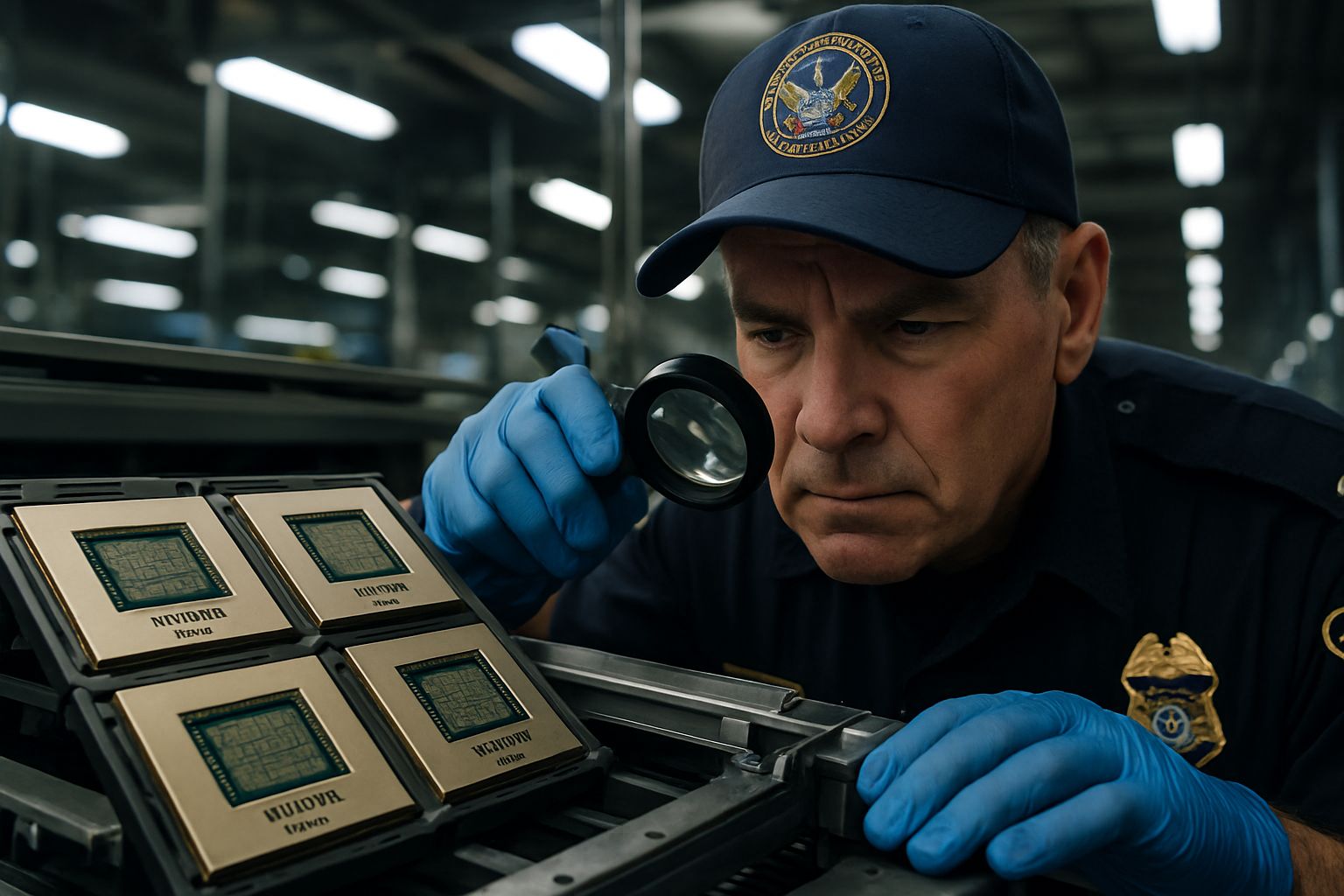
October 2022 marked the first sweeping U.S. Export controls on advanced GPUs. In contrast, 2023 and 2024 introduced tighter thresholds targeting memory bandwidth and interconnect speeds. Subsequently, Nvidia responded with the H20 design, calibrated to remain below regulated limits. However, April 2025 filings revealed that Commerce now required a license even for that downgraded part. The rules specifically targeted China to curb potential military uses.
- Dec 19 2025: Inter-agency review of H200 exports confirmed by Reuters.
- Dec 9 2025: White House signaled conditional sales with revenue sharing.
- April 2025: Commerce imposed licenses on H20, triggering major write-offs.
Reuters later disclosed a December 2025 inter-agency review of possible H200 shipments. Moreover, the White House signaled willingness to permit limited sales if companies shared revenue with Washington. Critics immediately warned that such fees might violate trade law.
These milestones illustrate policy volatility within the ongoing Geopolitical Chip Review. Consequently, the next section explores Nvidia's financial fallout.
Nvidia Financial Fallout Impact
Nvidia's April 2025 Form 8-K stunned investors with multibillion-dollar charges tied to lost Asia revenue. Furthermore, the company projected up to $5.5 billion in inventory and purchase-obligation write-offs. Later filings trimmed the figure to about $4.5 billion, yet the shock lingered.
Meanwhile, H20 sales of roughly $4.6 billion disappeared after the sudden license requirement. Consequently, management stopped including China in forward guidance, citing unpredictable policy shifts.
This Geopolitical Chip Review shows how financial pain can follow overnight regulatory action. Therefore, every exported accelerator now carries compliance, accounting, and reputational risk.
The numbers quantify corporate exposure. Next, we dissect the inter-agency review process shaping H200 decisions.
Inter-agency Review Process Dynamics
Commerce leads the license process, yet Defense, Energy, and State all provide classified assessments. Moreover, Washington allotted roughly 30 days for these agencies to file comments on H200 shipments. The deadline pressures staff to balance security intelligence with market realities.
In contrast, Nvidia lobbies hard for swift approvals, emphasizing Export compliance guarantees and tracking technology. Subsequently, Commerce may impose conditions such as end-user reporting, on-site audits, or shipment caps. Nevertheless, critics argue that any approval grants Beijing valuable time to accelerate indigenous chips.
This procedural deep dive enriches the Geopolitical Chip Review with insights beyond headline politics. The next section evaluates the strategic security debate.
Strategic Security Debate Points
National security voices worry that aggregated GPUs shorten model training cycles for military applications. Therefore, they see every licensed shipment as a potential force multiplier for China. CSIS analyst Gregory Allen notes that export controls buy time but cannot freeze technological diffusion.
Meanwhile, industry advocates highlight revenue that funds domestic research, keeping America ahead. Moreover, conditional approvals with monitoring are pitched as pragmatic middle ground by Washington insiders. Jensen Huang argues that inflexible bans simply push customers toward Huawei and other local chips.
This balanced presentation strengthens our Geopolitical Chip Review, giving readers both caution and opportunity. Next, we assess market and domestic responses.
Market And Domestic Response
Chinese procurement authorities have reportedly discouraged agencies from buying U.S. chips amid uncertainty. In parallel, startups like Biren and Cambricon accelerate designs to replace imported accelerators. Consequently, analysts predict a domestic supply inflection by 2027 if licensing remains restrictive.
Moreover, global cloud providers are re-routing capacity planning to hedge against additional Export shocks. Nvidia, AMD, and Intel also diversify backend manufacturing to avoid single-market dependencies. Professionals can enhance compliance insight with the AI Security Compliance™ certification.
These shifts reshape demand curves and competitive dynamics. Subsequently, legal questions around fees gain prominence.
Legal And Trade Questions
Trade lawyers debate whether revenue-sharing resembles an unconstitutional Export tax. Moreover, Congress has demanded formal opinions from the Justice Department on the proposal. In contrast, Commerce argues the fee model incentivizes disclosure while capturing economic rents.
Meanwhile, allies monitoring the Geopolitical Chip Review fear policy dilution could undermine coordinated controls. Consequently, they press Washington to maintain a united front.
Legal clarity will determine the durability of any licensing framework. Finally, we look ahead to pending decisions and industry preparation.
Outlook And Next Steps
Decision makers have until mid-January to rule on the current H200 license requests. Therefore, investors expect near-term volatility in semiconductor equities. Additionally, Beijing may announce reciprocal measures if approvals proceed.
Industry stakeholders should map supply scenarios, diversify sub-vendors, and budget compliance headroom. This Geopolitical Chip Review recommends active monitoring of Federal Register notices and Commerce briefings. Furthermore, companies can prepare internal impact models using price elasticity data from prior chip cycles.
These proactive steps foster resilience. Consequently, the conclusion distills core insights and offers a final action call.
Nvidia's licensing saga underscores how policy risk now rivals technical execution. Moreover, Washington continues balancing economic gains with strategic caution toward China. H200 approvals will signal whether conditional exports become the new normal. Consequently, suppliers must refine compliance programs and scenario models. Meanwhile, Beijing's response could accelerate indigenous chips or revive demand for parallel imports. This Geopolitical Chip Review equips executives to anticipate either outcome. Additionally, proactive certification of security frameworks will strengthen commercial arguments during licensing negotiations. Professionals should therefore consider the earlier linked AI Security Compliance credential. Stay engaged, monitor official releases, and apply these insights before the next policy wave hits.


