

AI CERTS
5 hours ago
United Rentals Advances Field Service AI
The web application now supports more than 4,000 monthly users, streamlining diagnostics and cutting wait times across 1,739 global depots.
Moreover, the deployment highlights a broader industrial shift toward practical, retrieval-based intelligence. Therefore, leaders in maintenance and fleet operations are watching closely.
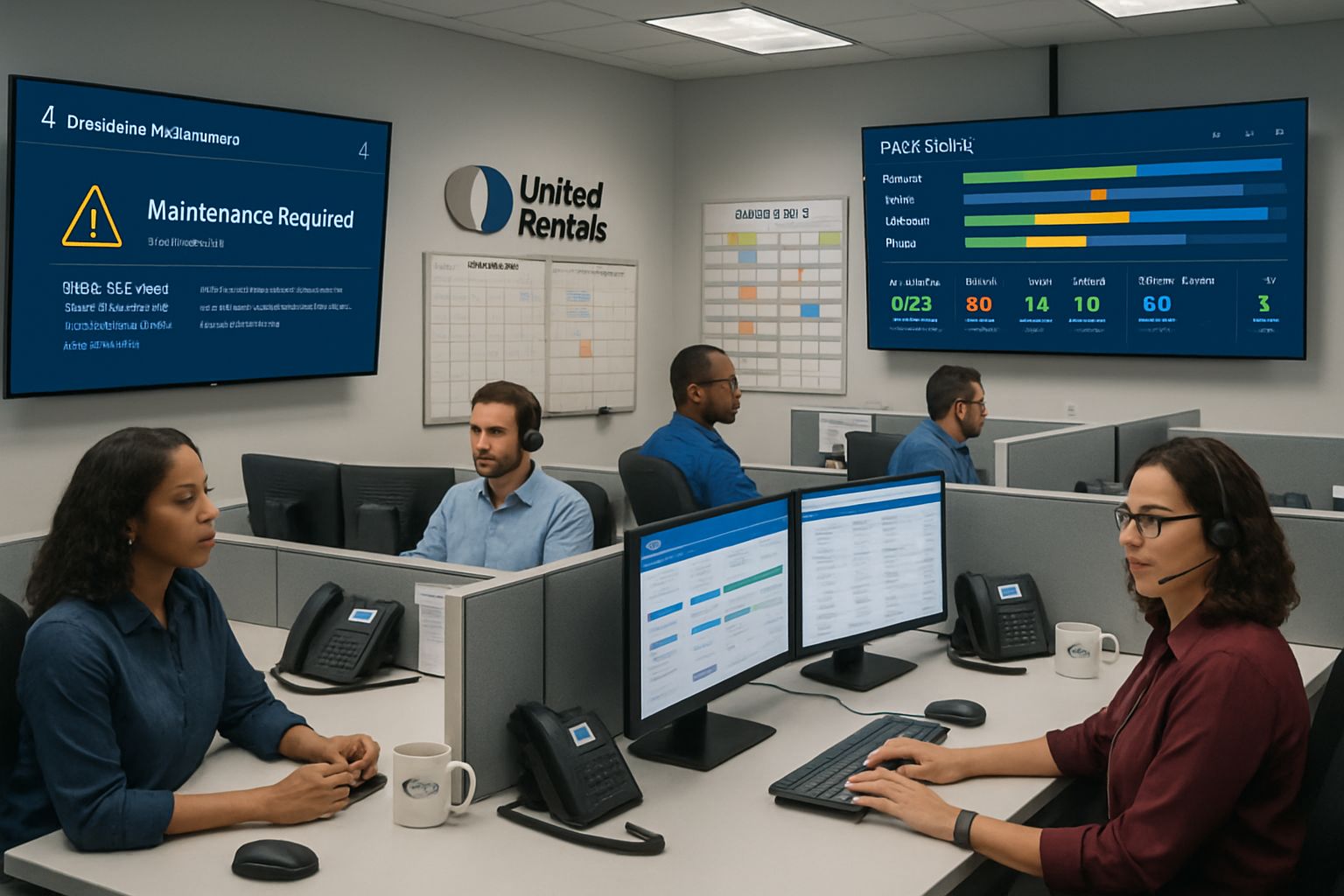
United Rentals’ AI Rollout
United Rentals reported that technicians can surface repair steps in seconds rather than minutes. Furthermore, the organization expects higher fleet utilization because machines return to rental-ready status sooner. “Manual Assist AI helps our service teams get equipment back into service faster,” said Tony Leopold, Chief Technology & Strategy Officer.
Independent outlets, including Equipment Finance News, corroborated the announcement on the same day. Consequently, analysts now cite the project as a milestone for Field Service AI adoption.
These statements underscore rising expectations. However, hard productivity percentages remain undisclosed, leaving room for follow-up reporting.
Technology Stack And Approach
The application combines Amazon Bedrock, Amazon OpenSearch, and a retrieval-augmented generation workflow. Bedrock hosts the generative model while OpenSearch indexes thousands of OEM manuals. Additionally, vector embeddings enable low-latency passage retrieval, delivering grounded summaries that reduce hallucination risk.
Meanwhile, guardrails inside Bedrock filter unsafe suggestions before delivery. Therefore, technicians receive concise, sourced guidance aligned with verified manuals. This architecture illustrates why many enterprises now view Bedrock as an accelerator for industrial Diagnostics.
The hybrid design also keeps sensitive service records within the customer’s AWS boundary, addressing compliance concerns.
Operational Gains And Metrics
United Rentals operates a fleet with an original cost of $22.82 billion. Consequently, every hour saved on repairs protects revenue. While exact KPIs remain private, early pilots indicated dramatic search-time reductions.
Key reported advantages include:
- Faster Diagnostics lookup across 10,000+ manuals
- Reduced downtime, boosting rental availability
- Improved technician confidence through cited passages
Moreover, fleet managers expect improved first-time-fix rates once more historical service data feeds the system. These anticipated benefits position Field Service AI as a direct profit lever. Nevertheless, observers still want quantified ROI.
Risks And Safety Mitigations
No industrial AI rollout is risk-free. In contrast, missteps can harm staff and equipment. United Rentals says Bedrock guardrails plus human approvals reduce exposure. Additionally, technicians see source pages, allowing quick verification.
However, liability questions persist. Who pays if an incorrect instruction causes damage? Gartner warns that unclear accountability erodes technician trust. Therefore, continuous audit logging and clear SOPs remain essential.
These cautions highlight governance gaps. Subsequently, organizations planning similar deployments must embed human-in-loop checks from day one.
Industry Context And Trends
Field teams across utilities, telecom, and manufacturing face identical pressures. Consequently, leaders search for scalable assistants that ground answers in vetted Manuals. McKinsey frames the movement as an “agentic” revolution that reallocates labor toward higher-value tasks.
Moreover, retrieval-based Field Service AI aligns with that thesis because it augments rather than replaces technicians. Competitors such as ServiceNow, IFS, and Salesforce Field Service are building comparable offerings.
United Rentals therefore gains an early-mover advantage. Nevertheless, sustained savings require continued model tuning and change-management support.
Skills And Certification Path
Enterprises now need product leaders who understand Bedrock APIs, OpenSearch tuning, and service-workflow design. Professionals can validate those competencies through the AI Product Manager™ certification. Additionally, engineers should deepen Diagnostics domain knowledge to guide prompt engineering.
Therefore, cross-functional upskilling becomes as critical as the technology itself. Moreover, certified leaders often accelerate adoption by bridging technical and operational teams.
These talent investments ensure Field Service AI projects deliver durable value. Subsequently, companies avoid stalled pilots and deliver measurable gains.
Key Takeaways And CTA
United Rentals’ Manual Assist AI demonstrates how grounded generative models can reshape heavy-equipment Service workflows. Moreover, the Bedrock-powered stack blends speed with governance, tackling long-standing Diagnostics pain points. Nevertheless, safety, liability, and ROI metrics demand ongoing scrutiny.
Consequently, organizations exploring Field Service AI should evaluate retrieval quality, guardrails, and user trust in parallel. Professionals eager to lead such rollouts can secure an edge with the linked AI Product Manager™ credential.
Adopt best practices, validate your skills, and drive the next wave of industrial AI innovation.


