

AI CERTS
19 hours ago
AI Writer Academy Launches to Transform Newsroom AI Adoption
Moreover, the launch aligns with OpenAI partnerships, grants, and accelerators already supporting over 100 publishers. Industry leaders hope the platform's on-demand courses, playbooks, and open-source resources will translate experimentation into sustainable practice. However, legal disputes over training data and hallucination risks still cloud adoption conversations. Additionally, ChatGPT's 800 million weekly users showcase the potential reach for licensed newsroom content. Therefore, strong governance guidance within the Academy may influence publisher negotiations and regulatory scrutiny.
Industry Context And Demand
Global news revenue has declined for a decade. Consequently, publishers now chase efficiency gains wherever possible. ChatGPT already sees 800 million weekly active users according to Sam Altman. Therefore, audience expectations for instant answers grow daily. In contrast, many legacy systems still lock vital archives behind brittle search interfaces.
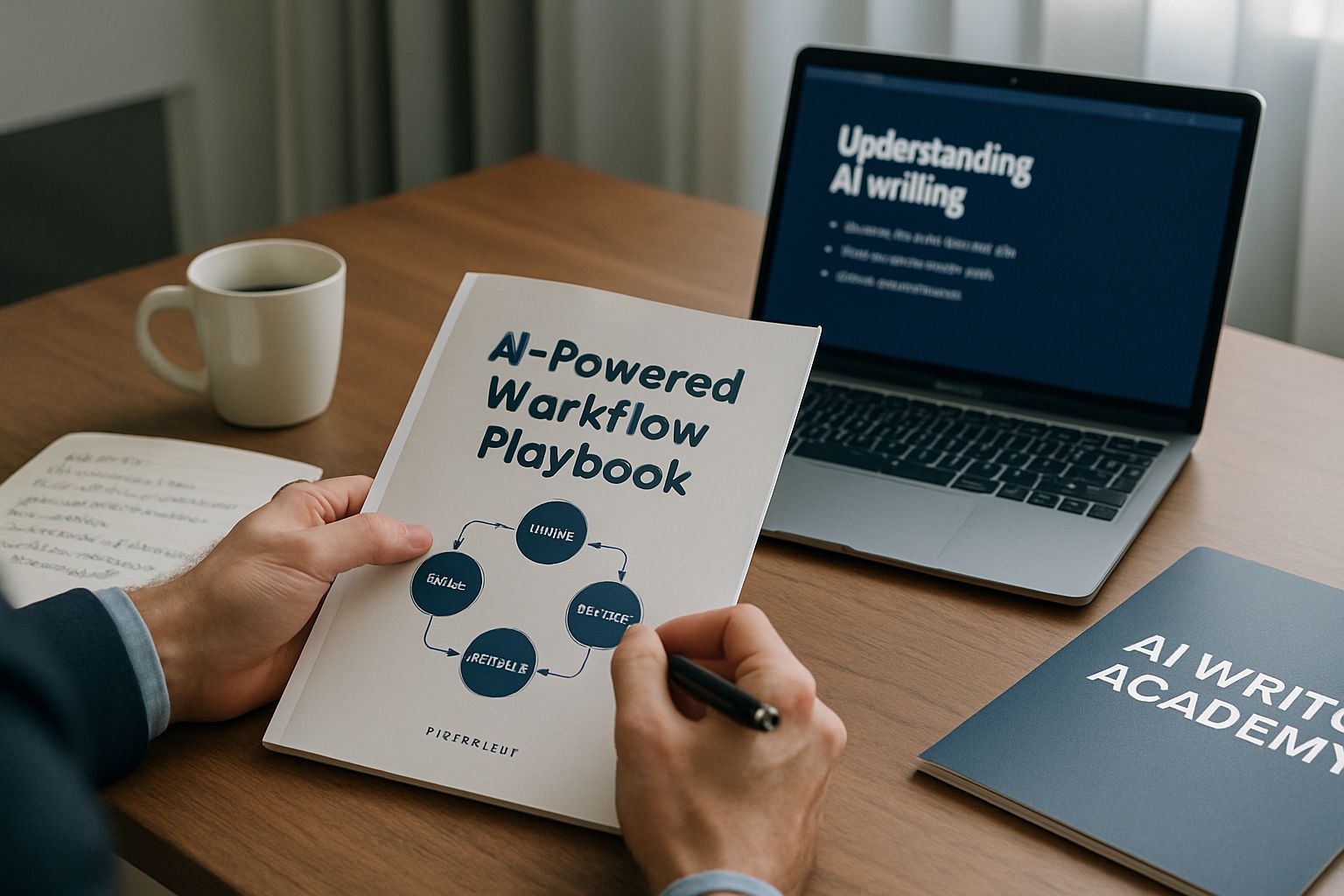
OpenAI designed the AI Writer Academy to bridge that capability gap. Furthermore, the platform complements programs like the WAN-IFRA Newsroom AI Catalyst that supported 128 outlets in 2024. Additionally, grants from the Lenfest Institute and American Journalism Project back experimentation among local teams. These aligned investments establish a supportive ecosystem for accelerated adoption.
Market pressures create urgency, while existing accelerators build capacity. Consequently, demand for structured AI education now peaks.
With context set, we next explore what the Academy delivers today.
Core Features At Launch
The launch version bundles several resources. Firstly, on-demand Training modules like “AI Essentials for Journalists” cover foundational concepts in under one hour. Secondly, detailed Playbooks outline step-by-step Workflows for investigative research, multilingual reporting, and data analysis. Moreover, open-source projects offer reusable code for rapid prototyping. Meanwhile, governance templates advise editors on attribution, fact-checking, and policy development. Within the AI Writer Academy portal, users find direct links to these resources.
The portal also links to recorded summit sessions featuring Brown Institute scholars and Hearst product leads. Additionally, case studies spotlight early pilots from Axios Local, Financial Times, and regional broadcasters. Nevertheless, OpenAI states that comprehensive metrics will follow after cohorts complete pilots.
The initial toolkit balances theory and practice for diverse newsroom roles. Consequently, teams can start experimenting immediately.
The following section highlights practical gains publishers should expect.
Practical Newsroom Benefits
Early adopters using the AI Writer Academy report tangible time savings. For example, automated translation transforms foreign dispatches within seconds, freeing reporters for context gathering. Moreover, transcription and summarization features compress multi-hour hearings into digestible notes. Consequently, staff reclaim hours previously lost to mechanical tasks.
- 20% faster background research on average, according to internal OpenAI pilot data
- Up to 40% cost reduction in transcription services for local outlets
- Instant multilingual publishing boosts reach across non-English audiences
Additionally, the Playbooks emphasize human-in-the-loop validation to preserve editorial standards. Therefore, editors remain accountable for accuracy while benefiting from AI acceleration. Professionals can enhance their expertise with the AI Writer™ certification, ensuring skills keep pace with evolving tools.
Efficiency gains release resources for deeper reporting and audience engagement. However, risks must be addressed proactively.
Therefore, we now examine the criticisms and open challenges.
Risks Critics Still Voice
Publisher lawsuits allege unlicensed training data usage that threatens business models. Additionally, unions fear job displacement and opaque accountability chains. Moreover, hallucinations can introduce false claims at scale, undermining public trust.
OpenAI responds with responsible-use guidance inside the AI Writer Academy and sample governance checklists. Nevertheless, critics argue vendor-led Training lacks independent oversight. In contrast, academic audits have not yet validated error-rate claims.
Legal, ethical, and labor concerns remain significant. Consequently, governance frameworks must evolve alongside technical capability.
Governance approaches are explored in the next section.
Governance And Responsible Use
Effective safeguards start with clear policies. Therefore, the Academy provides model documents covering sourcing transparency, human review, and attribution standards. Furthermore, guidance defines escalation paths when hallucinations arise during Workflows.
The materials recommend cross-functional oversight committees involving Journalists, product managers, and legal counsel. Additionally, they propose regular audits against accuracy benchmarks and bias indicators. Consequently, newsrooms can track performance and iterate policies. Governance templates inside the AI Writer Academy clarify accountability at each editorial checkpoint.
Structured governance mitigates risk without stalling innovation. Meanwhile, certification pathways reinforce shared best practices.
With safeguards defined, newsrooms need actionable implementation plans.
Implementation Roadmap For Newsrooms
Successful adoption begins with a discovery sprint. Firstly, map pain points against Academy Playbooks to identify quick wins. Secondly, launch pilots with measurable success criteria like time saved per Workflow step.
Subsequently, assemble a Training calendar that pairs on-demand modules with live peer sessions. Moreover, rotate Journalists through experiment cycles to distribute institutional knowledge. Consequently, cultural resistance diminishes as wins become visible.
Finally, connect pilots to business metrics such as subscription conversions or audience engagement. Additionally, share findings via industry bodies to refine community standards. Teams returning to the AI Writer Academy dashboards can track progress and compare benchmarks.
An iterative roadmap accelerates ROI and nurtures internal champions. Therefore, leadership can scale AI initiatives confidently.
Looking ahead, measurable impact and expanded content will define future success.
Future Outlook And Metrics
OpenAI pledges additional modules on fine-tuning and multimodal storytelling. Furthermore, it plans enterprise cohorts for large publisher groups. However, real validation will come from transparent case studies with quantifiable metrics.
Industry observers will track how the AI Writer Academy publishes those performance reports. Industry analysts expect adoption curves similar to CMS migrations, with lagging local outlets eventually catching up. Meanwhile, regulatory rulings on copyright could accelerate licensing negotiations, reshaping revenue splits.
The AI Writer Academy sits at the center of that evolving ecosystem. Consequently, its success depends on balancing publisher trust, technical innovation, and responsible governance.
Clear metrics will convert optimism into evidence. Subsequently, continuous iteration will keep the Academy relevant.
OpenAI’s new learning hub signals a pivotal moment for digital journalism. Additionally, the platform’s Training modules, Playbooks, and Workflows supply a structured entry point for busy newsrooms. Nevertheless, legal uncertainty and genuine editorial concerns demand robust governance and transparent metrics. Therefore, leaders should pilot targeted use cases, audit outcomes rigorously, and update policy frameworks continuously. Moreover, staff can validate emerging competencies through the AI Writer™ certification, demonstrating commitment to responsible innovation. In contrast, inaction risks competitive disadvantage as AI capabilities proliferate. Consequently, teams embracing the AI Writer Academy today position themselves at the forefront of data-driven storytelling. Take the first step today by reviewing Academy resources and charting your own AI roadmap.


