

AI CERTS
3 months ago
Policy Moratorium Debate Intensifies
Industry giants, meanwhile, argue rapid buildout supports jobs and competitiveness. These opposing narratives set the stage for a decisive federal debate. Therefore, this article unpacks the numbers, politics, and market stakes behind the proposed pause. Technical readers will also gain insight into emerging mitigation strategies and certification options. Throughout, we examine how such a Policy Moratorium could reshape infrastructure planning and regulation. Finally, each section connects the dots using verified data and concise analysis.
Sanders Proposal Context Overview
Sanders framed the construction surge as benefiting only, in his words, "the one percent." However, he insisted the Policy Moratorium would simply pause, not cancel, long-term innovation. The senator described the action as giving democracy "time to catch up" with corporate engineering. Additionally, his stance aligns with an open letter signed by 230 environmental organizations earlier December. That coalition includes Greenpeace, Friends of the Earth, and Food & Water Watch.
Their message echoes Sanders: grid strain and rising utility bills fall on everyday households. In contrast, technology leadership argues that large-scale computing drives national security and medical breakthroughs. Understanding this framing helps explain why the debate escalated so rapidly. These arguments reveal a widening gap between climate advocates and growth champions. Subsequently, quantifying the environmental footprint clarifies what is truly at stake.
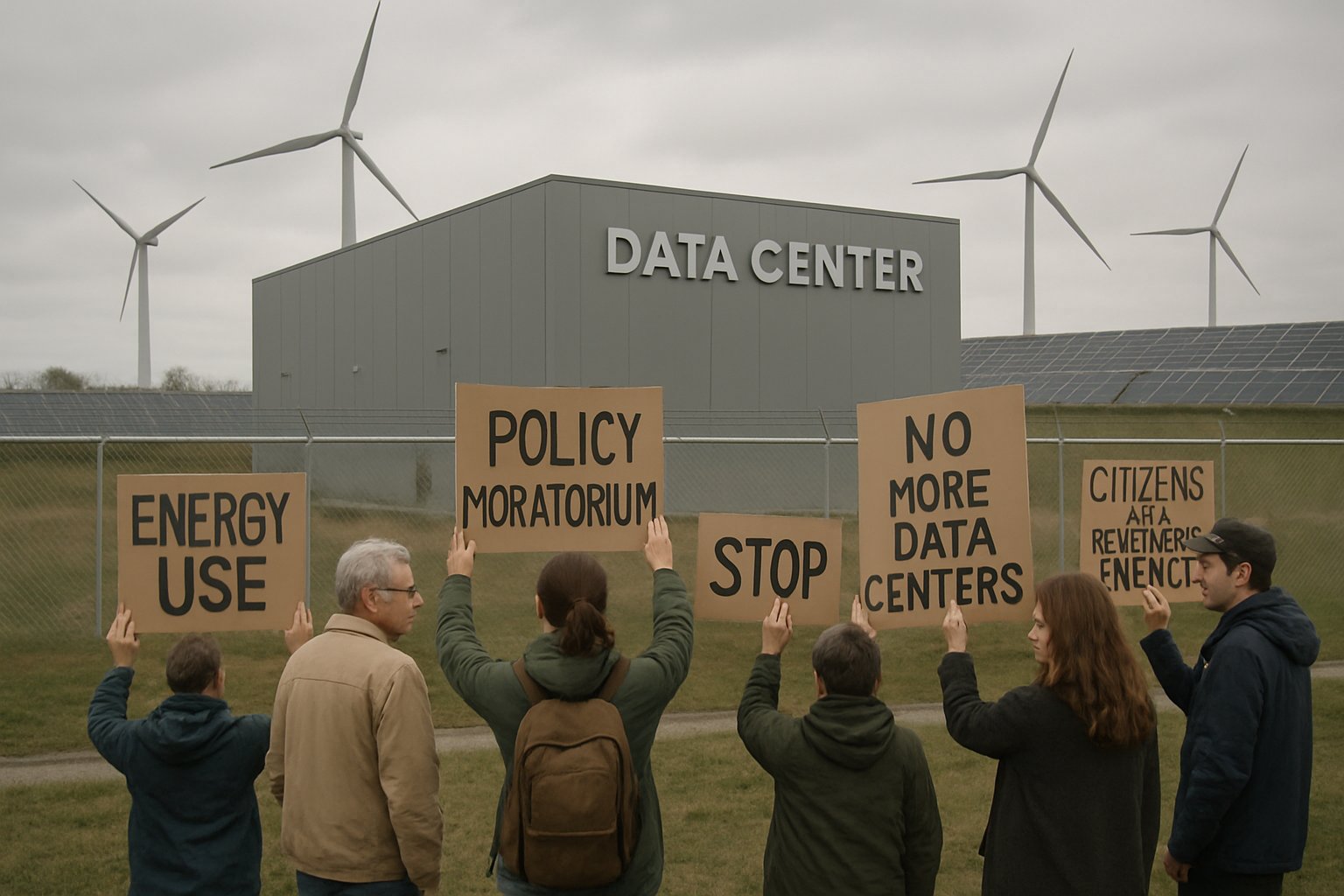
Key Environmental Footprint Metrics
Lawrence Berkeley National Lab estimates data centers consumed 4.4% of U.S. electricity during 2023. Moreover, their scenarios project 6.7% to 12% by 2028 depending on AI adoption. VisualCapitalist charts suggest consumption could hit 606 TWh by 2030, nearly triple today’s load. Consequently, BloombergNEF warns utilities face unprecedented capacity requirements and costly transmission upgrades. Water usage compounds pressure, with 66 billion liters drawn nationwide in 2023 alone. Meanwhile, water-stressed regions like Arizona and Utah fear evaporative cooling will deepen scarcity.
Backers of the Policy Moratorium cite these statistics when challenging new construction permits. The broader Environment therefore endures compounding stress. Nevertheless, companies tout renewable power purchase agreements and liquid-cooling efficiency gains. These technical claims deserve scrutiny before broader Policy decisions crystallize. Therefore, attention now turns to Capitol Hill investigations.
Political Momentum And Regulation
Senators Elizabeth Warren, Chris Van Hollen, and Richard Blumenthal opened formal probes on December 17. Additionally, their letters require Google, Amazon, Meta, Microsoft, and operators to disclose utility contract details. In contrast, the White House remains focused on growth targets set during the AI Executive Order. Consequently, an intra-party clash over energy, equity, and Policy optics has emerged. Sanders amplifies that tension by threatening legislative riders to enforce his Policy Moratorium.
Meanwhile, local councils from Virginia to Georgia have already delayed at least $64 billion of projects. Those municipal votes supply political cover for federal skeptics. Nevertheless, industry lobbyists emphasize data-center construction yields union wages and rural tax revenue. The next hearings will test whether public concern outweighs economic allure. Subsequently, industry arguments against a national pause demand closer examination.
Industry Arguments Against Pause
Executives contend a blanket pause would cede innovation leadership to China and the EU. Moreover, they note many projects bundle onsite solar, battery storage, and advanced heat reuse loops. Some providers sign twenty-year renewable PPAs covering more megawatt-hours than their operational demand. However, critics respond that contract opacity makes verification difficult. BloombergNEF analysts add that even aggressive clean energy offsets cannot erase transmission congestion.
Consequently, utilities often socialize upgrade costs across entire customer bases. Industry stresses alternative Regulation instruments, such as specialized tariffs, instead of a Policy Moratorium. In contrast, opponents believe those tools arrive too late for fast-moving hyperscale builds. Professionals can upskill through the AI Policy Maker™ certification. These counterpoints sharpen the stakes yet still leave market impacts uncertain. Therefore, examining possible consequences becomes essential.
Potential Market Consequence Outlook
If enacted, the Policy Moratorium could delay billions in hyperscale capital expenditure through 2027. Consequently, utility revenue forecasts, semiconductor orders, and construction employment would shift downward. BloombergNEF modeling suggests deferrals above 20 GW could surface within two fiscal years. Meanwhile, states with surplus renewable generation might court projects fleeing constrained grids. Investors would likely reprice data-center REITs as growth expectations soften. Moreover, equipment suppliers from cooling pump manufacturers to high-density rack vendors face sales shocks.
However, grid planners could gain breathing room to secure transmission corridors and storage assets. These dynamics show the economy-wide ripple effects of a construction Pause. In contrast, some analysts argue demand elasticity ensures deferred workloads simply migrate offshore, shrinking domestic tax collections. Subsequently, policymakers must weigh environmental relief against competitiveness risks. Market projections highlight both danger and opportunity. Next, we explore specific regulatory pathways that could balance those forces.
Possible Regulatory Paths Forward
Lawmakers possess several levers short of a sweeping Policy Moratorium. Firstly, targeted siting rules can steer facilities toward regions with idle clean power capacity. Secondly, federal disclosure mandates could expose who pays for each upgrade. Thirdly, dynamic tariffs might shift loads to off-peak hours, reducing peak congestion. Additional tools under consideration include:
- Expedited liquid cooling grants
- Onsite small modular reactors
- Mandatory water-use reporting
- Community benefit agreements
Moreover, the Department of Energy could coordinate regional grid capacity forecasting. Nevertheless, effective Regulation demands transparent data from operators, utilities, and municipalities. Therefore, an approach blending incentives, standards, and accountable reporting may satisfy competing camps. These measures illustrate how compromise might avert an indefinite Pause while safeguarding the Environment. Consequently, attention will soon shift to negotiation timelines. Stakeholders now possess a tentative policy toolkit. However, the final shape depends on upcoming congressional hearings.
Conclusion
Bernie Sanders’ call for a Policy Moratorium transformed a technical planning matter into a headline political fight. Environmental data show legitimate grid, water, and climate risks if AI facilities keep expanding unchecked. Moreover, mounting municipal pushback signals authentic public anxiety over rising utility bills. Conversely, industry leaders warn that an outright Pause threatens economic growth and global standing. Therefore, measured Regulation tools, transparent costs, and strategic siting may forge a viable compromise. Protecting the Environment while enabling innovation remains the central challenge.
Professionals seeking deeper expertise should consider the linked AI Policy Maker certification for structured guidance. Ultimately, Congress must decide whether the moment demands a temporary Policy Moratorium or refined, enforceable guardrails. Stakeholders should track hearings, submit evidence, and remain ready to adapt. Further updates will follow as proposals evolve.


