

AI CERTS
4 months ago
Hut 8, Anthropic Forge Gigawatt Infrastructure Partnership for AI
Analysts view the move as a direct response to 7.4 GW of Q3 leasing. Meanwhile, builders must synchronize land, power, Compute and capital faster than ever. This article unpacks the agreement, technical strategy, risks, and workforce opportunities. Readers will gain actionable insight into what the collaboration signals for the broader AI stack.
Surging Market Demand Trends
TD Cowen recorded 7.4 GW of U.S. hyperscale leasing in Q3 2025. Moreover, the active pipeline now exceeds 10 GW, dwarfing previous annual totals. In contrast, legacy colocation contracts rarely topped 50 MW per tenant.
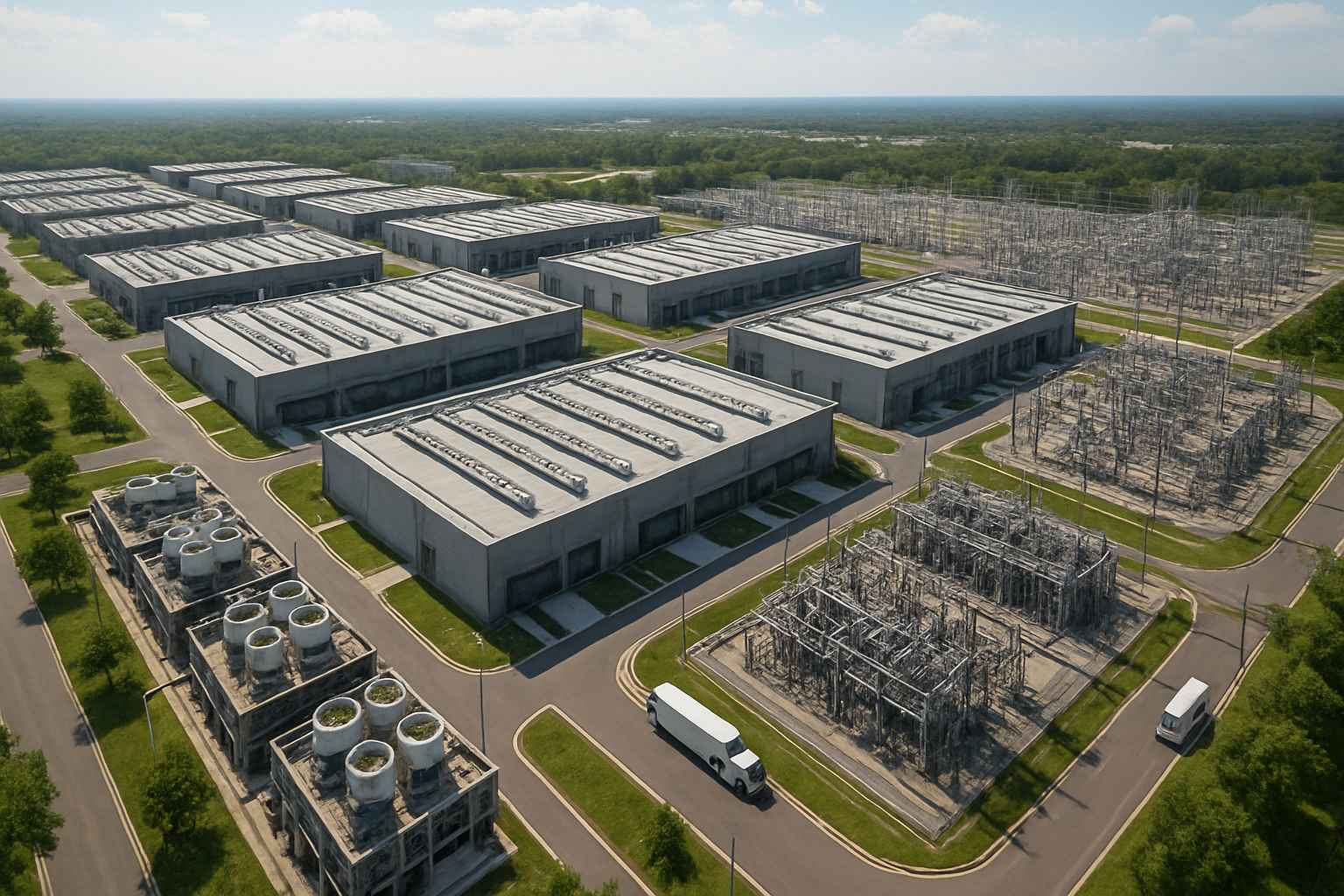
Such explosive appetite explains why the Infrastructure Partnership appears timed for speed. Hut 8 publicly tracks 1,020 MW of energy already managed and another 1,560 MW advancing. Consequently, the company can funnel power toward Anthropic workloads without lengthy site searches.
Gigawatt scale procurement also reduces per-unit cost for transformers, cooling, and networking. Therefore, large labs gain economic leverage over cloud intermediaries.
Overall, the Infrastructure Partnership signals how capacity shopping has become power shopping. Yet understanding the tranches clarifies execution mechanics.
Multi-Tranche Deal Summary Key
River Bend anchors Tranche 1 with 245 MW dedicated IT load. Additionally, 330 MW of utility capacity underpins that initial slice. Tranche 2 grants Anthropic a Right of First Offer for another 1,000 MW on the same campus.
Subsequently, Tranche 3 opens optional development across the Hut 8 pipeline, totaling 1,050 MW. Taken together, the Infrastructure Partnership capacity could range from 245 MW to 2,295 MW. Therefore, the Infrastructure Partnership embeds expansion flexibility without new negotiations.
Fluidstack will deliver cluster architecture while Hut 8 secures transmission and substation upgrades. Meanwhile, Anthropic locks predictable unit economics over multiple execution phases. The multi-tranche map de-risks scheduling by staging power, land, and Compute concurrently.
Next, we explore the technology and power choices that make the model viable.
Technology And Power Alignment
Frontier models crave dense GPU clusters, low-latency fabrics, and reliable megawatts. Consequently, Fluidstack’s design integrates immersion cooling, 800 G links, and AI-tuned orchestration. Hut 8 emphasizes a power-first approach, citing greenfield substations that shorten energization timelines.
Moreover, the partners target PUE under 1.2, boosting available Compute per watt. Gigawatt scale engineering requires early transformer commitments and long-lead turbines for backup generation. Therefore, locking supply chains now protects 2027 delivery milestones.
This technical stack underpins the Infrastructure Partnership promise of rapid ramp and efficient operation. However, social dividends also matter, as the following section shows.
Economic And Social Impact
Anthropic and Fluidstack project roughly 2,400 construction jobs across U.S. sites. Furthermore, they expect 800 permanent roles averaging $144,000 in salary. Louisiana leaders anticipate new tax revenue around the River Bend Data Center build.
Local colleges already discuss training pipelines for electrical, HVAC, and networking technicians. Consequently, the Infrastructure Partnership could anchor a resilient industrial cluster beyond the campus fence. Community stakeholders still await detailed emissions and power-mix disclosures.
Economic upside appears significant for labor and municipal balance sheets. Nevertheless, unanswered questions feed risk narratives covered next.
Risks And Open Questions
Delivering thousands of megawatts is never trivial. In contrast, utility interconnections can drag for half a decade. EIA data show queue backlogs, especially where Gigawatt projects cluster.
Additionally, critics warn that massive AI Compute loads could strain regional grids and raise rates. Hut 8 has yet to disclose renewable procurement strategy or carbon intensity targets. Moreover, financial analysts fear an overbuild if model revenue growth slows.
Addressing these issues early will secure trust in the Infrastructure Partnership. The next section explores skills professionals need to participate.
Skills And Certification Path
Developing multi-Gigawatt campuses demands specialized talent across power, networking, and controls. Professionals can boost skills via the AI Data Robotics™ certification. Furthermore, project managers must grasp Right of First Offer mechanics and complex lease structures.
- Grid integration planning
- PUE optimization and thermal design
- Long-lead equipment procurement
- Community engagement strategies
Mastering those domains positions applicants for Infrastructure Partnership roles across the pipeline. Consequently, strategic learning now feeds future career mobility.
These capability gaps reveal why foresight matters. Finally, we assess the broader outlook.
Strategic Outlook Moving Ahead
Industry observers expect hyperscale leasing to keep climbing through 2027. Moreover, U.S. industrial policy encourages domestic Data Center builds to secure supply chains. The developer aims to replicate its power-first template at additional sites.
Anthropic continues diversifying suppliers while retaining Compute sovereignty. Therefore, the Infrastructure Partnership should influence procurement models for other labs.
Sustained execution could prove that aligned capital, land, and energy unlock frontier breakthroughs. Nevertheless, stakeholders must monitor grid impact and demand realism.
Conclusion
Hut 8, Anthropic, and Fluidstack have mapped a bold execution course. Moreover, staged tranches align capital deployment with measurable demand signals. Technical choices emphasize power density, efficient cooling, and accelerated workload delivery. Economic forecasts point to significant job creation and regional diversification. However, grid congestion, emissions transparency, and financing discipline remain critical checkpoints. Professionals who master power economics and cluster operations will shape these campuses. Consequently, now is the right moment to upskill through vetted programs and certifications. Explore the AI Data Robotics™ certification and prepare to lead the next data wave.


