

AI CERTS
4 months ago
Google CC and Productivity Adoption: AI Agent Shifts Email Habits
Therefore, many analysts see the launch as a watershed moment for Productivity Adoption. However, privacy advocates already weigh benefits against fresh data retention risks. This article unpacks the technology, safety safeguards, competitive stakes, and enterprise ripples surrounding CC.
Google's AI Agent Launch
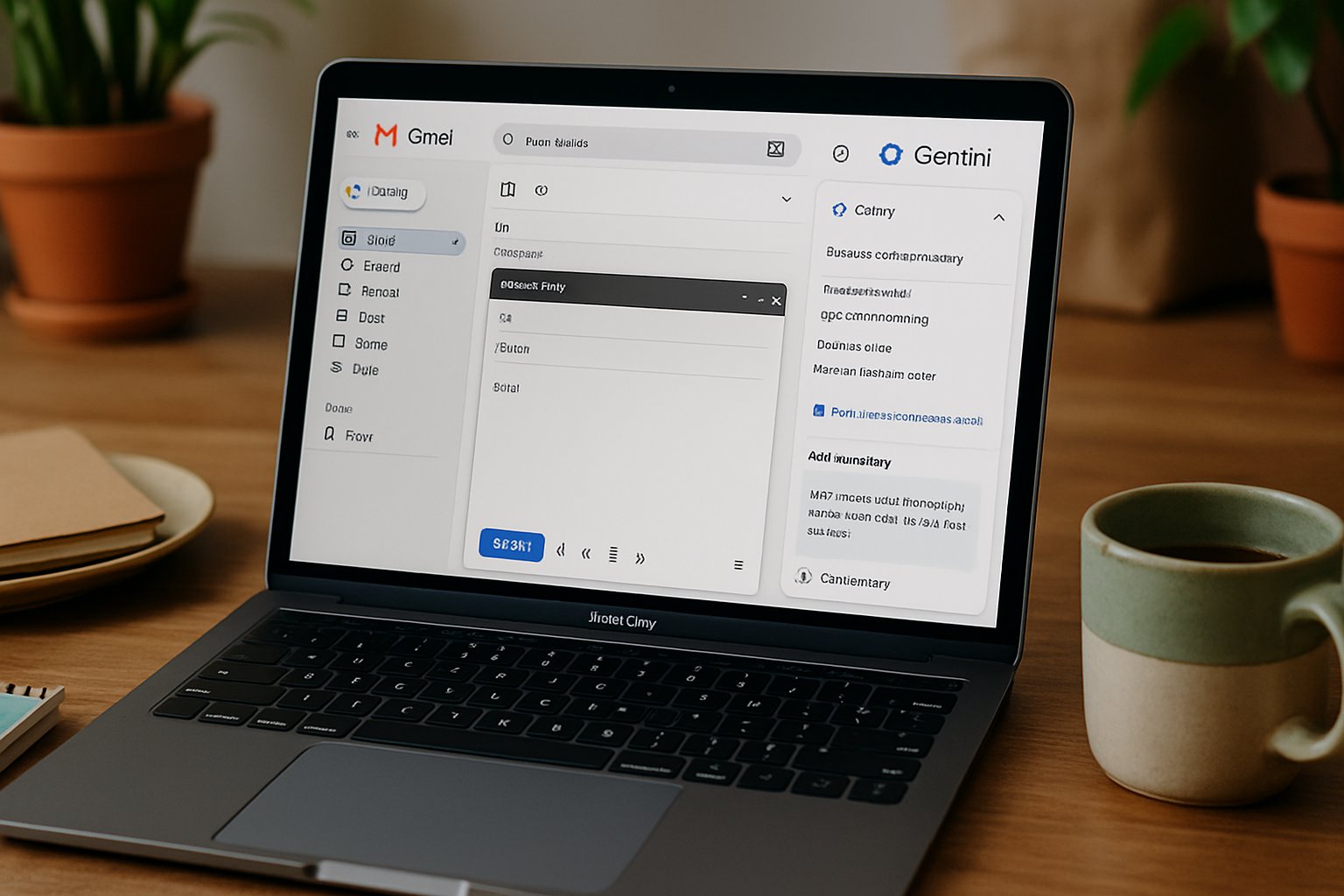
CC debuted on December 16, 2025 after a low-key Google Labs post. Meanwhile, a waitlist opened for consumer accounts aged eighteen or older in the U.S. and Canada. Google prioritizes access for AI Ultra and other paid tiers, signaling revenue ambitions. In contrast, free users must queue behind subscribers. The agent sends a morning email summarizing deadlines, bills, travel bookings, and meeting invites.
- Announcement date: 16 Dec 2025
- Regions: United States and Canada
- Eligibility: 18+ consumer Google accounts
- Priority: AI Ultra subscribers
Additionally, action buttons link straight to Calendar events or draft replies inside Gmail. Users can reply to CC or address their username plus "cc" to refine preferences. Consequently, early testers describe the workflow as frictionless because it rides the existing Inbox. Google stresses that CC remains separate from Workspace and core AI apps, underscoring experimental status. These launch details frame CC as an early test of widespread Productivity Adoption. CC arrives quietly yet purposefully, harnessing familiar channels to accelerate habits. Next, we examine the Gemini backbone that makes those habits possible.
Gemini Models Power CC
Under the hood, CC relies on Google's Gemini 3 series, optimized for agentic reasoning. Furthermore, the models handle multimodal signals, parsing text, attachments, and linked Drive documents. They orchestrate multi-step chains that pull context, plan tasks, and generate concise prose. Google's developer pages describe dedicated "thinking" variants designed for autonomous flows. Consequently, CC can draft email replies that reflect conversational tone and situational urgency. In contrast with earlier assistants, the agent suggests next actions rather than waiting for a prompt. Moreover, Google claims user data stays partitioned and is not reused to train core models.
Those assurances mirror privacy tenets introduced during recent API launches. Technical observers believe the project serves as a live sandbox for future Workspace agents. Gemini therefore underpins both capability and strategic learning for Google. Gemini's flexible architecture lets CC reason across apps with minimal latency. However, capabilities mean little without tangible benefits, which the next section explores.
Inbox Workflow Benefits Explained
Email remains the planet's busiest business tool, reaching roughly 2.5 billion Gmail active accounts. Therefore, embedding an agent inside that Inbox meets users where they already start their day. CC reduces context switching by collating tasks that previously demanded separate tab hops. Moreover, draft buttons encourage immediate follow-through, shrinking the procrastination window.
- Reduced email triage time
- Lower cognitive load
- Immediate action shortcuts
- No new app required
Analysts predict measurable time savings for knowledge workers juggling overlapping meetings. Early testers recorded notable productivity gains within the first week. Additionally, the daily briefing alleviates cognitive load by converting unstructured mail into an ordered checklist. Professionals can deepen skills through the AI Marketing Professional™ certification. Consequently, CC may accelerate Productivity Adoption among users craving simpler mornings. Such momentum could normalise Productivity Adoption across broader demographics. Time savings and reduced friction drive enthusiasm around early tests. Nevertheless, potential risks deserve equal scrutiny in the upcoming privacy section.
Privacy And Safety Controls
Granting an agent access to private archives invites scrutiny. However, Google labels CC strictly opt-in and detachable at any moment through Settings. The Labs FAQ clarifies that disconnecting fully purges the agent's memory. In contrast, deleting emails alone leaves residual snapshots inside CC until removal. Furthermore, Google states personal data never trains foundational models. Security researchers nevertheless warn about prompt injection and phishing amplification. Consequently, organizations may require explicit policies before pilot deployments. Users must balance convenience with persistent exposure of Inbox metadata. Transparent dashboards and third-party audits could strengthen trust and Productivity Adoption. Robust controls soothe many fears, yet gaps persist. Next, we contrast CC with rival agents to gauge its competitive footing.
Competitive Agent Market Landscape
Google is not alone in chasing proactive email assistants. OpenAI launched ChatGPT Pulse in September with similar morning briefings. Meanwhile, Microsoft pilots Copilot features that summarise Outlook threads automatically. Anthropic and several startups target Gmail directly with plug-ins and browser overlays. Pulse similarly touts rapid productivity improvements for overwhelmed teams. Consequently, CC must differentiate through model scale, ecosystem breadth, and trusted brand equity. Analysts note that Google's two-billion-plus user base expedites potential Productivity Adoption.
However, gating early access behind premium subscriptions risks ceding momentum to free alternatives. In contrast, CC's email delivery format reduces onboarding friction when compared with standalone apps. Competition fosters rapid iteration and sharper privacy commitments. Subsequently, enterprise buyers will watch these battles when planning internal rollouts.
Enterprise Implications Ahead Now
Large organisations rarely enable experimental tools without compliance guarantees. However, CC foreshadows agentic workflows that could embed within Google Workspace proper. Google's large-language infrastructure already powers Workspace Flows, making future integrations technically straightforward. Therefore, IT leaders must evaluate data residency, audit logging, and role-based controls early. Some firms may pilot CC with dummy accounts to model behaviour before wider Productivity Adoption. Additionally, priority access for paid tiers signals a potential upsell path for Enterprise licenses. In contrast, rivals pitch flat pricing to entice budget-conscious departments. Legal teams will scrutinise prompt histories to ensure no sensitive contract language leaks via drafts. Enterprise adoption hinges on clear governance and ROI evidence. The final section explores how Google can sustain momentum and broaden Productivity Adoption further.
Driving Productivity Adoption Forward
Sustained user engagement will decide CC's fate beyond Labs. Consequently, Google must iterate quickly on briefing accuracy and contextual nuance. Feedback loops, thumbs-up metrics, and A/B experiments will refine prioritisation logic. Moreover, integrating voice delivery or mobile push alerts could extend reach. Google could also expose APIs, letting partners embed CC brainpower into specialised Enterprise dashboards. Additionally, publishing red-team findings would reassure sceptics and accelerate Productivity Adoption.
Marketing efforts should highlight certification paths that empower teams to harness agentic AI responsibly. Professionals who upskill early may capture efficiency gains and career leverage. Continuous improvement, transparency, and education underpin sustainable uptake. Consequently, the coming months will reveal whether CC becomes a staple or another sunsetted experiment.
Google's CC signals a pivotal shift toward proactive workplace agents. Meanwhile, language models provide the technical foundation, while familiar Gmail delivery lowers the learning curve. However, privacy and monetisation choices will shape long-term perception. In contrast, rivals like Pulse and Copilot guarantee an accelerated feature race. Therefore, enterprises should monitor trials, update policies, and prepare staff for responsible interaction. Professionals seeking advantage can deepen expertise through the linked certification and spearhead efficiency programs. Ultimately, clear safeguards and measurable value will determine whether CC transforms daily routines or fades into history.


