

AI CERTS
4 hours ago
Regulatory Conflict Over AI Preemption Intensifies
Commerce must also release a comprehensive review of state statutes within 90 days. Meanwhile, the FTC and FCC will craft positions that could override local mandates. Many observers frame this clash as a Regulatory Conflict testing federalism boundaries. Moreover, the order exempts child safety and procurement domains, signalling a selective approach. Critics warn the strategy undermines local protections and invites lengthy court battles. Supporters argue uniformity will accelerate innovation and global competitiveness. These opening moves set the stage for an intense policy struggle.
Federal Preemption Drive Forward
The executive order relies on classic federal levers to neutralize divergent statutes. Specifically, it instructs DOJ lawyers to sue states whose rules allegedly violate interstate commerce principles. Additionally, federal grants like the $42.5 billion BEAD program may gain new strings, pressuring legislatures to reconsider aggressive requirements. Such tactics mirror historical precedents in highway safety and education funding.
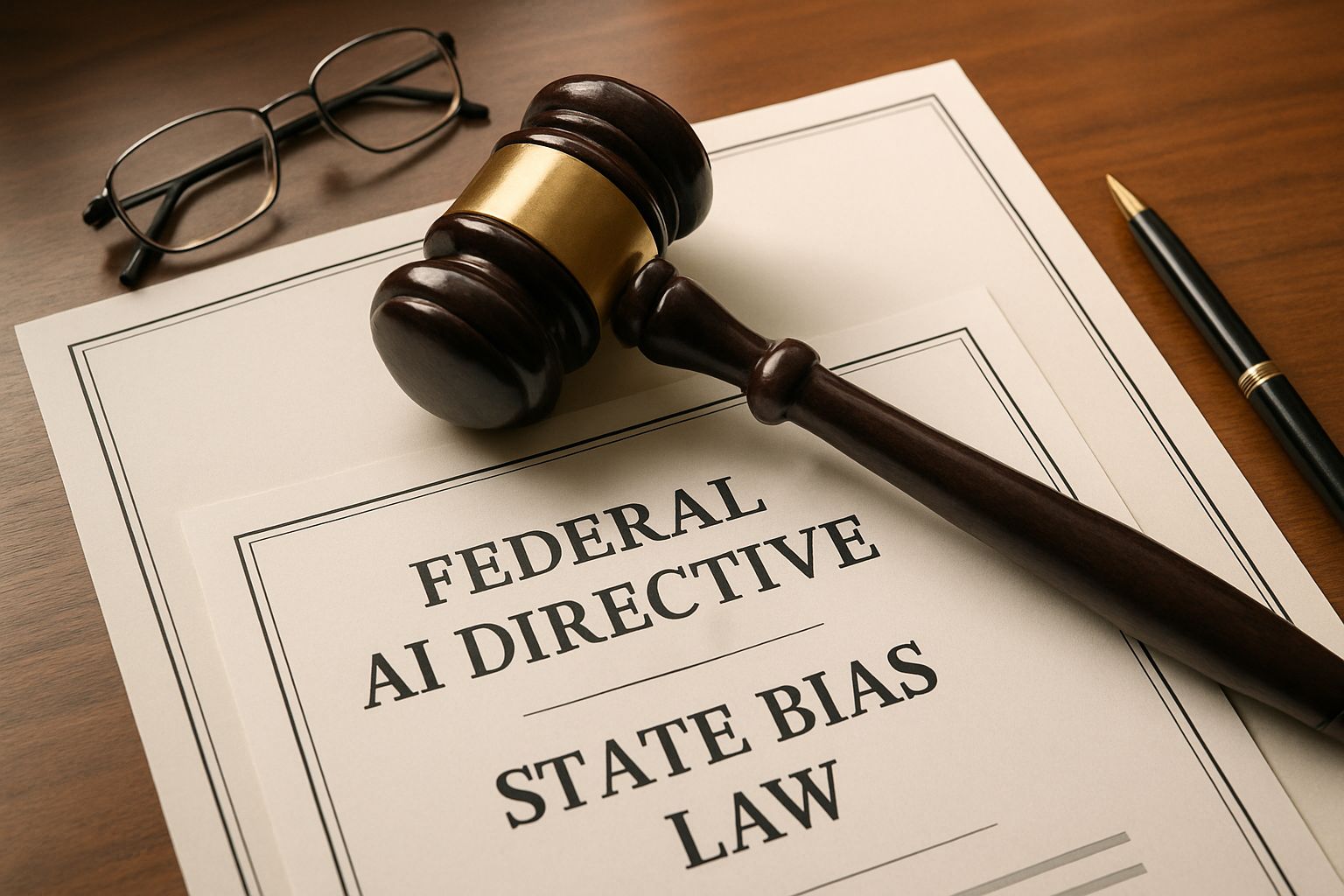
However, constitutional scholars warn that an executive directive cannot single-handedly erase duly enacted state laws. Therefore, any lawsuit will likely hinge on demonstrating direct operational clashes rather than mere inconvenience. In contrast, Congress possesses clear authority to enact explicit preemption.
Regulatory Conflict surfaces here again because the administration must balance speed with legal durability. Nevertheless, officials argue that immediate action deters further fragmentation while lawmakers debate comprehensive bills.
These mechanisms illustrate Washington’s intent to centralize standards. However, looming court tests could blunt momentum.
Attention now shifts to states already holding expansive rules.
State Laws Spotlighted Now
Colorado occupies center stage due to its pioneering SB 24-205. The statute mandates impact assessments, risk governance, and disclosure obligations for high-risk systems. Moreover, it targets algorithmic Bias by requiring developers to mitigate discriminatory outcomes.
The executive order cites Colorado explicitly, claiming the law might force models to generate False Results to satisfy demographic parity. Consequently, federal lawyers may test whether such mandates violate free speech or commerce clauses.
California’s SB 53 and New York’s pending transparency bills offer similar friction points. Additionally, more than thirty states have enacted partial rules covering deepfakes, biometric data, or employment screening. This mosaic fuels the broader Regulatory Conflict narrative.
Diverse statutes address local concerns yet complicate multistate deployment. Therefore, uniform guidance remains elusive.
Industry stakeholders now weigh in on this fragmentation.
Industry Reaction Remains Divided
Major tech platforms welcomed the promise of streamlined compliance. Google, Microsoft, and OpenAI issued statements praising reduced paperwork across fifty jurisdictions. Furthermore, industry associations argued that consistent Policy lowers entry barriers for startups. This evolving Regulatory Conflict shapes investment roadmaps.
Nevertheless, venture investors caution that litigation uncertainty can freeze hiring and fundraising. Startups cannot match Big Tech resources during a prolonged Regulatory Conflict. Consequently, some founders may delay product launches until courts clarify obligations.
Meanwhile, vendors selling risk-assessment tools anticipate new demand. Their platforms document Bias metrics, generate governance reports, and track remediation actions. Such services may bridge compliance gaps regardless of lawsuits.
Industry sentiment reflects both optimism and anxiety. However, capital allocation hinges on predictable timelines.
Civil-society groups offer a contrasting perspective.
Civil Liberties Concerns Mount
Advocacy organizations like the ACLU and EFF argue that state oversight fills federal voids. Moreover, they warn that weakened rules will amplify systemic Bias in housing, credit, and hiring decisions.
In contrast, California Governor Gavin Newsom labeled the order “corruption, not innovation.” He insisted local voters demand stronger safeguards against False Results that mask discriminatory patterns. Similarly, Colorado officials vowed to defend their legislature’s autonomy.
Civil-rights lawyers also challenge the spending-power threat. They maintain that conditioning broadband dollars on deregulation coerces states unconstitutionally. This Regulatory Conflict underscores spending clause tension. Nevertheless, the White House claims broad discretion under existing infrastructure statutes.
Civic advocates frame the EO as a rights setback. Therefore, court filings from non-profits seem imminent.
Legal scholars now dissect the order’s vulnerabilities.
Legal Hurdles Confront Order
Experts point to limits on executive authority. Federal preemption usually requires clear congressional intent, not unilateral directives. Additionally, the anti-commandeering doctrine bars Washington from directing state regulators outright. Such Regulatory Conflict adds weight to separation-of-powers arguments.
Furthermore, the spending clause sets conditions. The Supreme Court’s Dole precedent demands a nexus between funding and the desired conduct. Consequently, attaching BEAD money to AI deregulation may face strict scrutiny. Courts will weigh this Regulatory Conflict carefully.
Ideological debates also permeate constitutional analysis. Some jurists argue Colorado’s law reflects acceptable police powers. Others call it an ideological overreach inducing False Results through rigid quotas, thereby harming free expression.
Court battles will likely span years and circuits. Meanwhile, companies must plan for overlapping regimes.
Practical guidance helps stakeholders navigate this uncertainty.
Next Steps For Stakeholders
Organizations should inventory applicable state requirements, focusing on Colorado and California obligations. Moreover, teams must track DOJ Task Force announcements and Commerce’s forthcoming list. Frequent reviews reduce surprise litigation costs.
Key federal deadlines include:
- Thirty days: DOJ creates AI Litigation Task Force.
- Ninety days: Commerce evaluates state AI laws publicly.
- Three months: FTC and FCC issue preemption statements.
- Later: Agencies may tie BEAD grants to compliance.
Teams can bolster competence through targeted education. Professionals can enhance their expertise with the AI Educator™ certification. Such credentials improve governance design and audit readiness.
Regulatory Conflict therefore becomes a strategic planning priority. Moreover, risk officers should prepare playbooks covering discovery, model testing for Bias, and crisis communications.
Proactive preparation mitigates fines and reputational harm. Consequently, leadership alignment is essential.
The article concludes by synthesizing the broader picture.
The executive order ignites a complex Regulatory Conflict pitting federal ambitions against diverse state experiments. Colorado, California, and many peers now brace for courtroom showdowns. Moreover, industry leaders seek clarity, while civil libertarians fear diluted safeguards and amplified Bias. Legal scholars forecast constitutional tests over spending powers, free speech, and Ideological mandates that could force False Results. Deep Ideological divides complicate consensus. Therefore, prudent organizations must monitor deadlines, maintain flexible compliance frameworks, and leverage certifications like the AI Educator™ to strengthen oversight. Consequently, staying informed positions stakeholders to influence evolving Policy and safeguard innovation and rights alike.


