

AI CERTS
7 months ago
AI CapEx Surges Past Consumer Spending as Key Economic Indicator
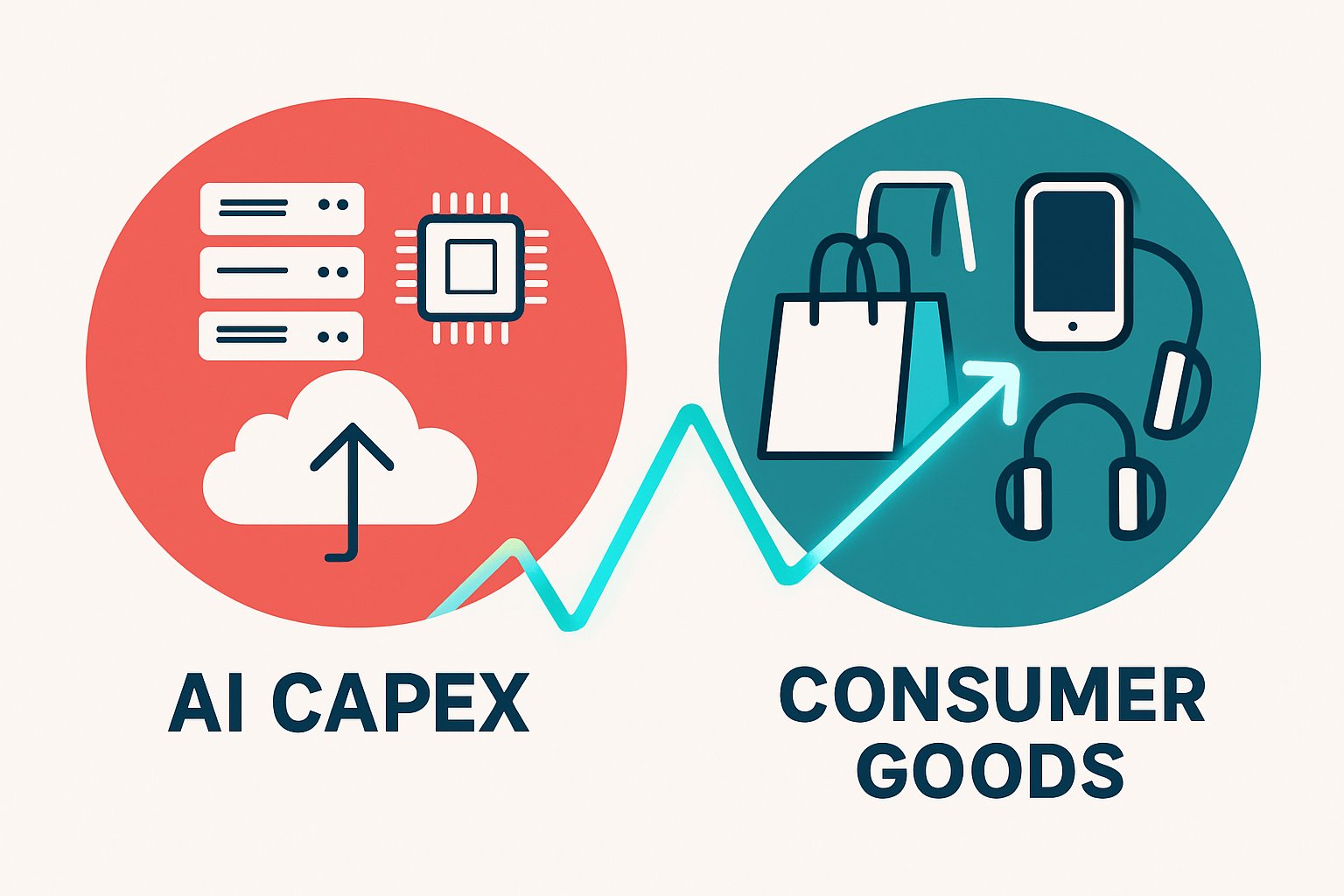
The Bureau of Economic Analysis reported 3.3% annualized real GDP growth in Q2 2025. Moreover, equipment and software purchases contributed an outsize share. Jason Furman calculated that information-processing gear, barely 4% of GDP, supplied 92% of growth. Therefore, corporate spending on AI infrastructure eclipsed household outlays. Meanwhile, Renaissance Macro added that the dollar lift from data centers exceeded Consumer spending itself. This article dissects why that pattern matters as an Economic Indicator for executives, investors, and policymakers.
AI Spending Redefines Growth
Company balance sheets are expanding record CapEx programs to chase generative AI scale. Microsoft, Google, and Amazon together will deploy almost $400 billion this year. Furthermore, Morgan Stanley estimates global AI CapEx hitting $2.9 trillion between 2025 and 2028.
Those numbers have material macro weight. According to BEA tables, private fixed Investment in information-processing equipment added nearly one percentage point. That boost lifted real GDP in early 2025. In contrast, the traditional Consumer contribution was flat.
Consequently, market participants now track hyperscaler outlays as an emerging Economic Indicator. Lisa Shalett of Morgan Stanley noted that data-center builds alone may cushion growth by 100 basis points. Nevertheless, concentration risk looms if spending cools.
Data Behind Surging CapEx
Quantitative signals support the narrative. Furman’s popular post summarized re-aggregated BEA data and sparked debate. Additionally, Renaissance Macro’s chart comparing Consumer and data-center support spread quickly among portfolio managers.
The following figures illustrate the pivot:
- Information-processing equipment: 4% of GDP yet 92% of H1 growth (Furman).
- Hyperscaler 2025 CapEx run-rate: $300-$400 billion, per Morgan Stanley.
- Morgan Stanley projects $1.4-$1.5 trillion external financing gap by 2028.
- Analysts attribute 0.5-1.0 percentage point to AI infrastructure in recent GDP prints.
Therefore, these statistics reinforce AI spending as a forward-looking Economic Indicator. Portfolio teams at JP Morgan have already incorporated hyperscaler guidance into internal growth dashboards. Meanwhile, bond desks weigh credit supply implications.
Financing Gap Raises Risks
Building clusters of liquid-cooled servers demands cash beyond corporate free flow. Consequently, Morgan Stanley warns of heavy reliance on private credit. JP Morgan asset strategists echo that view, citing tighter bank standards.
Moreover, securitization structures backed by data-center leases are appearing. In contrast, some regulators recall lessons from earlier leverage cycles. If funding stalls, the same Economic Indicator that signals strength could flip to warning mode.
Beyond balance sheets, regional utilities face capacity shortfalls. Additionally, higher electricity prices may erode project economics. Therefore, returns on Investment could compress, raising downgrade risk across infrastructure debt.
Strategic Outlook For Leaders
Corporate treasurers must balance growth ambitions with capital discipline. Therefore, staggered deployment schedules can smooth earnings volatility. JP Morgan research recommends matching tenor of debt with asset life, reducing rollover stress.
Furthermore, finance chiefs should secure green energy agreements early. Such moves mitigate operational risk and align with ESG mandates. Meanwhile, project managers can boost credibility by securing professional credentials. Professionals can enhance their expertise with the AI Data Robotics™ certification.
Boards also crave clear metrics. Consequently, tracking hyperscaler spending against productivity gains turns raw spending into a meaningful Economic Indicator. Transparent reporting calms investors eyeing possible overbuild.
Implications For Policy Makers
Policy officials monitor macro stability through many gauges. However, the AI spending surge complicates readings. When one narrow Investment category drives GDP, headline prints may mask underlying weakness.
Therefore, economists urge complementary metrics such as median wage growth and regional hiring. Nevertheless, the spending pulse still acts as a frontline Economic Indicator for fiscal planning.
Additionally, regulators consider power grid readiness. In contrast, delayed substations could slow project timelines and dampen GDP momentum. Coordinated permitting reforms remain vital.
Key Takeaways And Actions
The AI buildout offers clear lessons:
- CapEx leadership now rivals Consumer demand as a core Economic Indicator.
- Financing structures need vigilance to avoid systemic strain.
- Early energy planning secures cost stability and ESG alignment.
Consequently, investors should benchmark portfolios against hyperscaler spending trajectories. Executives must integrate scenario analysis into capital planning. Meanwhile, policymakers ought to strengthen infrastructure permitting.
Collectively, these steps transform headline data into actionable insight. Therefore, a once-niche metric becomes the Economic Indicator shaping strategic conversations.
The dominance of AI infrastructure spending has redefined how observers read the economy. Moreover, its outsized share of growth converts data-center outlays into an essential Economic Indicator. Nevertheless, financing, energy, and demand uncertainties persist. Consequently, leaders must track both opportunity and risk with equal rigor. By adopting disciplined capital frameworks and securing advanced skills, organizations can capture upside while protecting downside. Ready to deepen your analytical edge? Explore the linked certification and stay ahead of the next cycle.
Disclaimer: Some content may be AI-generated or assisted and is provided ‘as is’ for informational purposes only, without warranties of accuracy or completeness, and does not imply endorsement or affiliation.


