

AI CERTS
3 months ago
Infrastructure Shift: Texas Crypto Sites Pivot to AI Data Centers
Therefore, every megawatt in Texas counts. Galaxy Digital, Cipher Mining, Core Scientific and Riot Platforms have started publicized retrofits. Furthermore, Google and CoreWeave are underwriting billions in hosting contracts. In contrast, some policy analysts warn about rising grid stress and water use. This article examines economics, technology, and policy shaping the ongoing Infrastructure Shift across Texas.
Texas Sites Transform Rapidly
Barber Lake once buzzed with ASIC noise. However, after a 2025 deal, Cipher Mining will dedicate 168 MW to Fluidstack GPUs. Galaxy Digital followed a similar path at its Helios campus in Dickens County. Meanwhile, Core Scientific committed Denton to one of North America’s largest GPU supercomputers. Consequently, three Texas counties now headline a fast Infrastructure Shift narrative. Riot Platforms could enlarge that list by repurposing 600 MW in Corsicana. In contrast, miners outside Texas still study costs before departing Crypto-mining entirely. Geography matters because ERCOT offers deregulated markets and abundant wind and solar. Additionally, counties dangle tax abatements to speed site upgrades. These early movers prove that idle infrastructure can pivot toward AI revenue quickly.
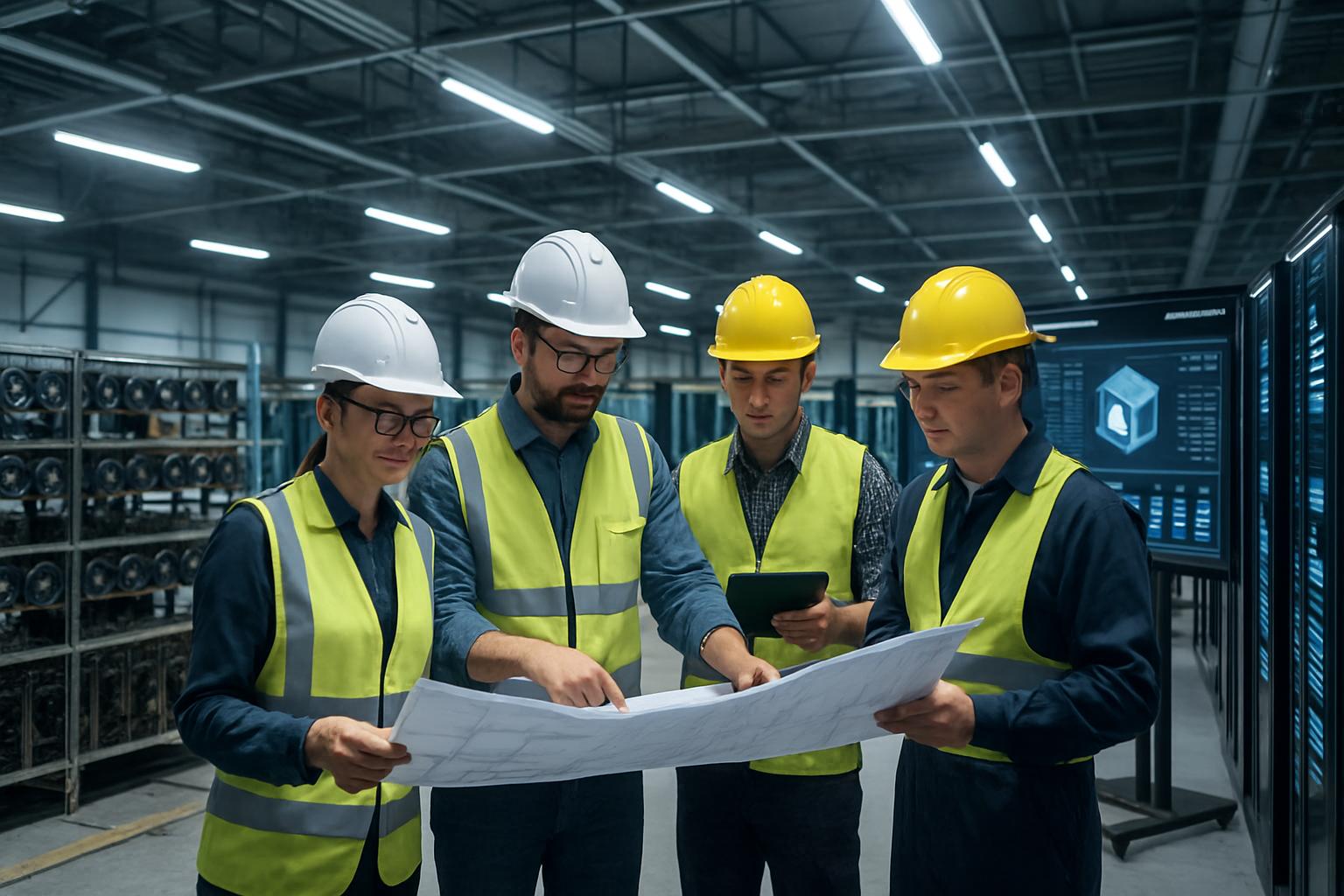
Texas miners showed how speed yields competitive advantage. Next, we explore forces driving that momentum.
Drivers Behind Infrastructure Shift
Demand for GPU capacity explodes as model sizes grow. Consequently, hyperscalers need sites ready within months, not years. Crypto-mining campuses already possess heavy transformers, onsite substations, and high-amp switchgear. Therefore, a miner’s Conversion cost can undercut greenfield projects by millions per megawatt. Furthermore, miners hold valuable ERCOT interconnection queue positions. Those positions shorten timelines more than any capital budget. Investors also like fifteen-year leases that hedge bitcoin volatility. Moreover, contracted revenue, such as Galaxy’s projected $4.5 billion, justifies retrofit financing. Geography also assists; Texas land remains cheap relative to coastal data-center hubs. The state supplies diverse renewable Power, and natural gas peakers balance grid frequency. Nevertheless, AI tenants need redundant dark Fiber to connect with national backbones. Miners now negotiate these telecom routes parallel to electrical upgrades.
Market timing, existing assets and policy incentives fuel the Infrastructure Shift. With drivers clear, attention shifts to contract economics.
Key Deals And Dollars
Public filings reveal unprecedented lease sizes. For example, Cipher’s initial 168 MW agreement with Fluidstack totals roughly $3 billion over ten years. Google backstopped nearly half that sum, gaining equity warrants. Meanwhile, Galaxy’s Phase I Helios lease covers 133 MW of critical IT load. Subsequently, CoreWeave exercised expansion options, increasing total contracted Power at Helios. Denton saw a $1.2 billion expansion that adds 70 MW for Core Scientific. Furthermore, CleanSpark has purchased 270 acres near Houston for an anticipated AI campus. Analysts estimate retrofit CapEx between $4 million and $6 million per megawatt after Conversion. Consequently, a 150 MW project might demand close to $750 million. However, stable lease revenue can surpass $1 billion, creating attractive internal rates of return. Investors, therefore, see Infrastructure Shift economics as less speculative than Crypto-mining cycles. These figures illustrate why financial giants participate through debt, equity, and guarantees.
Big tickets confirm the trend’s seriousness. Technical challenges now take center stage.
Technical Retrofit Checklist Guide
Retrofitting a miner is complex. Additionally, AI racks draw 30-50 kW each, far surpassing ASIC densities. Consequently, operators must upgrade cooling, fire suppression, and floor loading. Liquid or immersion systems often replace air cooling entirely. Moreover, redundant Fiber paths are mandatory for low-latency workloads. Engineers also refine grounding schemes to protect delicate GPUs.
- Substation re-rating to higher amperage
- Transformer swap for 13.8 kV feeds
- Chilled-water or immersion modules
- Dual-path dark Fiber installation
- Backup generators and battery systems
Conversion projects frequently trigger new building permits and environmental reviews. In contrast, Crypto-mining facilities rarely required such detailed mechanical plans. CapEx escalates, yet miners still benefit from existing land and Power contracts. Professionals can enhance audit readiness with the Bitcoin Security Professional™ certification.
Technical hurdles raise costs but remain manageable. The next section weighs grid consequences.
Grid Impact And Debate
LBNL reports data-center electricity could hit 580 TWh by 2028. Therefore, AI conversions intensify pressure on already stretched infrastructure. ERCOT scenarios model an additional 22 GW of load this decade. Consequently, transmission upgrades and new generation must accelerate. Policy analysts warn that AI loads are less curtailable than Crypto-mining operations. Geography influences feasibility; West Texas hosts wind surpluses, yet lines to cities remain limited. Moreover, some communities fear higher water consumption from advanced cooling systems. Brookings and RAND propose expedited permitting, flexible rates, and carbon-free baseload incentives. Nevertheless, local officials still approve multi-billion investments, expecting tax revenue. In contrast, they demand reliability guarantees to prevent rolling outages. Power planners debate whether behind-the-meter solar or small modular reactors could help.
Energy planning will decide how far the Infrastructure Shift can scale. Operator strategies reflect that uncertainty.
Strategic Outlook For Operators
Miners are hiring data-center veterans and capital markets specialists. Additionally, many firms lock long-lead equipment like transformers well ahead of need. Meanwhile, others pursue wholesale Conversion, betting on AI rents. Moreover, equity analysts favor companies with diversified revenue streams and low-cost Power hedges. Investors also monitor Fiber delivery timelines because delays can stall tenant onboarding. Geography continues to influence valuations; counties offering tax breaks see higher land premiums. Consequently, site acquisition teams scout rail-adjacent plots near ERCOT load pockets. Infrastructure Shift momentum could slow if chip supply or power prices spike. Nevertheless, current contracts run fifteen years, signalling confidence in demand durability.
Operator playbooks now emphasize financing, equipment procurement, and community relations. We close with key takeaways and action items.
Conclusion And Next Steps
Texas stands at the center of an unprecedented Infrastructure Shift reshaping digital infrastructure economics. Miners leverage existing assets, advantageous Geography, and deregulated energy markets to attract AI tenants quickly. Major deals already total billions, anchoring long-term revenue diversification strategies. However, grid constraints, water use, and permitting could temper growth. Therefore, operators must coordinate with ERCOT, municipalities, and telecom carriers early. Professionals aiming to audit or secure converted facilities should pursue advanced credentials. The Bitcoin Security Professional™ program offers a timely option. Consequently, informed teams can navigate risk while capitalizing on the ongoing Infrastructure Shift.


