

AI CERTS
3 months ago
Delhi AI Buildathons Boost STEM Education and Skills
These events signal how STEM Education now blends grassroots hacking with government scale. Consequently, Delhi has become a live laboratory for India’s broader AI talent mission. Industry observers see complementary strengths, yet they also flag governance gaps demanding urgent attention. This article dissects the two programmes, contrasts their approaches, and highlights emerging opportunities for academia and industry. Additionally, it explores risks, policy debates, and next steps for learners chasing AI-ready careers. Read on for a detailed, data-rich journey through Delhi’s latest push toward innovation.
Delhi Buildathon Event Overview
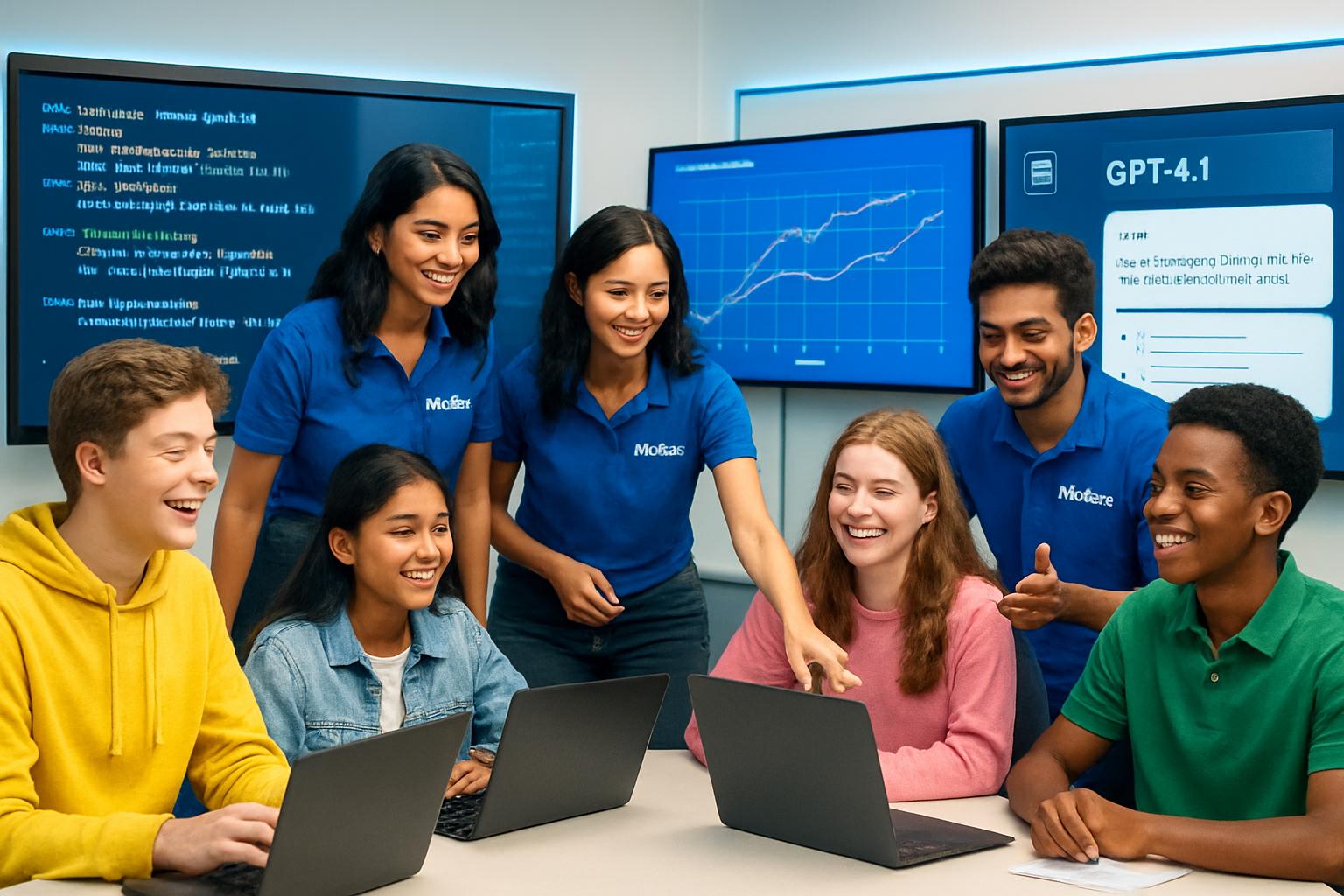
From 22–24 November 2025, OpenAI Academy and NxtWave hosted a GenAI Buildathon in Noida. Over 500 Delhi-NCR innovators joined the 48-hour sprint. Furthermore, 50 expert mentors guided hands-on experimentation with GPT-4.1 and multimodal APIs. The organisers framed the sprint as a regional qualifier toward a national Summit planned for early 2026. Participants represented DTU, IGDTUW, Amity, Galgotias, and several other institutions. Consequently, cross-college teams formed rapidly, aligning creative energy with real-world problem statements. Judges scored solutions on technical feasibility, social impact, and presentation clarity. The Delhi edition demonstrated how STEM Education benefits from industry mentorship and advanced APIs. Such momentum demonstrated scale and diversity within a tight timeframe. However, an even broader cohort emerged through the government’s parallel school initiative.
Government School Innovation Drive
While college hackers coded in Noida, school Students nationwide engaged in the Viksit Bharat Buildathon. Dharmendra Pradhan launched the programme on 23 September 2025 with an ambitious million-learner target. Moreover, DoSEL, NITI Aayog, AIM, and AICTE coordinated registration, themes, and evaluation protocols. A live online session in October connected Delhi classrooms with peers from every state. The initiative leverages Atal Tinkering Labs, ensuring hardware access and basic AI toolkits. Consequently, younger creators receive early exposure to rapid ideation and project pitching. Therefore, the programme embeds STEM Education principles into everyday classroom practice. Organisers promise recognition, incubation, and showcase slots during the national Summit stage. The school Drive complements collegiate contests by widening the talent funnel. Next, we examine how GenAI tooling accelerates both tracks.
GenAI Tools Empower Learners
GenAI models served as creative amplifiers during both buildathons. OpenAI granted GPT-4.1 credits, multimodal endpoints, and documentation to each registered team. NxtWave mentors ran micro-workshops on prompt engineering, vector stores, and agent orchestration. Additionally, Students accessed vision models for real-time object detection in robotics challenges. Government organisers adopted similar toolkits, though they restricted certain APIs for data safety. In contrast, college hackers pursued deeper stack integration, including edge deployment on Raspberry Pi boards. Such experiences cultivate practical Skills coveted by recruiters across finance, healthcare, and logistics. These toolchains align with modern STEM Education curricula centred on inquiry and iteration.
- 1M-token context handling
- Multimodal input support
- Code interpreter functionality
Advanced tools shorten experimentation cycles and lower entry barriers. However, standout Prototypes still define success in any hackathon.
Key Prototypes And Impact
Teams delivered a wide range of working Prototypes within 48 hours. For example, one group built a smart waste-segregation robot using YOLO vision models. Another team simulated drone delivery of emergency medical kits across congested urban corridors. Moreover, campus SOS applications integrated speech, location, and image inputs for instant security alerts. Secure-link verification tools tackled phishing by scanning URLs through GPT-4.1 reasoning. Meanwhile, attendance apps combined QR codes with face recognition, reducing administrative burdens. Judges commended the breadth, noting social benefit alongside technical novelty. Such demonstrations illustrate how project-based learning strengthens STEM Education outcomes beyond theory.
- 500 Delhi Participants, 50 Mentors
- 10+ robotics or IoT Prototypes showcased
- 30% projects addressed sustainability challenges
- Top 5 teams invited to national Summit
Consequently, organisers selected five champion teams for further incubation and Summit pitching. Prototype diversity highlights student creativity and practical community focus. Nevertheless, mastery of underlying Skills ultimately determines project longevity.
Emerging Skills And Careers
Employers increasingly evaluate hackathon portfolios when screening early-career candidates. Furthermore, NxtWave reports heightened recruiter interest after each regional event. Technical Skills observed include multimodal prompt design, rapid API orchestration, and iterative user testing. Soft competencies also matter, such as agile teamwork, concise pitching, and ethical reflection. Industry mentors encouraged Students to document architecture decisions for future audits. Professionals can deepen expertise through the AI Architect™ certification. Additionally, the upcoming national Summit will host a dedicated career fair linking companies and standout coders. Such ecosystems reinforce STEM Education pathways from classroom to industry. Robust Skills pipelines reduce mismatch between training and employer demand. Yet governance remains critical for sustainable scaling.
Governance Risks And Mitigation
Rapid experimentation can expose personal or institutional data if safeguards lag. Therefore, experts cite India’s DPDP Act as a compliance baseline for all student projects. Economists also warn about inequity when premium API credits expire. In contrast, organisers offer open-source alternatives and scholarship licences to underfunded colleges. Academic councils urge transparent citation policies to retain assessment integrity within STEM Education. Moreover, quality assurance is vital because hallucinations or bias can harm vulnerable users. Subsequently, mentors recommend model output validation, dataset documentation, and gradual field trials. Proactive governance fosters trust and protects long-term innovation capacity. The final section projects how these initiatives may evolve.
Future Outlook And Recommendations
Delhi’s AI buildathons will likely expand, integrating deeper partnerships with industry and civil society. Meanwhile, NxtWave plans cross-border collaborations, positioning India as a regional innovation hub. Government agencies intend to embed buildathon methodologies into annual STEM Education calendars. Consequently, next year’s Summit could feature blended school-college teams working on national missions. Organisers should standardise metrics that track Prototypes from idea to deployed product. Additionally, sustained micro-grants and cloud vouchers can preserve momentum beyond award ceremonies. Industry readers should monitor winning projects for investment or hiring opportunities. Delhi initiatives preview India’s trajectory toward an inclusive, skills-driven AI economy. The following conclusion synthesises the article’s insights and proposes immediate actions.
Conclusion
Delhi’s twin buildathons underscore a pivotal moment for STEM Education in India. Students gained hands-on Skills, produced viable Prototypes, and engaged mentors through industry platforms and government programmes. Furthermore, balanced governance will safeguard data, integrity, and equity as these events scale. Consequently, institutions should adopt clear privacy policies and extend cloud support beyond contest weekends. Professionals can strengthen credentials through the AI Architect™ certification. Finally, collaboration among academia, industry, and policymakers will keep STEM Education empowering every learner responsibly.


