

AI CERTS
7 months ago
Zoox Inches Closer to Autonomous Vehicles Commercial Approval
This article examines how Autonomous Vehicles progress from research to paid service, using Zoox as the case study.
Federal Exemption Milestone Achieved
NHTSA’s August decision granted Zoox a rare demonstration exemption. Consequently, the waiver lets its steering-wheel-free shuttles operate without human controls. In contrast, conventional designs must comply with all Federal Motor Vehicle Safety Standards. The exemption covers research and public demonstrations only. Therefore, the vehicles may not yet collect fares.
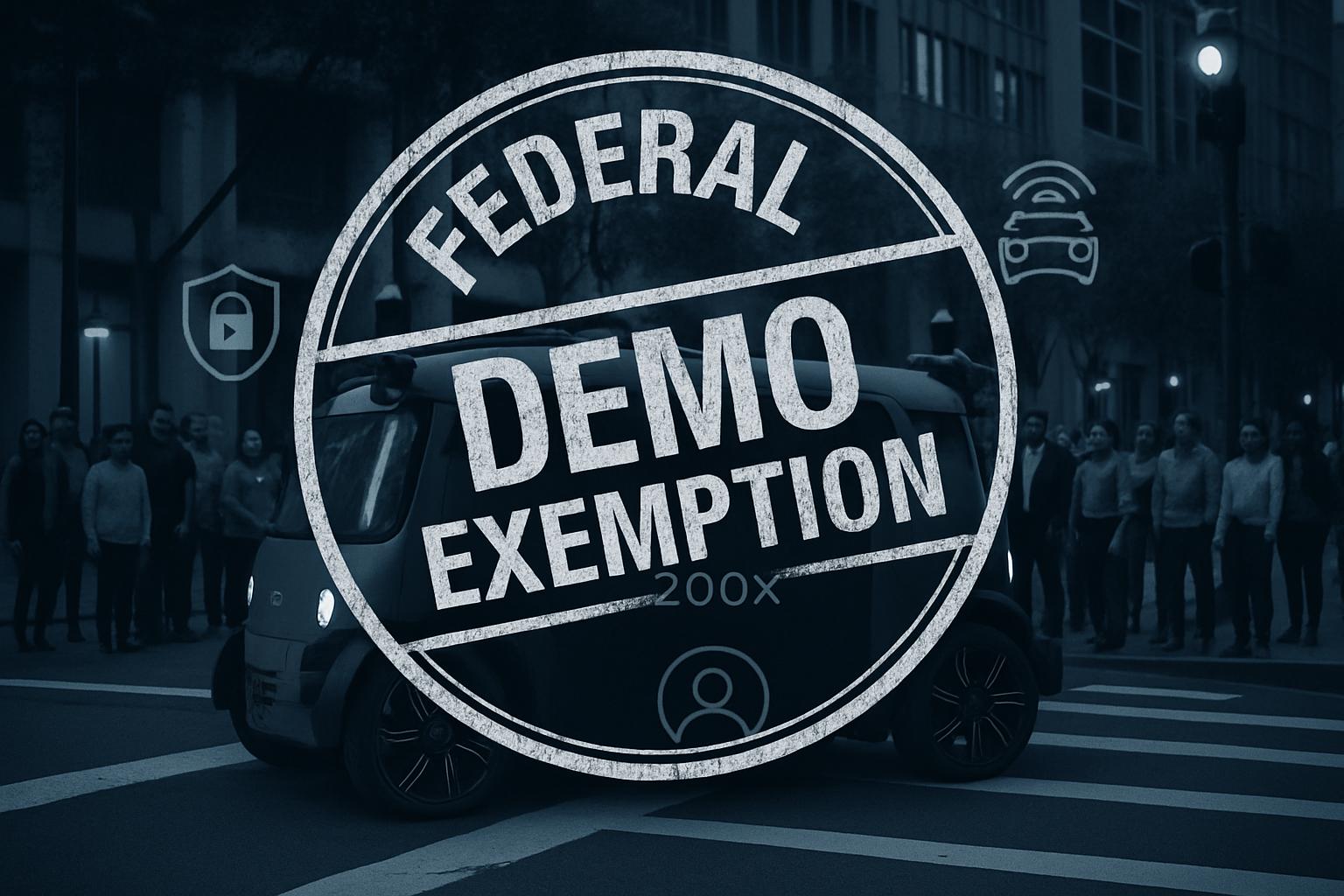
U.S. Transportation Secretary Sean P. Duffy called the action “a win-win for safety and innovation.” Moreover, NHTSA Chief Counsel Peter Simshauser stressed speedy reviews for innovators. These statements highlight a shifting federal mindset. Previously, autonomous pilots relied on state permissions alone. Now, federal exemptions are central to scaling Autonomous Vehicles nationwide.
The demonstration exemption validates Zoox’s safety claims. It also signals growing federal openness to novel cabin layouts. Consequently, attention now shifts to production capacity, which determines market readiness.
Production Capacity Scales Up
In June, Zoox opened a 220,000-square-foot facility in Hayward, California. Furthermore, executives claim it can assemble more than 10,000 robotaxis annually at full tilt. The plant underscores Amazon’s financial backing. Electric drivetrains dominate the assembly line, reflecting sustainability priorities.
Scaling production matters because NHTSA’s Part 555 exemption caps yearly deployments. Nevertheless, the company aims to align factory output with the permitted 2,500 units initially. Moreover, modular manufacturing allows quick volume increases once broader approvals arrive. Autonomous Vehicles will need such flexibility to meet fluctuating city demand.
Key factory indicators include:
- Floor space: 220,000 square feet for Electric assembly.
- Peak capacity: over 10,000 units yearly, subject to legal limits.
- Current test fleet: roughly 50 Driverless shuttles across two cities.
The Hayward launch confirms supply readiness. It also demonstrates Amazon’s long-term commitment to scale hardware rapidly. Subsequently, operational pilots provide real-world validation.
Las Vegas Service Launch
September saw Zoox debut free robotaxi rides along the Las Vegas Strip. Riders book through an invite program, then step into a bidirectional cabin without steering wheel. Meanwhile, operating speeds remain capped near 45 mph for safety.
Crucially, the service stays free while state Regulatory bodies finalize fare-collection rules. Additionally, the geofence covers hotels, convention centers, and transport hubs. Driverless operation within the domain illustrates Level 4 capability. Tourists thus experience future Electric mobility firsthand.
The pilot showcases customer appetite for seamless rides. It also supplies the firm with valuable telemetry for the Part 555 docket. Therefore, the next hurdle involves navigating overlapping laws.
Complex Regulatory Path Ahead
Commercial deployment requires multiple green lights. First, NHTSA must grant the Part 555 temporary exemption. Subsequently, state agencies like California’s CPUC must convert pilot permits into paid licenses. Local municipalities then negotiate curb access and emergency protocols.
Each layer asks for distinct data. However, overlapping demands can slow timelines. The company prepares extensive safety reports, incident logs, and fleet analytics. Technology partnerships with first responders aim to streamline approvals.
Analysts caution that Autonomous Vehicles face reputational risk if incidents spike. Therefore, transparent dashboards and proactive communication help maintain public confidence.
The fragmented Regulatory maze remains the critical bottleneck. It also shapes investor expectations about revenue forecasts. Nevertheless, safety culture influences public sentiment just as strongly.
Safety And Public Trust
Safety advocates cite past crashes involving other Driverless fleets. In contrast, the company emphasizes redundancy across perception, planning, and braking. Moreover, real-time remote assistance augments onboard systems.
NHTSA will scrutinize post-deployment data carefully. Consequently, the firm commits to releasing anonymized incident details. Community outreach events in Las Vegas allow passengers to question engineers. Electric vehicle quietness, however, raises new considerations for pedestrians with impairments.
Autonomous Vehicles also require clear audible alerts to warn nearby pedestrians. Industry experts argue that consistent metrics build trust. Furthermore, standardized reporting could benefit all Autonomous Vehicles, not just the firm’s products.
Public acceptance hinges on demonstrable safety improvements. It also relies on credible dashboards that compare fleets objectively. Meanwhile, competition intensifies across the sector.
Market Implications And Competition
Waymo and Cruise already run limited paid services. Therefore, Zoox must differentiate on cabin design and Electric range. Amazon’s logistics ecosystem could provide a scalable customer funnel.
Competitor setbacks, including recalls, highlight execution risk. Additionally, Regulatory crackdowns in San Francisco reveal how local politics sway deployment speed. Technology leadership must pair with diplomatic agility.
Investors see Autonomous Vehicles as a long-term platform, not a short fad. Analysts forecast robotaxi revenues topping $50 billion by 2030. Moreover, cost curves will favor firms owning vertical manufacturing. Autonomous Vehicles with optimized interiors could command premium subscription tiers.
Competitive dynamics remain fluid as regulations evolve. They also depend on battery supply chains and software talent. Consequently, professionals should upskill to stay ahead.
Skills For Industry Leaders
Engineers and managers working on Driverless programs need cross-disciplinary expertise. Furthermore, deep knowledge of perception algorithms and safety validation is vital. Professionals can enhance their expertise with the AI Engineer™ certification.
Curricula cover sensor fusion, cloud deployment, and compliance frameworks. Moreover, exposure to real Electric fleet data bridges theory and practice. Autonomous Vehicles demand such holistic understanding.
Specialized training accelerates career progression. It also supports safer, more efficient Technology rollouts.
The journey illustrates both progress and patience. Federal demonstration approval affirms engineering rigor. However, commercial permission still rests on NHTSA’s pending decision. Meanwhile, state permits and local agreements must align. Consequently, the company balances technical ambition with detailed compliance. Autonomous Vehicles stand on the brink of mainstream service, yet trust and transparency remain decisive factors. Professionals aiming to influence this transformation should pursue advanced credentials and stay informed. Begin by exploring industry certifications and monitor upcoming Regulatory filings for pivotal updates.
Disclaimer: Some content may be AI-generated or assisted and is provided ‘as is’ for informational purposes only, without warranties of accuracy or completeness, and does not imply endorsement or affiliation.


