

AI CERTS
3 months ago
AWS Clean Rooms Elevates Data Collaboration Security Practices
Consequently, technology leaders must understand the safeguards, market momentum, and legal caveats before committing budgets.
This article unpacks the latest product updates, market forces, and governance expectations. Throughout, we spotlight best practices that reinforce Data Collaboration Security while maintaining analytic value.
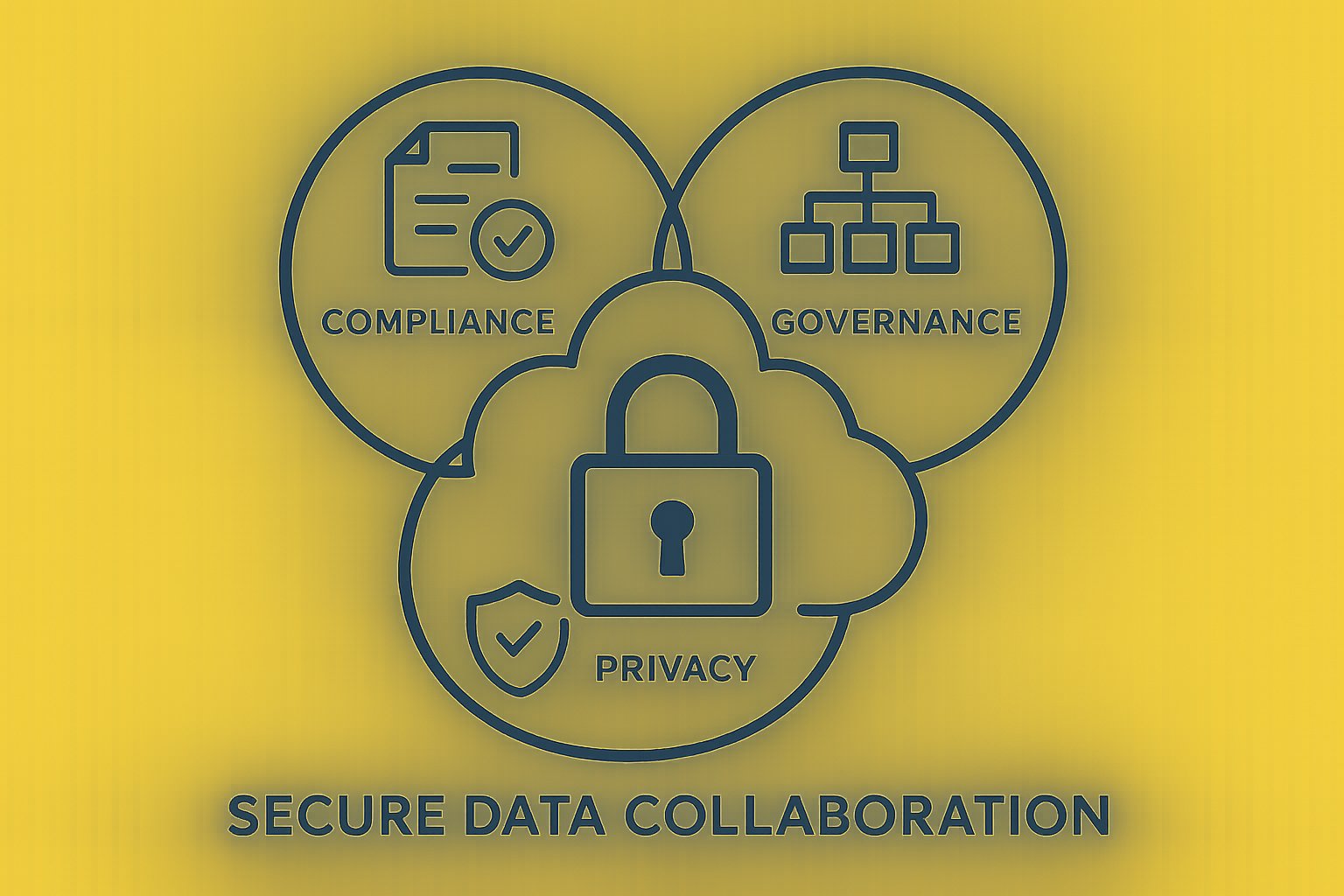
Key Market Drivers Overview
Regulatory crackdowns, cookie deprecation, and first-party data expansion converge to push confidential collaboration tools. Additionally, analysts value the global clean-room market at USD 1.2–1.6 billion in 2024, with double-digit CAGR forecasts. Meanwhile, AWS boosts visibility through advertising, retail media, and airline partnerships.
Recent integrations with Snowflake and Athena zero-ETL flows removed heavy data migrations. Therefore, enterprises can activate existing lakehouse assets quickly, improving Data Collaboration Security across hybrid estates.
Key drivers include:
- Regulations demanding demonstrable protection and compliance for joint data use
- Marketing pressure for cross-publisher reach analysis without customer re-identification
- Cloud adoption, which lowers entry barriers for privacy-enhancing computation
These forces sustain demand. Nevertheless, accurate ROI hinges on pragmatic technical controls. Next, we examine their architecture.
These drivers illustrate strong momentum. However, understanding the underlying safeguards remains critical.
Core Technical Controls Explained
AWS Clean Rooms assembles permissioned tables, not copies, achieving intrinsic data protection. Furthermore, analysis rules set column access, filter scopes, and output limits. Logs capture every query, aiding compliance reviews.
Differential privacy reached general availability in April 2024. The feature injects calibrated noise, enforces privacy budgets, and blocks unsafe joins. Consequently, participants gain mathematical disclosure guarantees while retaining aggregate accuracy. Yet some SQL constructs remain unsupported when differential privacy is enabled.
Cryptographic safeguards complement policy controls. Metadata and artifacts stay encrypted with customer-managed keys. Moreover, traffic travels via TLS, keeping Data Collaboration Security intact during transit.
These layers provide robust protection. Nevertheless, utility trade-offs demand case-specific tuning before production rollout.
Controls reduce obvious leaks. Still, emerging ML capabilities introduce fresh considerations.
Emerging ML Features Landscape
Clean Rooms ML allows partners to train lookalike models inside the enclave. It samples seed audiences, respects minimum thresholds, and outputs scored IDs under strict policies. Moreover, AWS documents membership-inference mitigations, strengthening Data Collaboration Security for predictive activation.
Previewed at re:Invent 2023, these capabilities matured through 2025 with better orchestration APIs. Consequently, vendors like Habu expose intuitive workflows that hide SQL complexity.
Swami Sivasubramanian highlighted customer control at launch: “You can delete the model when done.” That ephemerality matters for both protection and compliance.
ML features unlock new revenue streams. However, legal exposure expands as model outputs may still reveal sensitive patterns.
ML potential is clear. In contrast, regulatory uncertainty complicates long-term planning.
Legal And Risk Landscape
European regulators recently tightened pseudonymization thresholds. The CJEU’s September 2025 ruling held that data remains personal unless re-identification is practically impossible. Therefore, parties using AWS Clean Rooms within the EU likely remain joint controllers, with full GDPR obligations.
Additionally, U.S. state laws impose opt-out rights and purpose limitations. Compliance teams must map processing purposes, notice language, and retention policies. Logs and analysis rule audits simplify evidence gathering, supporting Data Collaboration Security narratives.
Nevertheless, critics warn of “privacy-washing.” Poorly tuned cohort sizes, auxiliary datasets, or timing attacks can pierce differential privacy safeguards. Consequently, independent penetration tests and legal reviews should precede external marketing claims.
Regulatory headwinds appear daunting. Yet structured governance can mitigate exposure.
Implementation Checklist Essentials
Security architects should follow a disciplined rollout plan:
- Define roles: owner, query member, additional data provider.
- Set acceptable epsilon and privacy budget parameters.
- Enforce minimum cohort sizes for every analysis.
- Document joint-controller contracts and incident response flows.
- Test against known re-identification and side-channel vectors.
Professionals can enhance their expertise with the AI+ UX Designer™ certification. Moreover, training deepens understanding of privacy-first design principles that underpin Data Collaboration Security.
These steps create operational discipline. Subsequently, organizations can evaluate strategic benefits versus residual risk.
Adoption Signals Snapshot
Enterprise momentum is visible through public case studies. United Airlines applies Clean Rooms for route advertising measurement. Furthermore, VideoAmp and Affinity Solutions built cloud-native dashboards inside the service, citing differential privacy safeguards.
Independent market reports predict multi-billion valuations by the early 2030s. Meanwhile, orchestration vendors like LiveRamp and InfoSum integrate with AWS, Google, and Snowflake, easing cross-platform analysis workflows.
These examples show rising trust in Data Collaboration Security approaches. Nevertheless, usage metrics remain anecdotal because AWS withholds aggregate query counts.
Adoption trends look promising. However, decision makers still weigh advantages and drawbacks.
Pros And Cons Balanced
Advantages include flexible multi-party analytics, audited governance, and noise-based protection. Additionally, cloud elasticity lowers operational maintenance versus bespoke cryptographic systems.
Limitations involve unsupported SQL patterns under differential privacy, potential utility loss from noise, and evolving compliance interpretations. Moreover, schema mismatches and cohort thresholds can hinder granular analysis.
Consequently, stakeholders must reconcile marketing aspirations with realistic privacy budgets. A balanced scorecard clarifies trade-offs, reinforcing Data Collaboration Security without overpromising impact.
Pros generate competitive insight. Cons remind teams to maintain humility and rigorous testing.
Section Summary: AWS Clean Rooms delivers layered technical, operational, and governance controls. However, sustained success depends on disciplined deployment aligned with emerging legal standards.
These insights ready teams for further strategic alignment. Next, we reflect on overarching implications.
Word count: approximately 1,210 words.
Conclusion And Next Steps
AWS Clean Rooms illustrates how cloud providers now embed privacy engineering directly inside analytic stacks. Moreover, differential privacy, encrypted metadata, and granular rules advance Data Collaboration Security while satisfying growing consumer scrutiny. Nevertheless, regulators warn that technical shields alone do not equal full compliance. Therefore, enterprises should pair clean-room deployments with joint-controller agreements, independent audits, and standardized governance playbooks.
Ready to deepen your privacy-first design skills? Explore the linked certification and strengthen your organization’s Data Collaboration Security posture through expert-led training.


