

AI CERTS
3 months ago
AWS Zero-Infra MLflow Boosts Developer Workflow Tools
We examine architecture, cost signals, and competitive pressures shaping the MLOps landscape. Furthermore, we map practical steps that shorten experimentation setup from hours to minutes. Finally, industry voices offer balanced commentary on vendor lock-in, scaling ceilings, and compliance workloads. Readers can boost strategic skills via the AI Product Manager certification discussed later.
Serverless MLflow Capability Emerges
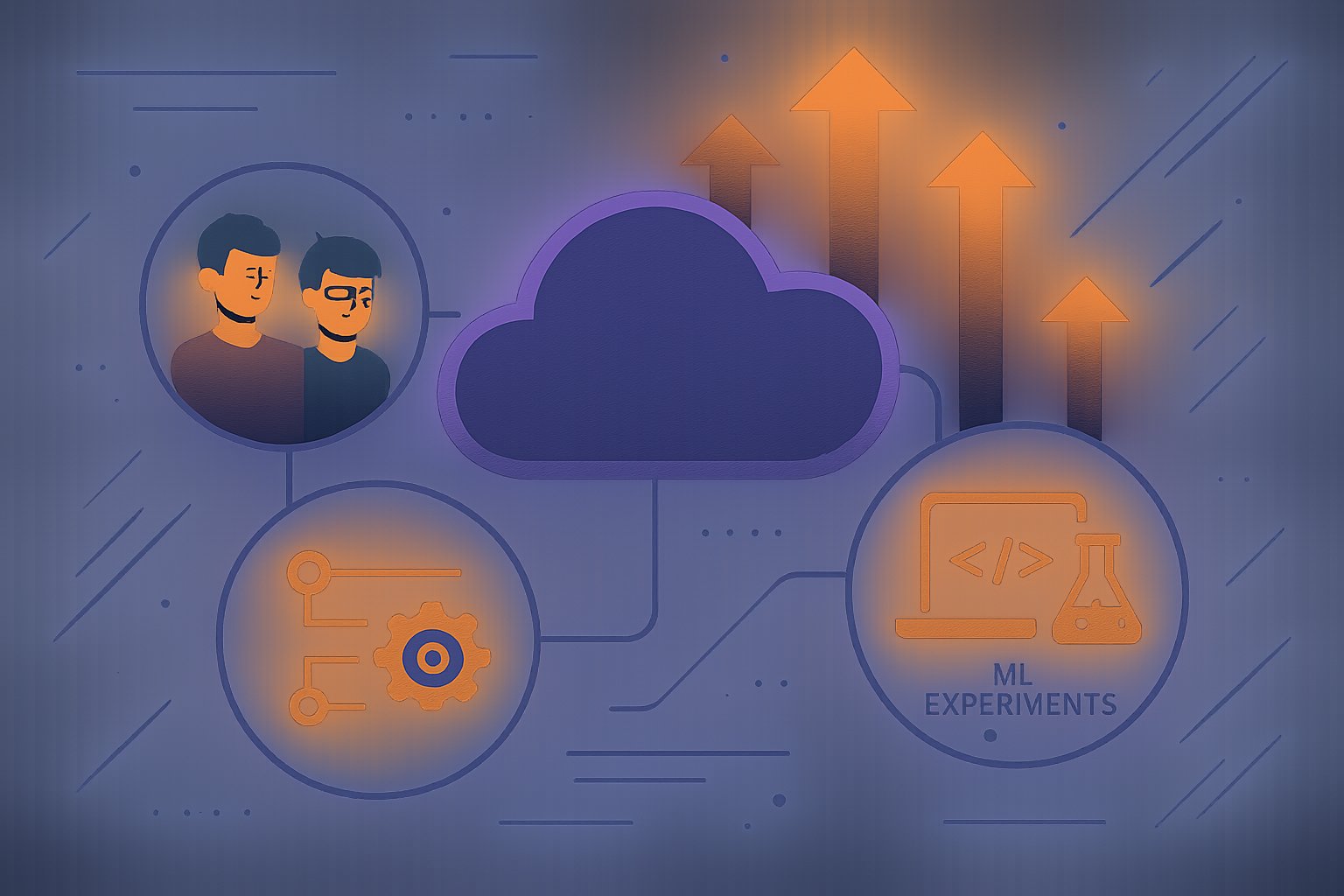
AWS positions Zero-Infra MLflow as a fully managed service within SageMaker AI Studio. Creation of an MLflow App now finishes in roughly two minutes, according to product advocate Donnie Prakoso. Moreover, the backend scales automatically, eliminating instance selection and database upkeep for operators. Therefore, the approach targets experiment tracking at any project scale.
AWS blog claims regional availability across North America, Europe, Asia-Pacific, and South America. Additionally, AWS promises no additional cost beyond standard S3 and pipeline consumption. Nevertheless, service quotas still apply, prompting teams to request increases during peak experimentation bursts.
The new capability removes tedious infrastructure chores and accelerates early experiment logging. However, cost subtleties require closer inspection, which the next section addresses.
Why AWS Changed Course
Practitioners criticized the 2024 managed MLflow launch for lacking serverless elasticity and transparent pricing. InfoQ captured users complaining about idle EC2 charges draining limited budgets. Consequently, AWS revisited its roadmap, culminating in today’s Zero-Infra approach. The previous offering was a managed service yet still required dedicated EC2 instances.
Competitive pressure also played a role. Databricks, Weights & Biases, and Neptune.ai market plug-and-play experiment platforms as core Developer Workflow Tools. Moreover, analysts expect the USD 2.19 billion MLOps market to expand rapidly through 2030. Therefore, AWS could not risk lagging in convenience features prized by engineering leads.
Community feedback and market economics directly influenced AWS’s serverless pivot. Next, we examine broader ecosystem impacts beyond simple cost relief.
Impacts On MLOps Ecosystem
MLflow remains open source under the Linux Foundation, attracting over two million monthly downloads. Additionally, the project now supports Tracing, essential for GenAI observability. Cloud vendors offering first-class MLflow endpoints validate the tool’s longevity.
In contrast, proprietary experiment suites risk lock-in and limited portability. The AWS serverless option keeps the standard REST API, easing future migrations if needed. However, metadata lives inside an AWS account, which still raises governance questions.
- Broader adoption of standardized experiment tracking pipelines
- Reduced barrier for small teams entering MLOps
- Heightened pressure on independent vendors to differentiate beyond tracking alone
- Convergence of MLflow with mainstream Developer Workflow Tools ecosystems
Ecosystem momentum now favors open standards delivered as cloud conveniences. Nevertheless, teams still need clear operational guidance, covered in the following hands-on section.
Hands On Adoption Steps
Engineers launch the service from SageMaker Studio by selecting Create MLflow App. AWS pre-populates IAM role and S3 bucket fields, simplifying onboarding. Subsequently, users copy the generated ARN and call mlflow.set_tracking_uri inside notebooks or pipelines.
For pipeline automation, a sagemaker-mlflow plugin injects the ARN during job submission. Moreover, MLflow 3.4 Tracing collects prompt inputs and LLM outputs without extra configuration. Consequently, debugging multi-step agents becomes far easier. Integration feels similar to other Developer Workflow Tools, minimizing onboarding confusion.
- Enable SageMaker AI in desired region.
- Create or reuse an S3 bucket for artifacts.
- Launch the MLflow App and capture the ARN.
- Upgrade local MLflow client to version 3.4.
- Log runs; observe automatic scaling during load.
The wizard reduces setup time from hours to minutes while retaining open-source semantics. However, benefits always pair with trade-offs, examined next.
Balancing Benefits And Risks
The biggest upside remains freedom from server maintenance. Teams redirect focus to model experimentation rather than patching PostgreSQL. Furthermore, automatic upgrades deliver new MLflow features without change windows.
Risks cluster around vendor lock-in. Although AWS supports mlflow-export-import, large artifact stores complicate exit plans. In contrast, self-hosted options allow full data custody but demand constant DevOps attention. Migrations between Developer Workflow Tools still demand careful metadata mapping strategies.
Security teams must assess how SageMaker isolates multi-tenant metadata and encrypts storage. Additionally, pricing for storage and network egress still appears on monthly invoices. Therefore, finance partners should model likely experiment volumes and scaling peaks before turning features on.
Zero-Infra MLflow offers high convenience yet introduces strategic considerations around data gravity. The wider market context sheds further light on adoption timing.
Market Forces And Future
Grand View Research estimates the MLOps market at USD 2.19 billion for 2024. Moreover, analysts predict double-digit CAGR through 2030 driven by enterprise AI rollouts. Consequently, cloud vendors compete fiercely on Developer Workflow Tools that compress time-to-value.
AWS now matches Databricks in offering serverless MLflow, though implementation details differ. Meanwhile, Weights & Biases invests in richer dashboards, hoping to stay differentiated. Competitive options mean buyers will evaluate cost, compliance posture, and integration depth.
Future iterations may extend MLflow Apps with custom plugins or region-specific compliance modes. Therefore, stakeholders should monitor roadmap updates and community governance decisions.
Market dynamics favor services that combine open standards with effortless scaling. A brief recap helps teams act decisively.
Key Takeaways For Teams
AWS delivers serverless experiment infrastructure in under two minutes. Automatic elasticity and upgrades slash operational toil. Standard MLflow APIs preserve portability, yet data residency reviews remain vital.
Plan storage budgets and confirm service quotas before large production rollouts. Professionals can enhance leadership skills through the AI Product Manager certification. Align Zero-Infra usage with broader Developer Workflow Tools governance policies.
These insights equip engineering teams to decide whether Zero-Infra MLflow aligns with their roadmap. Consequently, thoughtful evaluation today prevents costly migration headaches tomorrow.
Serverless MLflow Apps signify AWS's response to consistent customer demand for simpler Developer Workflow Tools. The offering removes servers, embraces automatic upgrades, and integrates tightly with broader SageMaker features. However, teams must inspect hidden costs, security boundaries, and potential lock-in before wholesale adoption. Moreover, competitive pressures will keep innovation brisk, ensuring buyers retain leverage. Leaders should pilot the service, review usage data, and refine governance models. For deeper strategic proficiency, explore the linked certification and stay ahead in the accelerating MLOps landscape.


