

AI CERTS
3 months ago
Digital Humanities AI: Google Aeneas Reimagines Epigraphy
The system couples transformer generation with image understanding to assist epigraphers at unprecedented speed. As a result, historians secure richer context, faster comparisons, and higher confidence during data analysis. This article explores how Digital Humanities AI reshapes inscription study and expands cultural discovery.
Google Aeneas Tool Overview
Aeneas debuted publicly on 23 July 2025 alongside a peer-reviewed Nature article. Moreover, the launch brought an interactive PredictingThePast site plus open code on GitHub. This transparency sparked immediate community connection and reproducible experimentation.
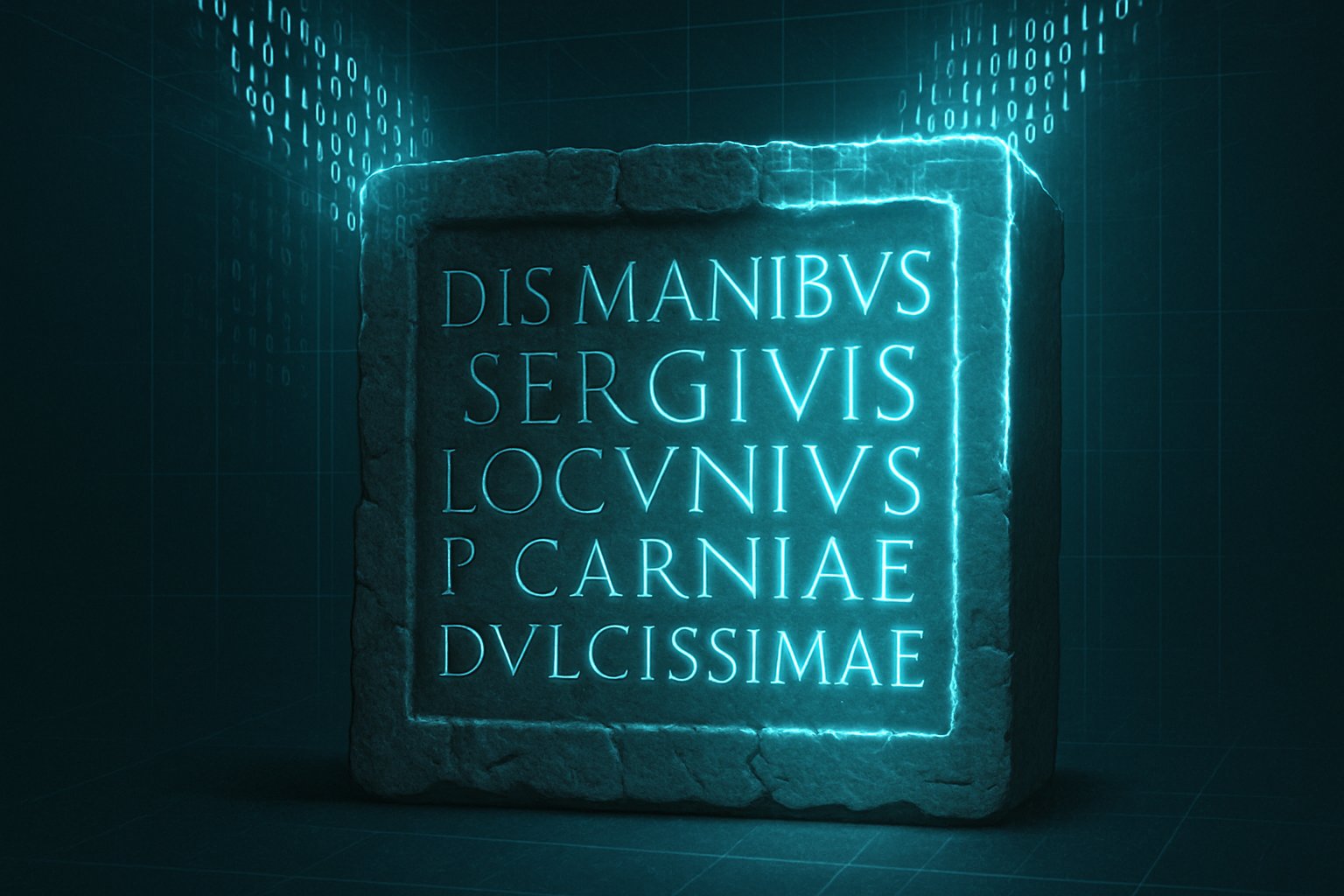
The core Latin Epigraphic Dataset includes 176,861 inscriptions spanning the seventh century BCE to eighth century CE. Additionally, five percent contain images that refine geographic predictions. All resources use permissive licences, therefore encouraging classroom integration.
Importantly, the project validates Digital Humanities AI as a bridge between computing and classical scholarship. Consequently, digital experts and historians now share a common reference platform for ongoing research.
Aeneas’ open release marks a milestone in accessible epigraphic technology. However, raw performance numbers reveal deeper impact, as the next section shows.
Model Capabilities And Metrics
DeepMind evaluated Aeneas across restoration, dating, and provenance tasks using a controlled historian study.
- Dating median error: 13 years with Aeneas alone.
- Historians with Aeneas cut error from 31 to 14 years.
- Province attribution accuracy reached roughly 72 percent across 62 regions.
- Top-20 gap restoration hit 73 percent when gap length was known.
Furthermore, Aeneas retrieves ranked inscription parallels, creating an interpretable evidence trail. Yannis Assael noted that scholars can view supporting texts instantly rather than sift catalogues. Such transparency strengthens connection between machine suggestions and human judgement.
These quantitative wins show why Digital Humanities AI now rivals traditional concordance tools. Nevertheless, strengths become clearer when tested inside real historian workflows.
Performance gains confirm Aeneas’ practical reliability. Consequently, many historians welcome the model, as the following section details.
Strengths For History Scholars
Historians prize speed, and Aeneas delivers comparable parallels in seconds instead of days. Moreover, the Nature study reports confidence rising by 44 percent when scholars used the tool. Mary Beard labelled the approach transformative for classical history.
Interpretability represents another strength. The model surfaces attention highlights and provenance probabilities, therefore guiding scholarly decisions. Additionally, results link directly to LED records, preserving citation integrity.
Thanks to Digital Humanities AI, junior researchers can explore unfamiliar provinces without expensive travel. Consequently, wider participation enriches collective history narratives.
Speed, transparency, and accessibility underpin Aeneas’ appeal. In contrast, several limitations still require attention, as the next section outlines.
Limitations And Ethical Concerns
No model is perfect; Aeneas struggles with rare names and numeral restoration. As a result, unknown gap tasks drop to 58 percent accuracy. Additionally, dataset bias favors formulaic inscriptions from well-studied centers.
Image handling within the public demo remains limited compared with internal experiments. Therefore, users must still supply careful transcriptions, reinforcing human responsibility. Independent tester Jason Colavito highlighted these manual steps in his critical review.
Ethical considerations extend further; open releases may weaken provenance connection if reused improperly. Nevertheless, DeepMind documents licences and encourages attribution within derivative research.
Responsible deployment of Digital Humanities AI, therefore, depends on transparent governance and scholarly oversight.
Limitations remind scholars to treat outputs as hypotheses. Subsequently, the next section offers guidance for practical adoption.
Practical Adoption Guidance Steps
Institutions planning pilots should define clear objectives before uploading inscriptions. Moreover, training sessions help staff interpret probability distributions and attention maps. Importantly, Digital Humanities AI lowers barriers for small archives lacking custom software.
- Install repository code and dependencies within controlled environment.
- Upload cleaned transcriptions, noting gap positions and metadata.
- Review machine suggestions, then log accepted changes with citations.
- Archive both raw and revised files for future research audits.
Furthermore, pairing Aeneas with local databases enriches data analysis through cross-collection comparisons. This hybrid workflow deepens history insights and strengthens regional connection studies.
Professionals can deepen skills through the AI Project Manager™ certification.
Following structured steps mitigates operational risk. Meanwhile, future upgrades promise broader capabilities, discussed in the next section.
Future Development Roadmap Ahead
DeepMind plans multimodal parity between research prototypes and the public interface. Additionally, expanding support beyond Latin toward Coptic or Phoenician texts appears feasible.
University partners are curating new LED extensions, which will improve data analysis for minority provinces. Consequently, Aeneas’ accuracy should rise as diverse inscriptions fill current gaps.
Continued progress will anchor Digital Humanities AI within standard archaeological toolkits. Nevertheless, community governance will determine ethical boundaries for synthetic restorations.
Upcoming upgrades point toward richer collaboration. Therefore, stakeholders should monitor repository updates and conference sessions.
Conclusion And Next Steps
Google Aeneas proves that machine learning can illuminate damaged voices from antiquity. The model’s metrics show dramatic speed and accuracy gains, especially when paired with human insight. However, experts must still validate outputs and respect provenance constraints. When balanced carefully, Digital Humanities AI becomes a catalyst for deeper history questions and sharper data analysis. Moreover, structured adoption and professional training minimize operational risks. Readers eager for leadership roles should consider the linked certification and engage with open-source tools. Consequently, a new generation of scholars will connect, restore, and share the Roman past with unprecedented clarity.


