

AI CERTS
5 months ago
James Cameron on AI Actors and Entertainment Industry Disruption
Additionally, readers will discover practical steps to protect creative integrity while embracing efficient tools. The stakes span livelihoods, audience trust, and the trajectory of blockbuster filmmaking. Consequently, every studio executive and performer must grasp the fast-moving landscape outlined here. Investors, unions, and coders now battle for influence over production pipelines. Meanwhile, audiences wonder whether emotional depth will survive accelerated automation. Consequently, regulatory conversations intensify on Capitol Hill and in global markets. This feature provides the technical, economic, and creative context you need today.
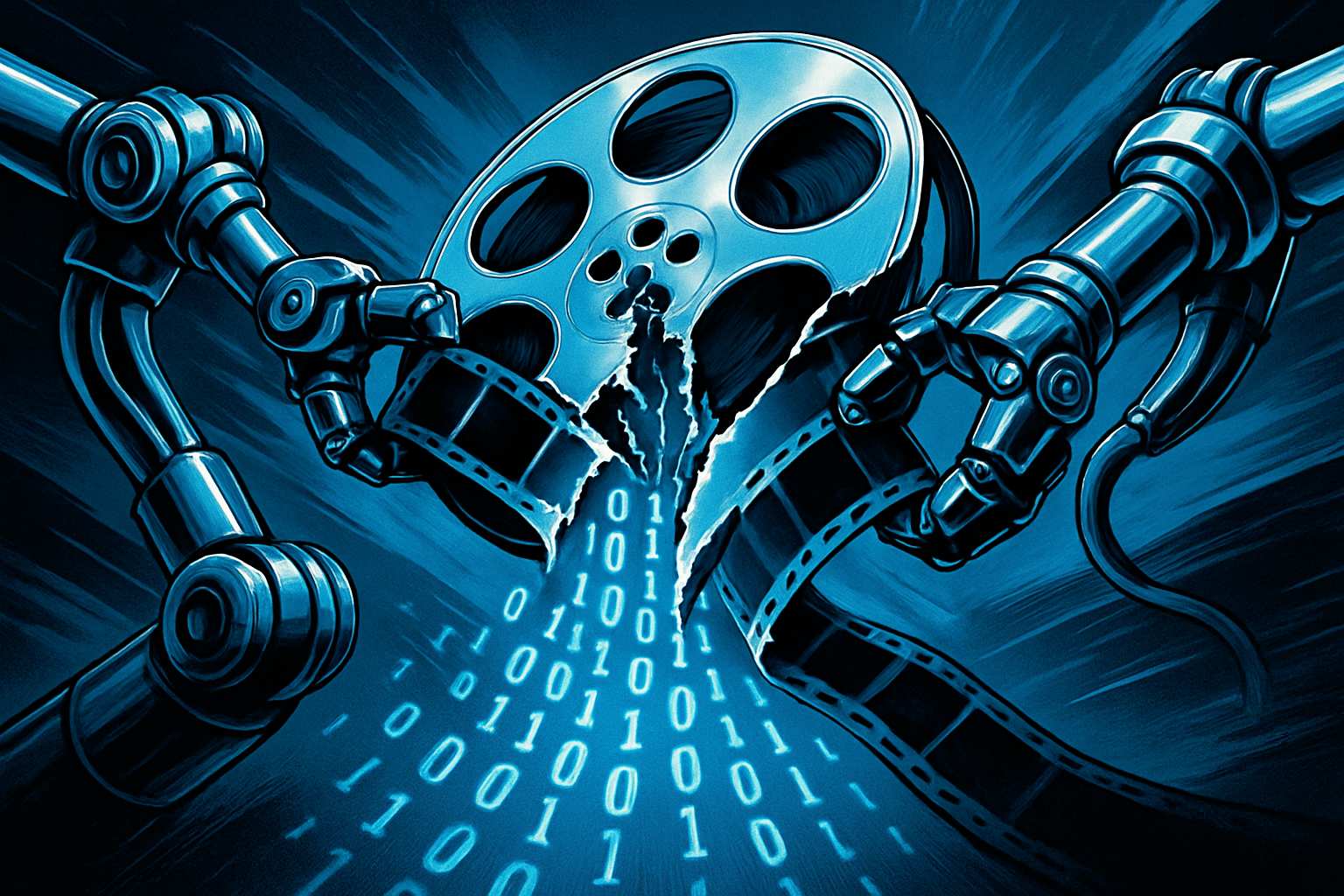
Cameron's Stark AI Warning
Cameron distinguishes performance capture from generative character creation. He argues that motion capture preserves the actor’s soul, whereas digital synthesis erases filmmaking humanity. Cameron insists human micro-expressions and improvisation remain impossible to synthesize authentically. Moreover, he banned generative AI on Avatar: Fire and Ash, reinforcing the stance internally. The director’s decision challenges studios racing toward automated casting for cost control. Meanwhile, supporters cite rapid savings when synthetic performers replace expensive reshoots. Analysts view his ban as a template for contract negotiations in 2026. Studios watching Avatar’s performance will gauge public sentiment toward actor-centric production.
Cameron guards against Entertainment Industry Disruption while still welcoming supportive AI tools. His ban spotlights ethical boundaries within emerging workflows. Nevertheless, the wider community already faces real examples of synthetic performers.
Synthetic Performer Backlash Grows
The Tilly Norwood debut at Zurich shocked hollywood talent agencies and unions. SAG-AFTRA swiftly declared that digital humans threaten 160,000 members’ livelihoods. In contrast, creator Eline Van der Velden insisted audiences value story over a pulse. Variety reported agents briefly considered endorsement deals before public opinion shifted. Additionally, stars like Emily Blunt labelled the prototype “scary” during press junkets. Consequently, agencies paused discussions about representing fully synthetic talent. Some marketing teams even tested trailers featuring the AI star to gauge clicks. Nevertheless, some independent creators celebrated the publicity as free marketing for experimental cinema. Journalists note that the Zurich panel lacked representatives from major unions.
Union pressure aligns with public unease toward non-human leads. The backlash illustrates how unchecked Entertainment Industry Disruption can damage brands. Therefore, industry economics deserve closer scrutiny.
Market Forces Driving Change
Analysts project the generative-AI market will near one trillion dollars by 2034. Media and entertainment comprise roughly one-third of early revenue, according to Precedence Research. Statista echoes similar forecasts, though methodology differences create wide error margins. Moreover, studios chase faster post-production cycles to accelerate filmmaking for streaming demand. Cost equations tempt executives toward digital humans that avoid overtime and travel expenses. However, hidden liabilities surface when unions intervene or audiences reject synthetic leads. Consultants caution that early winners will likely be infrastructure vendors, not content owners. Licensing costs for high-quality training footage are also climbing, compressing margins. Meanwhile, venture funding into creative AI startups surged 60% year over year.
Key financial signals include:
- USD 37.89 billion market size in 2025
- 34% share attributed to entertainment sector
- CAGR projections exceeding 40% through 2034
- 160,000 SAG-AFTRA members monitoring AI clauses
These figures explain aggressive experimentation despite vocal resistance. Money remains the strongest catalyst within the Entertainment Industry Disruption narrative. Investors expect hollywood demand to propel tool adoption. Yet creative concerns often override spreadsheets.
Creative Integrity Under Debate
Actors argue that AI remixes cannot replicate lived experience. Furthermore, critics warn datasets often include performances scraped without consent. Legal scholars argue that fair-use defences weaken when training data includes entire performances. Copyright lawsuits already target image generators; voice and likeness cases will follow. Proponents claim Entertainment Industry Disruption sparks new storytelling forms when algorithms join human imagination. Startups developing consent portals believe traceability will reassure regulators. In contrast, Cameron stresses collaboration must never eclipse authentic creative integrity. Meanwhile, cultural commentators fear homogenization if algorithms optimise characters for global tastes.
The debate pits efficiency against artistic identity. Stakeholders realise brand damage occurs if audiences feel manipulated. Consequently, technical feasibility deserves impartial analysis. Further, union lawyers prepare clauses to mandate residuals for algorithmic reuse. Software vendors are now embedding opt-out APIs for licensed clip repositories.
Technical Reality Check
Current text-to-video models still struggle with long-form, photoreal lip sync. Moreover, lighting continuity and emotional nuance often break under scrutiny. Researchers expect noticeable improvement by 2027 but not parity with live footage. VFX supervisors tell Variety that patching glitches may offset promised savings. Meanwhile, performance capture delivers predictable quality because a human anchors every frame. Therefore, Cameron views AI as an efficient paintbrush rather than a replacement canvas. In contrast, cloud render costs for high-resolution GAN scenes remain prohibitive. In contrast, creating stable digital humans at cinematic resolution remains elusive.
Principal obstacles include:
- Resolution limits on diffusion video models
- Unstable character consistency across shots
- Lengthy prompt-tweaking cycles
- Lack of union-approved consent tracking
Technical gaps temper the hype surrounding Entertainment Industry Disruption. Investors still funnel capital, yet insist on demonstrable timelines to theatrical quality. Consequently, CTOs maintain hybrid pipelines blending motion capture, keyframe animation, and selective diffusion. Academic labs, conversely, prototype open benchmarks to measure dialogue coherence objectively. Nevertheless, business strategists continue mapping generative roadmaps. Next, attention shifts to possible governance models. Pilot television episodes using fully AI extras premiered at niche festivals last month.
Future Paths For Hollywood
Policy decisions will define how hollywood integrates AI into everyday filmmaking. SAG-AFTRA demands notice and bargaining before digital humans or synthetic performer deployment. Studios may adopt watermarking to prove scenes remain actor-anchored. Additionally, Cameron’s board role at Stability AI could shape responsible tool guidelines. Disney, Netflix, and Amazon each run internal labs to test scalable voice cloning. Professionals can enhance their expertise with the AI Network Security™ certification. Moreover, interdisciplinary councils might issue standards for dataset consent and revenue sharing. Consequently, providers could monetise training data ethically, preserving creative integrity across productions. Audiences will ultimately reward transparency, not mere novelty. Nevertheless, union clauses could impose costly delays if approvals lag. Hybrid cloud pipelines promise scalability but raise confidentiality concerns for unreleased footage. Startups exporting talent avatars overseas risk conflicting with divergent privacy regimes.
Hollywood’s future likely blends human craft with measured automation. Responsible guardrails can convert Entertainment Industry Disruption into sustainable growth. Finally, let us summarise essential insights. Cross-border tax incentives may further encourage virtual production hubs.
Key Takeaways And Action
Cameron’s criticism underscores the human core of storytelling. However, economic incentives driving Entertainment Industry Disruption will persist. Studios must weigh savings against audience trust and legal compliance. Moreover, rigorous consent tracking and fair revenue models protect creative integrity. VFX leaders should benchmark text-to-video progress quarterly, not blindly reshape filmmaking hype. Government agencies are drafting disclosure rules to label AI-generated screen talent. Consequently, career longevity depends on continual upskilling. Professionals exploring AI workflows can validate expertise through certifications like the linked AI Network Security™ program. Meanwhile, investors monitor brand sentiment indices for early warning of audience pushback. Consequently, leadership teams should schedule ethics reviews alongside technical sprints. Therefore, staying informed remains the best defense against disruptive surprises.
Finally, transparent dialogue between technologists and artists transforms disruption into durable innovation. Join the conversation, adopt ethical guidelines, and shape the next wave of Entertainment Industry Disruption responsibly.
Disclaimer: Some content may be AI-generated or assisted and is provided ‘as is’ for informational purposes only, without warranties of accuracy or completeness, and does not imply endorsement or affiliation.


