

AI CERTS
7 months ago
Social Media Moderation Faces TikTok AI Hate Surge
Media Matters identified racist Veo 3 clips topping 14.2 million plays. Meanwhile, TikTok touts 1.3 billion AI labels but offers scant transparency. These contrasting figures expose an enforcement gap wider than many executives will admit. Moreover, new benchmarks show detectors falter when faced with adversarial prompts. This report examines the data, technical challenges, and business stakes shaping the moderation debate.
Escalating Scale Of Toxicity
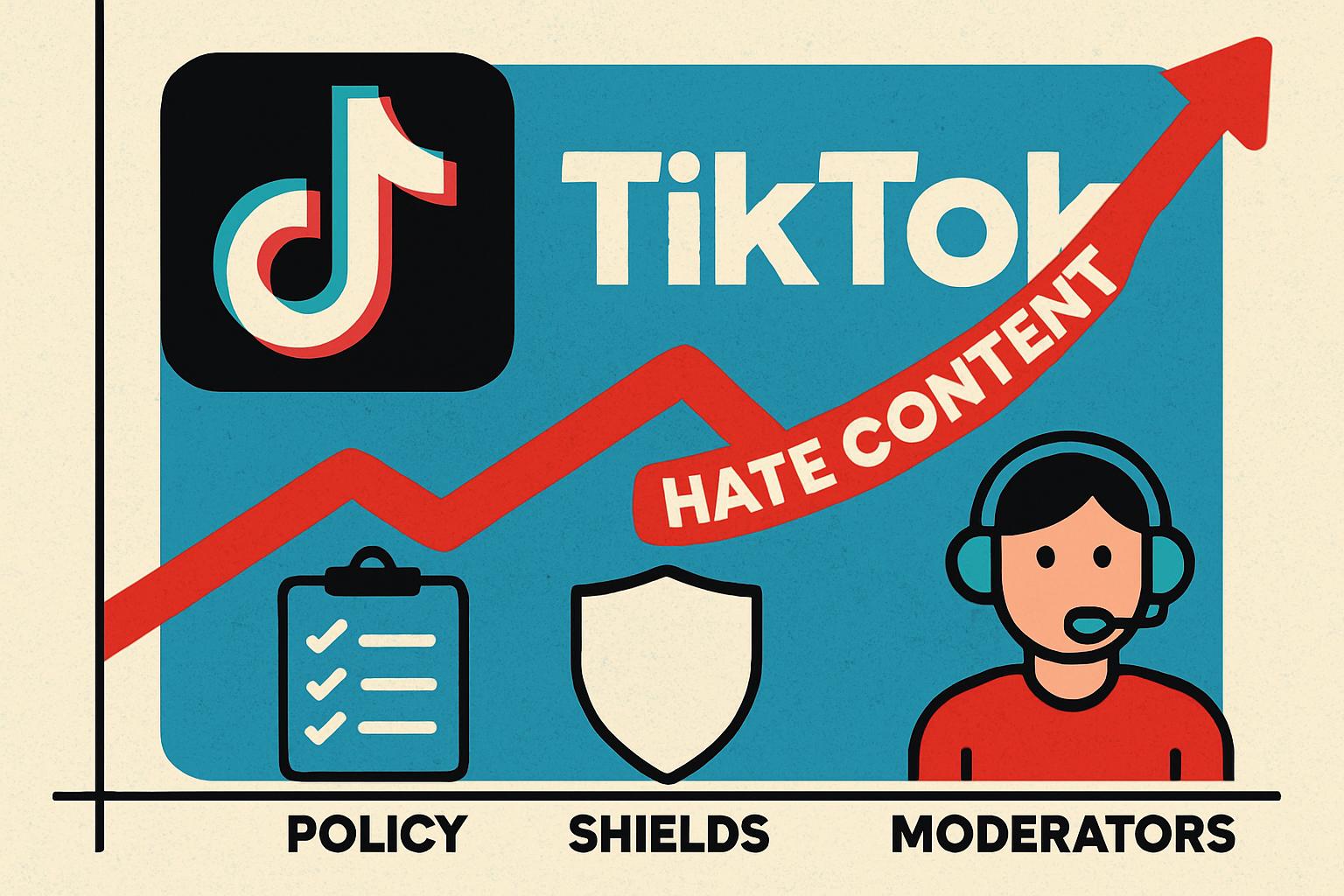
AI Forensics found 354 AI accounts spraying synthetic clips at industrial volume. Consequently, these profiles uploaded dozens of videos daily, overwhelming baseline controls. Less than two percent carried the required AI label, according to the nonprofit. Furthermore, the posts generated 4.5 billion viral views within thirty days. Researchers attribute the surge to recommendation algorithms optimized for engagement.
In contrast, human moderators simply could not watch content that fast. The numbers dwarf earlier hate speech scandals from 2024. Additionally, Media Matters highlighted anti-immigrant content that reached 14.2 million viewers. One Veo 3 video repeated nineteenth-century racial caricatures. Nevertheless, TikTok removed many flagged clips only after press coverage. Such delays illustrate weak Social Media Moderation at scale. Therefore, brand advertisers face rising reputational risk every time hateful clips trend. The data confirms unprecedented volume and velocity. However, scale is only part of the challenge, as the next section shows.
Algorithmic Amplification At Scale
TikTok’s For You feed employs collaborative filtering and deep-learning ranking algorithms. These mechanisms privilege content producing long watch times and repeat sharing. Consequently, sensational hate tropes outperform benign clips. Anti-immigrant content often taps nationalist emotions, driving explosive engagement spikes. Moreover, automated accounts exploit hashtag stuffing and trend hijacking to engineer viral views. Because ranking systems lack sentiment context, hateful videos are surfaced to broader audiences. Meanwhile, watermark stripping removes provenance signals that could trigger stronger Social Media Moderation. Researchers call the resulting flood “AI slop,” a buffet for recommendation engines. Subsequently, each engagement loop strengthens the probability of further amplification. Advertisers may benefit from reach, yet negative association erodes brand safety quickly. Amplification therefore magnifies minimal production costs into global exposure. Detection tools must match that speed, which the following section interrogates.
Detection Technology Under Strain
Academic work paints a sobering picture for automated filters. HateBench showed that detectors miss many new synthetic slurs, especially under adversarial attacks, scoring 0.966 success. Furthermore, detection accuracy degrades when large language models iterate quickly. Multimodal pipelines combining video, text, and audio improve precision yet require heavy computing. Consequently, real-time enforcement lags behind upload velocity. Areto Labs observed a 58 percent rise in hateful posts year over year. Meanwhile, the racism category alone soared 113 percent inside its index. Such findings underline the operational limits of the current Social Media Moderation infrastructure. Additionally, TikTok’s claimed 1.3 billion AI labels remain unaudited. In contrast, independent researchers cannot access raw detection logs through the research API. Therefore, confidence in headline numbers stays low among civil society groups. The next part examines how the platform itself frames progress and gaps.
Platform Responses And Gaps
TikTok argues it removes hateful clips and blocks bot accounts proactively. Moreover, the company is piloting invisible watermark reading to flag AI content. Google touts SynthID in Veo 3 to embed metadata that should survive uploads. Nevertheless, audits reveal less than two percent of studied posts carried any AI label. Policy announcements rarely address algorithm transparency, a core driver of viral views. Consequently, watchdogs urge public dashboards showing takedown speed, labeling rates, and residual reach. TikTok replies that releasing detailed metrics would expose moderation tactics to attackers. However, regulators in Europe now require clearer reporting under the Digital Services Act. Failure to comply could invite fines threatening platform safety commitments. Brands observing this tension reconsider ad budgets, elevating Social Media Moderation to a board priority. Company statements alone cannot resolve credibility gaps. Therefore, policymakers are expanding oversight, as the subsequent section explores.
Regulatory And Policy Pressures
Lawmakers leverage fresh data from AI Forensics and Media Matters to craft stricter statutes. Furthermore, the EU sets precedent by mandating risk audits for high-reach algorithms. The United States considers similar disclosure rules targeting anti-immigrant content and extremist propaganda. Additionally, agencies debate watermark standards that cannot be removed through simple editing. Consequently, platform operators face overlapping compliance deadlines in multiple jurisdictions.
Industry groups warn that blanket thresholds could chill creator innovation. Nevertheless, civil society argues that robust Social Media Moderation requires legally enforceable minimum baselines. Transparency incentives may accelerate cooperative research API programs supporting external audits. Meanwhile, venture investors monitor sentiment to forecast litigation driven cost exposure. The policy debate underscores business stakes, which the next subsection unpacks.
Business Stakes And Safety
Brands lost millions in 2024 boycotts sparked by hateful influencer content. Therefore, marketers now demand pre-bid tools that score brand safety across risky themes. Programmatic platforms integrate exclusion lists yet struggle when new slurs emerge. Moreover, crisis communication teams factor Social Media Moderation readiness into vendor contracts. Consequently, certifications prove valuable for professionals championing robust governance programs. Professionals can enhance their expertise with the AI Sales Strategist™ certification. Such credentials demonstrate commitment to responsible innovation despite evolving threats. Financial incentives therefore align with improved oversight. The final roadmap shows actionable steps.
Mitigation Roadmap For Safety
- Deploy multimodal detectors retrained monthly on emerging hate samples.
- Integrate provenance watermarks and enforce read-only attributes on reuploads.
- Publish algorithms impact reports detailing promotion factors and risk scores.
- Provide real-time APIs for civil auditors and academic researchers.
- Incentivize creators to self-label AI content through visibility boosts.
Additionally, executives should map escalation paths that blend machine triage with human Social Media Moderation experts. Moreover, cross-platform takedown protocols will limit recycling of anti-immigrant content across ecosystems. Consequently, users experience improved safety without heavy censorship of benign creative expression. The roadmap demonstrates that strategic investment can deliver measurable gains. However, ongoing vigilance remains essential as threat actors refine tactics.
TikTok’s AI hate surge reveals systemic weaknesses across technology, policy, and culture. Yet the crisis also spotlights momentum for tighter Social Media Moderation standards. Independent audits, regulatory mandates, and brand demands converge on shared accountability. Furthermore, improved detectors, transparent algorithms, and enforceable watermarks together can blunt viral views of hate. Nevertheless, no single fix will suffice against adaptive adversaries. Professionals must therefore cultivate continuous learning and certified expertise. Act now to audit workflows, train teams, and consider advanced credentials that reinforce corporate safety leadership. Responsible action today will determine the platform economy’s resilience tomorrow. Ultimately, effective Social Media Moderation safeguards users, advertisers, and democratic discourse alike.
Disclaimer: Some content may be AI-generated or assisted and is provided ‘as is’ for informational purposes only, without warranties of accuracy or completeness, and does not imply endorsement or affiliation.


