

AI CERTS
5 months ago
Australia’s Data Center Power Crunch Tests Grid
In August, the Australian Energy Market Operator (AEMO) separated data-centre demand in its forecasts. Subsequently, the market heard an official estimate of four terawatt-hours consumed during fiscal 2025. Therefore, professional readers must track how rapidly that footprint expands, how regulators respond, and how economic opportunity balances against grid stability obligations.
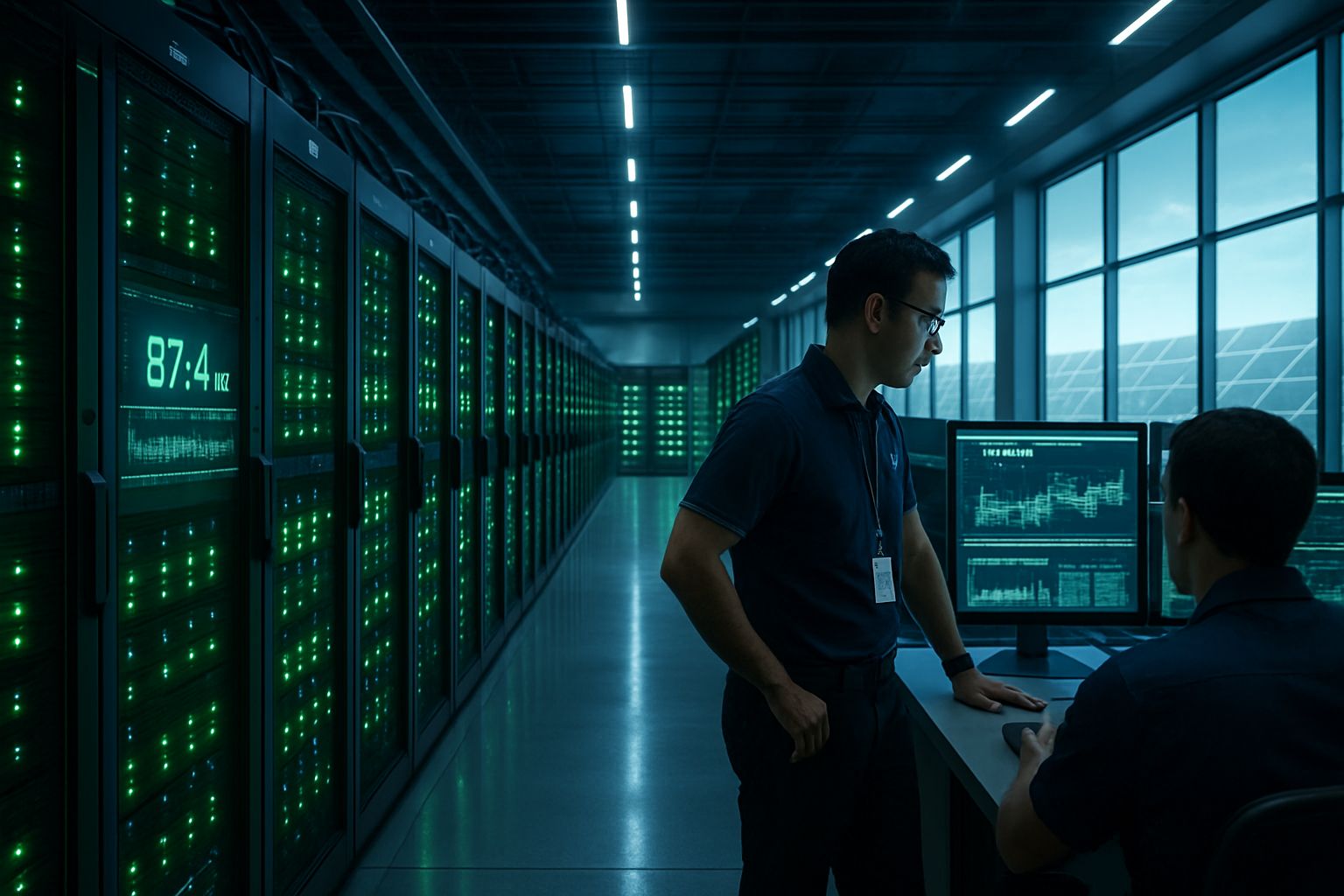
Data Center Power Crunch
Connection requests now exceed 44 gigawatts across the National Electricity Market. In contrast, Oxford Economics believes only six gigawatts will materialise. Nevertheless, even that smaller slice would triple the current Data Center Power draw within five years. Furthermore, AEMO’s Step Change scenario shows consumption touching 12 terawatt-hours by 2029 — equal to today’s Tasmanian load.
Local communities worry about water, while state planners juggle infrastructure approvals. Consequently, some jurisdictions have paused new applications until transmission upgrades catch up. These pressures reveal a widening supply gap. However, emerging rules aim to prevent surprise blackouts and rising prices. These dynamics underscore why demand forecasting must improve. Yet, the next section shows regulators already sharpening their tools.
Regulators Tighten Connection Rules
The Australian Energy Market Commission (AEMC) released Package 2 draft rules in mid-2025. Moreover, the proposal forces very large customers to meet system-security standards before energisation. Consequently, data-centre operators would need to ride through voltage dips, support frequency, and even curtail load during emergencies. Such measures enhance grid stability without new generation.
Nevertheless, operators argue that the timetable is aggressive. They claim delays could chill investment and stall regional job creation. In contrast, the regulator counters that reliability cannot wait. Therefore, consultation has become a high-stakes negotiation between hyperscalers and policymakers. Data Center Power advocates fear over-regulation, yet consumer groups demand safeguards.
These debates illustrate a broader pattern. Rules evolve as technology accelerates. However, another controversy—phantom demand—complicates those reforms. The following section explains why.
Phantom Demand Debate Grows
Oxford Economics coined the term “phantom demand” to describe speculative projects clogging the queue. Their research found six out of every seven megawatts requested may never draw a single amp. Therefore, planners risk over-investing in poles, wires, and generation if they treat the entire list as real.
The advisory notes Data Center Power requests sometimes hedge corporate strategy or seek land options. Moreover, developers file multiple locations to secure favourable terms, then abandon most plans. Consequently, AEMO now scores each application for credibility and stages network spending accordingly.
- 44 GW requested across NEM (AEMO IASR 2025)
- ~7.9 GW likely to proceed (Oxford Economics 2025)
- ~2.8 GW expected peak draw at maturity
- Potential 12 percent usage of the total grid by 2050
These figures highlight forecasting uncertainty. Nevertheless, infrastructure decisions happen today, not once perfect data arrives. Therefore, industry eyes turn to renewable procurement strategies that can hedge both risk and perception.
Renewables And PPA Strategies
Hyperscalers tout power-purchase agreements as proof they offset rising loads. Google partnered with AirTrunk and OX2 to underwrite a new solar farm. Additionally, Amazon Web Services has signed contracts marketed as “additional” generation. Consequently, critics question whether these deals include storage, firming, or merely swap renewable certificates.
The federal National AI Plan introduced “co-requisites” for large digital infrastructure. Therefore, any new Data Center Power project above specific thresholds must contribute fresh clean energy or water-saving technology. Moreover, state governments now link planning approvals to local employment, emissions intensity, and grid stability metrics.
Nevertheless, signed megawatts on paper do not always coincide with commissioning dates. Delays in transmission projects like VNI West can strand renewable output, leaving gas peakers to fill gaps. Consequently, market operators stress the need for synchronized build schedules. These issues feed directly into the technology efficiency frontier discussed next.
Technology Efficiency Opportunities Rise
Best-in-class hyperscale sites now report Power Usage Effectiveness around 1.1. Moreover, liquid cooling and heat reuse can shrink building footprints and lower water demand. Consequently, operators pitch these advances as pathways to limit 12 percent usage scenarios.
Furthermore, intelligent workload orchestration shifts AI training to off-peak windows. Meanwhile, inference clusters increasingly use purpose-built accelerators consuming fewer watts per query. Nevertheless, efficiency gains alone cannot erase rising demand. AEMO’s modelling still projects steady load growth even under optimistic assumptions.
Professionals can enhance their expertise with the AI+ UX Designer™ certification. The program covers human-centric design for high-density compute environments, offering skills valuable in modern infrastructure planning.
These technical levers buy time. However, climate commitments call for deeper alignment, which the next section explores.
Implications For Net Zero
Australia legislated a 2050 net-zero target. However, each additional megawatt consumed by servers raises pressure on renewable deployment. AEMO warns that delayed firming assets could jeopardise both emissions and grid stability goals.
Moreover, independent analysis shows Data Center Power could account for 12 percent usage by 2050 in worst-case trajectories. Consequently, critics argue for mandatory renewable ratios or load-flexibility obligations. Nevertheless, industry groups note economic benefits, export revenue, and regional employment linked to data-centre infrastructure.
Policy choices will decide which narrative prevails. Therefore, transparent metrics, timely transmission, and credible PPAs remain vital. These points converge in our closing reflections.
These sections revealed regulatory, technical, and market responses. Consequently, leaders must integrate them or risk missing decarbonisation milestones.
Grid Stability Measures Ahead
Meanwhile, AEMC’s final rule package will likely embed active power controls, frequency ride-through, and demand response capabilities. Furthermore, AEMO is piloting real-time visibility tools for large loads to protect grid stability. Additionally, state operators test microgrid buffers near data-centre clusters.
Nevertheless, implementation timelines remain tight. Therefore, collaboration between developers and network service providers is essential. These measures cap our review by underscoring that reliable infrastructure underpins both economic growth and climate ambition.
After this technical assessment, the following insights follow.
Conclusion
Australia stands at an inflection point. Moreover, AI demand surges while transmission projects lag. Consequently, Data Center Power now sits at the centre of national energy debates. Regulators tighten rules, industry signs PPAs, and engineers chase efficiency. Nevertheless, uncertainty over phantom demand and 12 percent usage forecasts persists. Therefore, coordinated planning, transparent metrics, and innovative cooling will shape outcomes.
Professionals should track upcoming AEMC decisions, AEMO’s 2026 Integrated System Plan, and state permitting reforms. Additionally, enhancing skills through recognised programs like the linked certification will position leaders to thrive. Act now, engage with policymakers, and contribute solutions that keep Australia on its net-zero pathway while powering the next wave of digital innovation.


