

AI CERTS
3 months ago
Sanders AI Warning Spurs US Political Regulation Debate
Sanders argues that unchecked “artificial labor” endangers labor rights, wages, and social stability. Moreover, he urges Congress to act before automation threats spiral. This article unpacks the numbers, questions the methods, and explores the legislation path now confronting policymakers.
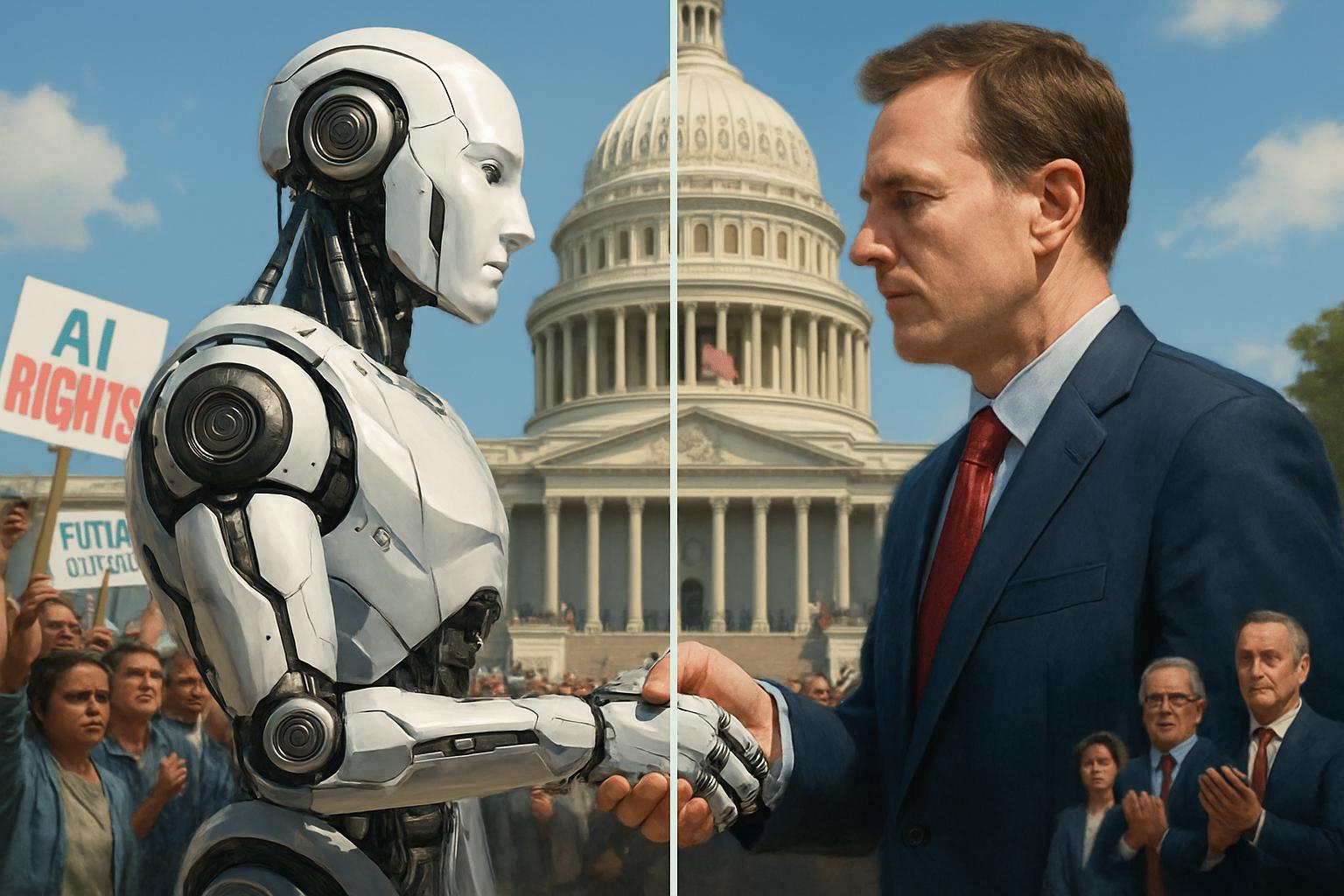
Sanders Sounds AI Alarm
On 6 October 2025, Sanders released “The Big Tech Oligarchs’ War Against Workers.” Therefore, headlines instantly focused on one statistic: up to 97 million American jobs could disappear. He paired the warning with bold prescriptions: a 32-hour workweek, a “robot tax,” and stronger unions.
During a November event with Geoffrey Hinton, Sanders repeated that message. Subsequently, media coverage amplified his claim, intensifying calls for tighter US Political Regulation. Nevertheless, critics demanded proof that the projections reflect economic reality.
These alarm bells frame the debate. However, data disagreements remain unresolved.
Job Loss Estimates Debated
Economists quickly dissected the report’s methodology. Sanders’ team relied on a ChatGPT-based model that mapped tasks to automation threats. In contrast, Brookings researchers observed little immediate displacement since ChatGPT’s 2022 release.
The World Economic Forum offered different numbers. Its 2025 forecast predicts 92 million global jobs lost but 170 million created, yielding a net gain. Consequently, many analysts view sectoral churn, not apocalypse, as the likelier outcome.
Key Sanders figures appear below:
- 89 percent of fast-food counter roles vulnerable
- 64 percent of accountants at risk
- 47 percent of truck drivers threatened
Such stark percentages intensified worries about labor rights. Nevertheless, uncertainty over modeling techniques fuels calls for transparent US Political Regulation hearings.
Disagreement on estimates underscores the need for rigorous review. Furthermore, consistent data sharing will sharpen future policy choices.
Policy Prescriptions Under Scrutiny
The report outlines aggressive remedies. First, Sanders proposes a 32-hour week without pay cuts. Additionally, he backs a “robot tax” on firms replacing human staff. Revenue would fund retraining, unemployment insurance, and community programs.
Second, he supports employee ownership and mandatory profit sharing. Moreover, passing the PRO Act would strengthen collective bargaining and safeguard labor rights. These ideas push US Political Regulation toward redistributive action.
Opponents caution that heavy-handed legislation could hamper innovation. In contrast, Sanders insists productivity gains must benefit workers. Therefore, the policy fight now pivots to practical design, cost estimates, and enforceability.
These proposals illustrate the tension between economic efficiency and social equity. Consequently, congressional committees will test each option’s feasibility.
Industry Voices And Data
Tech executives offer mixed reactions. NVIDIA’s Jensen Huang expects AI to “remove drudgery,” possibly shortening workweeks. Meanwhile, Bill Gates endorses taxing robots to fund social safety nets. However, corporate lobbyists warn that sweeping legislation risks ceding advantage to China.
Independent analysts echo nuance. Brookings notes stable employment so far, yet acknowledges rising automation threats. WEF data suggests net global job creation, but regional imbalances remain. Consequently, stakeholders agree that proactive, balanced US Political Regulation is essential.
Firms named in Sanders’ press release—Amazon, Walmart, UnitedHealth—decline detailed comment. Nevertheless, each invests heavily in AI to trim costs. Therefore, their deployment timelines will shape real-world impacts on labor rights.
Diverse perspectives reveal a shared recognition: AI will transform work. However, the scale and speed remain contested.
Pathways For Worker Protection
Policymakers possess several levers. Firstly, targeted tax credits can encourage worker-augmenting technologies rather than pure substitution. Secondly, public-private reskilling partnerships can reduce automation threats. Additionally, stronger wage insurance can cushion transitional shocks.
Professionals can enhance customer engagement strategies through the AI Customer Service™ certification. Consequently, upskilling helps employees stay valuable as tasks evolve.
Moreover, expanding apprenticeship programs can widen access to emerging technical roles. In contrast, relying solely on market forces could erode labor rights irreversibly.
These pathways demonstrate that thoughtful US Political Regulation could balance innovation and protection. However, action must precede mass layoffs.
Ahead, stakeholder collaboration will determine which safeguards gain traction. Subsequently, outcome metrics should guide policy refinement.
Next Steps For Congress
Congress faces converging pressures. Public anxiety about automation threats grows, while business groups lobby against extensive legislation. Therefore, bipartisan hearings will likely probe Sanders’ numbers and alternative forecasts.
Key agenda items include:
- Request full disclosure of the ChatGPT modeling code
- Commission independent labor-market simulations
- Debate the fiscal impact of a “robot tax”
- Assess environmental costs of data centers
- Examine international competitiveness risks
Moreover, lawmakers must integrate climate, antitrust, and labor rights considerations into one coherent package. Consequently, future US Political Regulation will hinge on cross-committee collaboration.
Timely oversight can prevent reactionary bans while still protecting workers. Ultimately, measured deliberation may yield durable safeguards.
Conclusion
Sanders’ report thrusts AI labor risk into the heart of US Political Regulation. Estimates vary, yet automation threats are undeniable. Moreover, proposed legislation spans robot taxes, shorter weeks, and stronger unions.
Industry data suggests opportunity alongside disruption. Nevertheless, securing labor rights demands preemptive, evidence-based action. Therefore, professionals should track congressional deliberations and pursue continuous learning.
Consequently, readers can future-proof careers by earning the AI Customer Service™ certification. Engage with policy discussions, advocate balanced regulation, and prepare for an AI-augmented economy.


