

AI CERTS
6 months ago
CoCounsel Sets Pace in Professional Services AI for Law
Consequently, this article unpacks recent developments, capabilities, and risks surrounding CoCounsel. Technical leaders will find actionable facts, adoption data, and independent critiques summarized here. Meanwhile, the story also illustrates how agentic workflows push automation beyond single prompts.
Since acquiring Casetext in 2023, Thomson Reuters has invested over $200 million in AI. Moreover, CoCounsel now integrates with Westlaw, Practical Law, and Microsoft 365 to embed AI where lawyers work. Deep Research, guided workflows, and bulk document review promise hours saved on high-value tasks. Nevertheless, independent benchmarks like Stanford HAI raise accuracy concerns that cannot be ignored. Therefore, strategic buyers must evaluate both potential speed and liability when considering enterprise deployment.
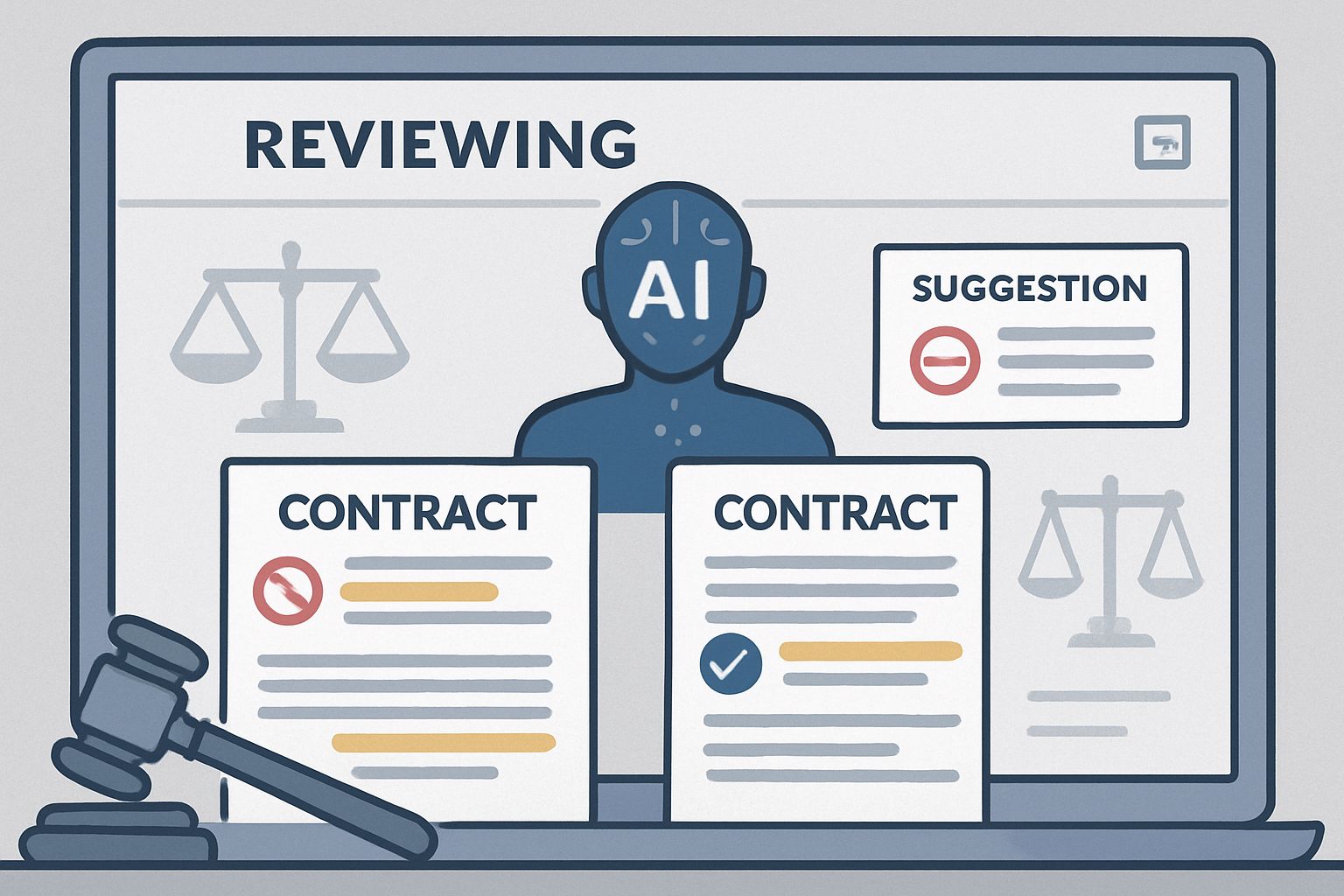
Global AI Market Momentum
Worldwide legal technology spending keeps rising. IDC predicts compound annual growth of double digits through 2027. In contrast, Thomson Reuters alone doubled AI investment to more than $200 million during 2024. Moreover, leadership targets link 15 percent of recurring revenue to generative features. That commitment positions CoCounsel as a flagship of Professional Services AI within law.
- Over 20,000 firms and departments listed as active CoCounsel users.
- More than 50,000 lawyers trained during early 2024 rollout.
- Nightly automated testing exceeds 1,500 scenarios, ensuring continuous quality checks.
- Agentic Deep Research can process 10,000 documents in one batch.
These numbers underscore heavy momentum behind legal technology adoption. Consequently, understanding product evolution becomes essential. Subsequently, we examine CoCounsel's rapid timeline. Collectively, these figures justify sustained board investment trends.
CoCounsel Evolution Timeline Details
CoCounsel emerged from the Casetext acquisition and has expanded quickly. Furthermore, multiple releases since 2024 show a deliberate, staged rollout. Below is a concise timeline highlighting milestones.
- Feb 2024: CoCounsel Core reached Canada and Australia after initial U.S. debut.
- Dec 2024: Japanese lawyers gained access through localized interfaces.
- Mar 2025: Next-gen version integrated Westlaw, Practical Law, and Microsoft 365.
- Aug 2025: CoCounsel Legal introduced Deep Research and guided agentic workflows.
- Nov 2025: Betas added bulk review and customizable workflow plans.
The cadence reveals quick iteration guided by user feedback. Therefore, acquisitions play a pivotal role. Meanwhile, recent purchases deserve closer inspection. Each regional launch required jurisdiction-specific content vetting and language alignment.
Recent Acquisitions Fuel Strategy
Thomson Reuters bought Safe Sign Technologies in 2024 to refine legal language models. Additionally, acquiring Materia delivered specialized expertise in agentic planning. These moves complement the earlier Casetext deal that originated CoCounsel. Consequently, the company now owns critical intellectual property across generation and automation. Integration engineers also merged distinct data pipelines across acquired teams.
Acquisitions sustain the product's technical edge and independence. Subsequently, we explore core capabilities now available.
Core Capabilities Explained Clearly
CoCounsel positions itself as an always-on assistant embedded in familiar tools. Moreover, Deep Research delivers multi-step legal research plans with traceable citations. The platform supports bulk document review covering up to 10,000 files at once. Guided workflows extend automation to drafting privacy policies, depositions, and lease abstracts.
Drafting features draw from Practical Law clauses and firm precedent to generate first drafts. In contrast, deviation checks flag missing obligations before lawyers circulate agreements. Consequently, users report significant time savings on repetitive edits. Importantly, every output links back to sourced materials, streamlining downstream validation.
Professionals can enhance their expertise with the AI Customer Service™ certification. Such credentials reinforce confidence when deploying Professional Services AI in regulated environments.
Together, these capabilities transform core legal workflows through speed and transparency. Therefore, adoption metrics warrant examination next.
Adoption And Integration Scale
Customer adoption has accelerated beyond early enterprise pilots. By 2025, over 20,000 organizations reportedly use CoCounsel daily. Furthermore, six of the Am Law 10 participated in the first wave. Integrations across Word, Teams, and iManage embed the assistant within existing protocols.
Nightly testing of 1,500 scenarios protects stability as scale grows. Moreover, Thomson Reuters claims more than one million cumulative quality tests executed. The vendor asserts zero-retention API calls, encrypted transport, and flexible regional hosting.
Such enterprise safeguards form a baseline expectation for Professional Services AI buyers. Nevertheless, some firms demand independent verification before mass rollout. Pilot groups reported 30 percent faster turnaround on diligence sets.
Adoption statistics illustrate strong momentum, yet scrutiny persists. Consequently, governance and risk factors deserve balanced analysis. Let us now assess those considerations.
Risk And Governance Considerations
Stanford HAI tests flagged hallucination rates in multiple legal research tools, including Westlaw. Thomson Reuters disputes the findings and cites internal benchmarks showing higher precision. Nevertheless, lawyers remain responsible for every citation, even when produced by an assistant. Courts have sanctioned practitioners who filed AI-generated briefs containing fabricated opinions.
Therefore, robust governance frameworks must accompany automation to mitigate malpractice exposure. Recommended controls include supervised review, audit trails, and continuous model monitoring. In contrast, zero-retention processing reduces data leakage risk but requires verification. Public policy debates increasingly call for standardized metrics to compare hallucination rates.
Risk analysis confirms technology benefits rise only with disciplined oversight. Subsequently, we consider future market trajectory.
Market Outlook And Next
Analysts anticipate increasing competition among Professional Services AI platforms serving legal teams. Meanwhile, CoCounsel holds an advantage through proprietary content and agentic workflows. Further language support, pricing clarity, and independent accuracy tests will influence purchase decisions. Moreover, integration roadmaps for DMS systems and Microsoft 365 will determine user satisfaction.
Industry consultants expect automation budgets to prioritize document review efficiencies in 2026. Consequently, CoCounsel's bulk document review capability appears well positioned. Professional Services AI spending may reach 20 percent of total firm technology budgets by 2028. Vendors that provide transparent benchmarks may gain trust faster than feature-rich competitors.
The outlook suggests accelerating investment tempered by accuracy demands. Therefore, buyers should monitor upcoming Deep Research benchmarks.
Thomson Reuters CoCounsel illustrates how Professional Services AI can reshape legal practice at enterprise scale. Deep Research accelerates legal research while guided workflows compress document review cycles dramatically. Moreover, strict governance controls reduce hallucination and malpractice risk, supporting wider automation adoption. However, ongoing accuracy disputes highlight the necessity of human validation for Professional Services AI outputs. Consequently, firms should pilot features, measure outcome gains, and scale only with reliable oversight. Professionals seeking competitive advantage may pair platform use with the previously mentioned certification, strengthening ethical foundations. Explore the evolving ecosystem of Professional Services AI and evaluate CoCounsel's fit within your organization's roadmap today. Timely adoption of Professional Services AI can convert routine workloads into strategic advisory opportunities.
Disclaimer: Some content may be AI-generated or assisted and is provided ‘as is’ for informational purposes only, without warranties of accuracy or completeness, and does not imply endorsement or affiliation.


