

AI CERTS
5 months ago
Enterprise Data Fabric Powers SAP Datasphere Knowledge Graph
Moreover, SAP positions the Knowledge Graph as the brain of this fabric, auto-generating ontologies from ingested sources. Organizations therefore gain richer context, improved governance, and faster insight across finance, supply chain, and service domains. However, hype often obscures technical realities, cost trade-offs, and competitive pressures within the booming graph market. This article dissects the timeline, technology, benefits, and risks so data leaders can plan pragmatic adoption. It also maps ecosystem partnerships and offers implementation guidance drawn from early customer feedback. Finally, readers will see how professional upskilling supports graph-driven innovation. Consider the AI Researcher™ certification for hands-on skills in semantic modeling.
Knowledge Graph Market Momentum
Market demand for graph technology is surging. MarketsandMarkets projects spending climbing from USD 1.07 billion in 2024 to almost USD 7 billion by 2030. Moreover, that 36.6% CAGR outpaces many broader analytics categories. Neo4j already reports revenue above USD 200 million, underscoring real commercial traction. Consequently, vendors now pitch knowledge graphs as essential pillars of any Enterprise Data Fabric strategy. In contrast, analysts warn that adoption depends on robust governance and skilled talent.
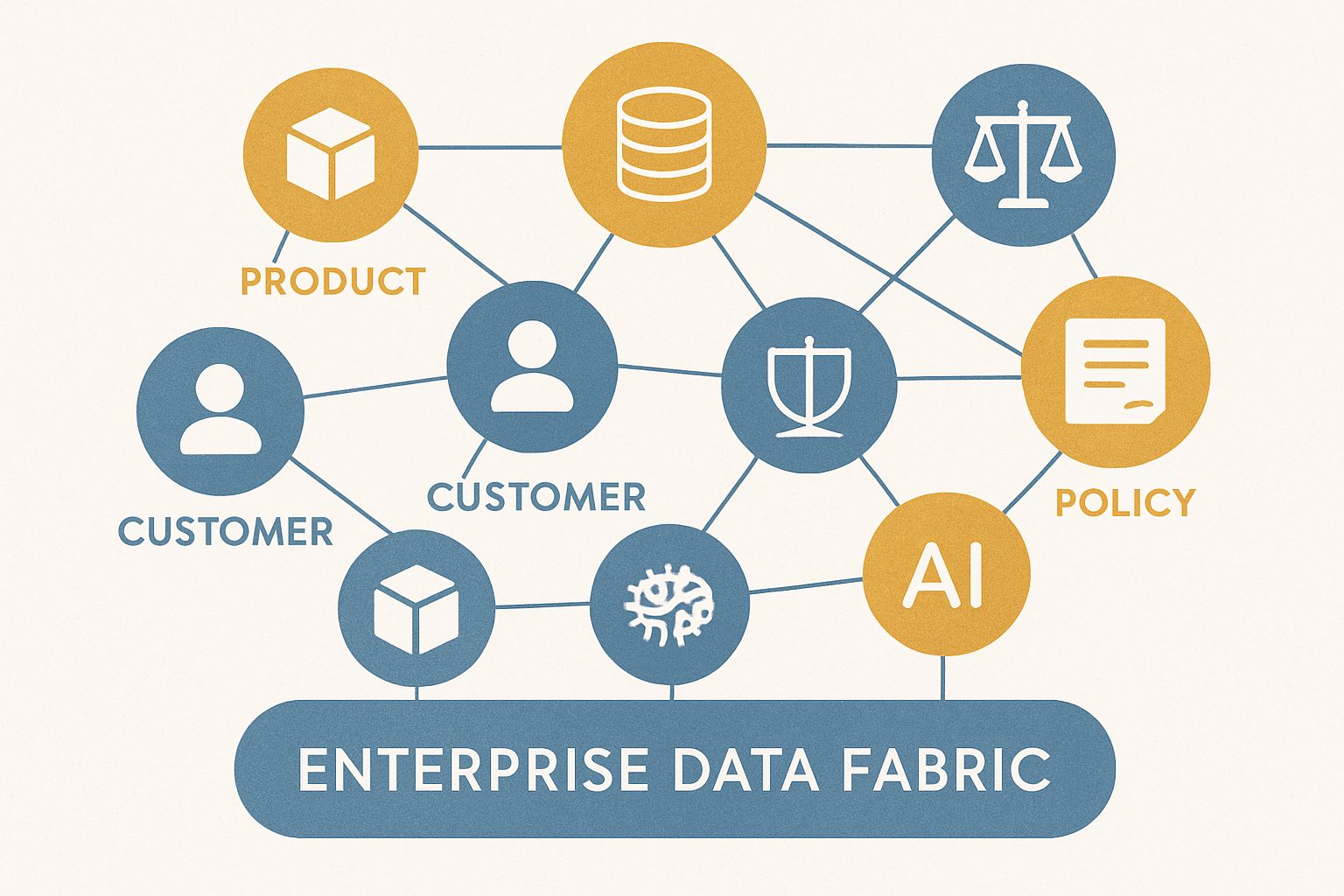
Semantics and context remain top buying criteria. Prospective buyers want explainability, multi-hop reasoning, and seamless integration with existing warehouses. Therefore, SAP’s entry aligns with market appetite and leverages its dominant footprint in business data.
The growth figures signal tangible opportunity. However, understanding SAP’s release cadence is crucial before committing resources to pilots.
Timeline Of SAP Releases
SAP revealed the Datasphere Knowledge Graph preview on March 6, 2024. Subsequently, early adopters tested auto-generated ontologies inside the cloud service. In early 2025, SAP declared the HANA Cloud Knowledge Graph engine generally available. Moreover, the vendor bundled vector search, enabling graph-augmented RAG within the same database.
February 13, 2025, brought SAP Business Data Cloud, positioning the graph as a core semantic layer. Meanwhile, the company unveiled Databricks integration and ready-to-use Joule agents. At Sapphire 2025, metadata ingestion across external sources and data product studio features entered the roadmap. SAP targets Q3 2025 for expanded governance and mapping capabilities.
The timeline shows rapid iteration every six months. Each milestone tightened the Enterprise Data Fabric loop between analytics and operations. Therefore, buyers should align project milestones with forthcoming feature drops to avoid rework. Next, we examine the technology underpinning this semantic stack.
Core Technical Building Blocks
SAP’s approach starts by ingesting business data into Datasphere. The system automatically generates an ontology representing entities, attributes, and relationships. Users can then refine that model using the browser-based editor. Consequently, enterprises accelerate semantics modeling without starting from scratch.
The Knowledge Graph is persisted alongside relational tables inside HANA Cloud. Moreover, SAP now supports SPARQL, Cypher-like SQL extensions, and combined graph-vector retrieval. This architecture reduces data movement and enforces security consistently. Integration with Joule allows multi-hop reasoning and grounded answers through graph-RAG pipelines.
A simple query can fetch supplier risk scores, link shipments, and surface relevant policies in one step. Meanwhile, vector similarity search enriches that result with recent documents or chat transcripts.
- Automatic ontology creation from metadata
- Ontology editor for manual refinement
- Graph and relational processing are unified
- Vector search for RAG
- Governed access controls inherited
These components build a flexible Enterprise Data Fabric foundation inside the SAP stack. However, technology alone does not guarantee value, which leads to practical use cases.
AI Grounding Use Cases
Finance teams ask Joule to explain revenue variances across regions. The graph grounds each answer in ledger entries, exchange rates, and shipment details. Similarly, supply-chain managers detect potential disruptions by traversing multi-tier supplier relationships. Consequently, fraud analysts explore payment outliers across linked vendors and contracts within seconds.
Use cases span analytics, compliance, and automated decision support. Nevertheless, teams must weigh benefits against challenges. The next section contrasts those advantages with emerging concerns.
Benefits And Key Drawbacks
Enterprise Data Fabric proponents highlight several tangible advantages for regulated industries. The most cited benefit is improved answer accuracy for generative AI. Furthermore, automatic ontology creation shortens deployment timelines. Customers also praise unified governance across transactional and analytical workloads. Enterprise Data Fabric alignment means fewer duplicate pipelines and consistent business logic.
However, weaknesses remain. Graphs rely on clean metadata; missing lineage causes misleading connections and poor context. Moreover, graph-RAG architectures introduce latency and infrastructure overhead. Licensing and storage fees can escalate when scaling petabyte volumes.
In contrast, independent analysts warn about vendor lock-in. Interoperability exists, yet deep optimization favors SAP workloads, complicating multi-cloud integration. Consequently, architects must evaluate open standards and exit strategies early.
These pros and cons inform investment decisions. Therefore, understanding the wider ecosystem is equally important. Let us explore competitive dynamics and partnerships next.
Wider Ecosystem And Partnerships
SAP promotes an open data ecosystem to balance proprietary strength with partner reach. Databricks, Google Cloud, AWS, and Snowflake provide landing zones and complementary vector engines. Moreover, Neo4j, TigerGraph, and Stardog often coexist for specialized lineage or multi-modal analytics.
SAP integrates external metadata into the Knowledge Graph through standardized APIs and federation rules. Consequently, teams can merge SAP transactions with IoT streams or social signals. However, mapping semantics across divergent schemas demands careful stewardship and ongoing monitoring.
- Which domains require cross-vendor graph joins?
- How will access controls propagate across clouds?
- What service level agreements cover lineage refresh?
Ecosystem breadth expands capability options. Nevertheless, governance complexity grows in parallel, influencing scheduling and budget. Implementation guidance addresses these operational realities.
Practical Implementation Guidance Checklist
Start with a high-value question, not a technology exploration. Subsequently, inventory relevant business data sources and assign stewardship roles. Define an ontology slice that covers 80% of the required entities before adding edge cases. Moreover, pilot Joule prompts early to validate grounding quality and latency.
Map lineage and classification tags to satisfy compliance teams. Integrate the HANA vector engine only when unstructured documents materially expand answer coverage. Meanwhile, monitor cost drivers such as graph storage and inference compute.
Upskill talent through certifications and workshops. Professionals can deepen graph skills via the AI Researcher™ certification. Consequently, teams gain shared vocabulary around semantics and reasoning patterns.
These steps create disciplined foundations. Next, leaders need a forward-looking perspective on roadmap evolution. That perspective shapes long-term investment planning.
Final Thoughts And Outlook
SAP’s Knowledge Graph strategy positions the company at the intersection of AI, analytics, and governance. Enterprise Data Fabric principles guide the architecture, connecting people, processes, and platforms. Market momentum indicates accelerating adoption, yet execution excellence will separate hype from value. Therefore, data leaders should align release timelines, ecosystem partnerships, and skill development to capture advantages. In contrast, neglecting data quality or semantic stewardship will erode trust and ROI. Nevertheless, disciplined teams can deliver grounded AI agents that enhance decision cycles across finance and supply chains. Act now: review your roadmap, launch a pilot, and pursue relevant qualifications to stay competitive. Your next move could define the Enterprise Data Fabric weaving future enterprise intelligence.
Disclaimer: Some content may be AI-generated or assisted and is provided ‘as is’ for informational purposes only, without warranties of accuracy or completeness, and does not imply endorsement or affiliation.


