

AI CERTS
5 months ago
AWS GraphRAG: Enterprise RAG Knowledge Graph Explained
Moreover, AWS pairs this graph with vector retrieval to deliver richer, traceable responses. This article decodes how GraphRAG works, what it costs, and where risks remain. Readers will learn practical steps, benefits, and certification paths to deepen expertise.
Inside AWS GraphRAG Overview
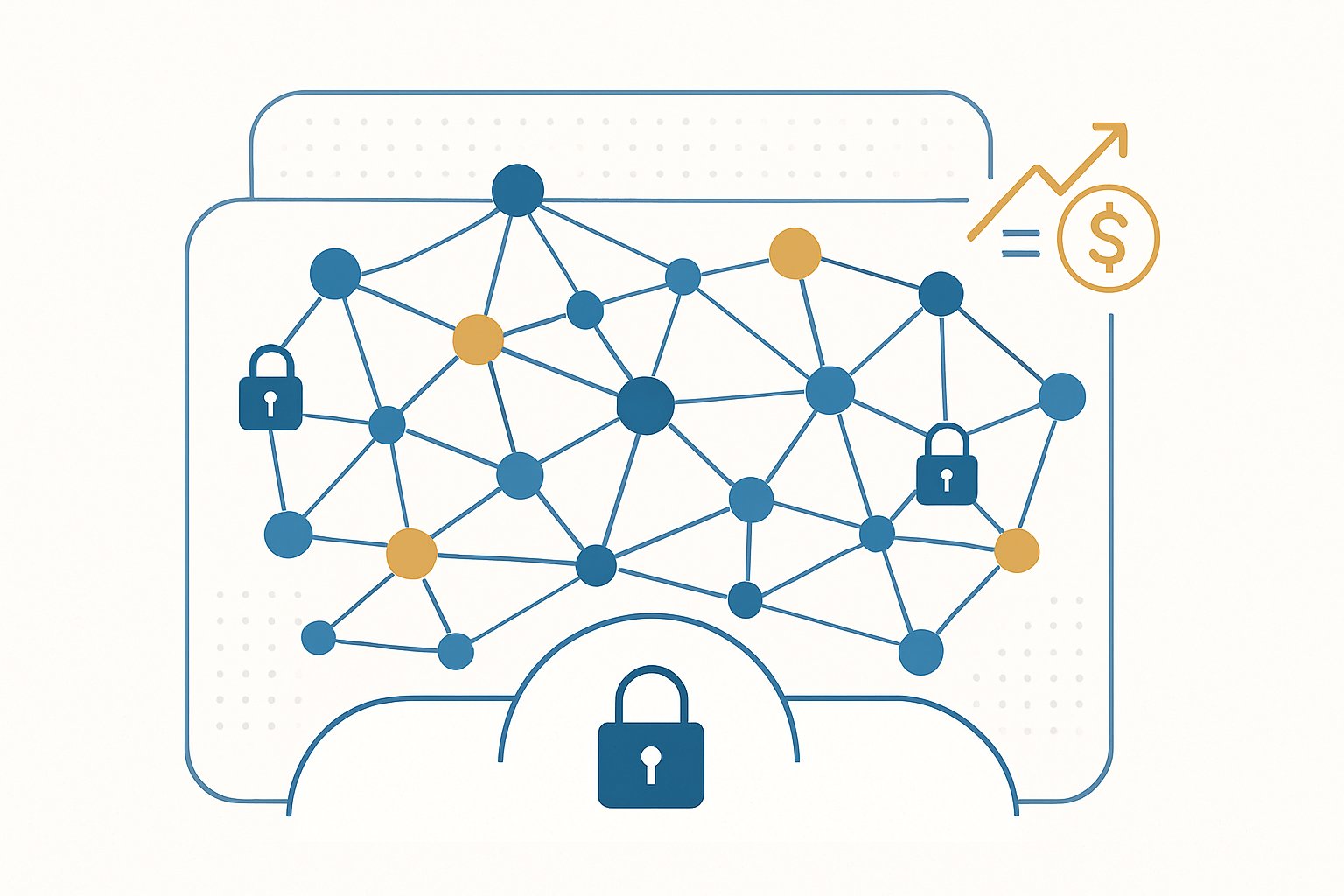
Amazon unveiled GraphRAG for general availability on 7 March 2025. Consequently, the feature integrates with Bedrock Knowledge Bases and Amazon Neptune Analytics. Bedrock now ingests documents, embeds them, and builds a live graph without manual tuning. Furthermore, the RAG Knowledge Graph sits inside Neptune, enabling combined graph traversal and vector search operations. Swami Sivasubramanian explained that connected data improves answer quality and explainability during re:Invent 2024.
Customers access GraphRAG through the Bedrock console or CLI. Meanwhile, underlying costs still stem from Bedrock model calls, Neptune memory units, and S3 usage. Nevertheless, there is no additional license fee beyond those services. Early pilots span financial services, automotive, and cybersecurity sectors.
In short, AWS packaged complex graph and vector tooling into a single managed workflow. Therefore, adoption barriers drop for many teams.
This foundation leads naturally to the system’s technical design.
RAG Knowledge Graph Architecture
The architecture combines embeddings with graph analytics. First, Bedrock extracts text chunks and generates embeddings through Titan or Cohere models. Subsequently, it stores the vectors directly inside Amazon Neptune Analytics, which now supports vector database capabilities. Additionally, Bedrock uses Claude 3 Haiku to extract entities, generating triples that form the RAG Knowledge Graph.
During query time, GraphRAG launches a two-step retrieval loop. Firstly, a semantic vector search finds the most relevant chunks. Secondly, graph traversal explores connected nodes, delivering multi-hop reasoning and stronger context awareness. Consequently, the generation model receives richer evidence and produces answers with fewer hallucinations.
These mechanics marry vector database speed with relationship reasoning. Therefore, architects gain an expandable yet explainable pipeline.
With the architecture defined, the next section examines tangible business benefits.
Benefits For Enterprise Teams
Adopting GraphRAG offers several gains beyond plain vector search. Moreover, the combined retrieval pipeline surfaces linked facts that standalone vectors often miss. As a result, support agents or analysts receive answers that reference multiple documents and reveal relationships.
- Higher answer precision, driven by the RAG Knowledge Graph linking related entities.
- Improved context awareness, thanks to multi-hop traversal that consolidates scattered evidence.
- Reduced hallucinations, since the generator receives stronger, verifiable input segments.
- Explainability, because users can inspect graph edges and source chunks.
- Lower engineering load, given AWS manages ingestion, vector database storage, and graph construction.
Furthermore, early pilots show latency comparable to classic vector pipelines when graphs fit allocated memory. In contrast, customer feedback notes faster iteration times, because developers skip manual schema design. Additionally, teams can reinforce skills through the AI-Ethical Hacker™ certification, which sharpens defensive tactics for GenAI systems.
Overall, these advantages drive faster value realization and stronger trust. Consequently, enterprises gain confidence deploying generative assistants.
The benefits appear clear, yet cost and capacity questions remain.
Costs And Limitations Explained
Financial planning still matters despite the managed experience. First, Neptune Analytics bills by memory-optimized capacity units at roughly $0.48 per hour in AWS examples. Secondly, Bedrock charges for embeddings, generation tokens, reranking, and knowledge base operations. Additionally, S3 storage and request fees accrue for document hosting.
Scaling requires sizing graphs manually because autoscaling remains unavailable. Meanwhile, default data source limits cap each S3 folder at 1,000 files. Teams can request higher quotas or partition buckets, yet these workarounds add process overhead.
Moreover, deleting a knowledge base does not remove the Neptune graph automatically. Therefore, unused graphs can accumulate charges until purged.
The RAG Knowledge Graph still offers savings compared with building custom pipelines. Nevertheless, careful monitoring avoids bill surprises.
Understanding these constraints helps avoid hidden expenses. Consequently, budgeting becomes transparent before production rollout.
Cost aside, security and robustness deserve equal attention.
Security And Robustness Concerns
GenAI security specialists warn that new retrieval layers expand the attack surface. Recent research shows that minor document edits can poison a RAG Knowledge Graph, subtly altering downstream answers. Additionally, multi-hop reasoning may amplify malicious relationships if input validation lags.
However, AWS isolates customer graphs within dedicated Neptune clusters and supports IAM based access controls. Furthermore, customers should apply provenance checks, content scanning, and human review for sensitive corpora. Meanwhile, continuous validation queries help detect unexpected hallucinations or drift.
Professionals aiming to harden deployments can pursue the AI-Ethical Hacker™ certification to deepen threat modeling skills.
Consequently, proactive governance keeps trust high while leveraging graph-enhanced retrieval.
Security diligence mitigates emerging graph-poisoning risks. Therefore, teams must embed controls early in the lifecycle.
With safeguards planned, implementing the service becomes straightforward.
Implementation Quick Start Guide
Getting started requires three primary steps. Initially, enable Claude 3 Haiku and your desired embeddings model inside Bedrock. Next, upload up to 1,000 source files into an S3 bucket. Subsequently, create a Knowledge Base, choose Neptune Analytics as vector database, then launch the initial sync.
During ingestion, Bedrock chunks documents, generates embeddings, and builds the RAG Knowledge Graph automatically. Afterwards, developers can run retrieve-and-generate calls via the Agent Runtime API or the console chat interface.
Monitoring lives in CloudWatch. Moreover, you should tag Neptune resources to simplify cost tracking. In contrast, deleting unneeded graphs prevents idle spending.
Implementation needs minimal custom code, accelerating pilots. Consequently, teams can validate value before scaling broadly.
A final look at industry positioning rounds out the analysis.
Market Context And Outlook
The GraphRAG launch signals a race among cloud and graph vendors. Neo4j, Pinecone, and Weaviate each combine vector database functions with graph traversal in their own toolkits. However, AWS now offers an integrated path that appeals to existing Bedrock customers.
In contrast, critics point to potential vendor lock-in and region availability gaps. Meanwhile, open-source libraries like LlamaIndex give developers portable GraphRAG blueprints that connect to any datastore. Additionally, hybrid architectures still allow on-premise vector database deployments while Neptune handles graph analytics.
Market analysts expect graph-enhanced RAG adoption to double over the next year. The RAG Knowledge Graph approach underpins that trend by boosting context awareness and suppressing hallucinations in enterprise search workflows.
Competitive dynamics will widen feature sets and lower prices. Therefore, buyers should revisit offerings every quarter.
These market forces set the stage for our closing insights.
Conclusion And Next Steps
The Amazon Bedrock GraphRAG release pushes Retrieval-Augmented Generation into a new era. This service fuses vector database storage with the RAG Knowledge Graph. AWS thereby delivers richer context awareness, fewer hallucinations, and faster search performance. Moreover, a pay-as-you-go model and streamlined setup shorten experimentation cycles. Nevertheless, costs, file limits, and security responsibilities demand careful planning. Consequently, enterprises should pilot workloads, monitor Neptune usage, and enforce validation checks. Professionals wanting deeper defensive insight can pursue the AI-Ethical Hacker™ certification. Ultimately, adopting this architecture today positions teams for competitive advantage tomorrow. Act now to explore GraphRAG and fortify your generative AI stack. Further reading on AWS documentation will accelerate onboarding.


