

AI CERTS
5 months ago
Vector Databases Elevate CRM Data Strategy
The launch matters because about 90% of enterprise information remains unstructured. Therefore, grounding large language models through retrieval-augmented generation, or rag, is now critical. In contrast, previous approaches required costly tuning or external pipelines. Salesforce positions the native store as the missing layer connecting insights, governance, and automation.
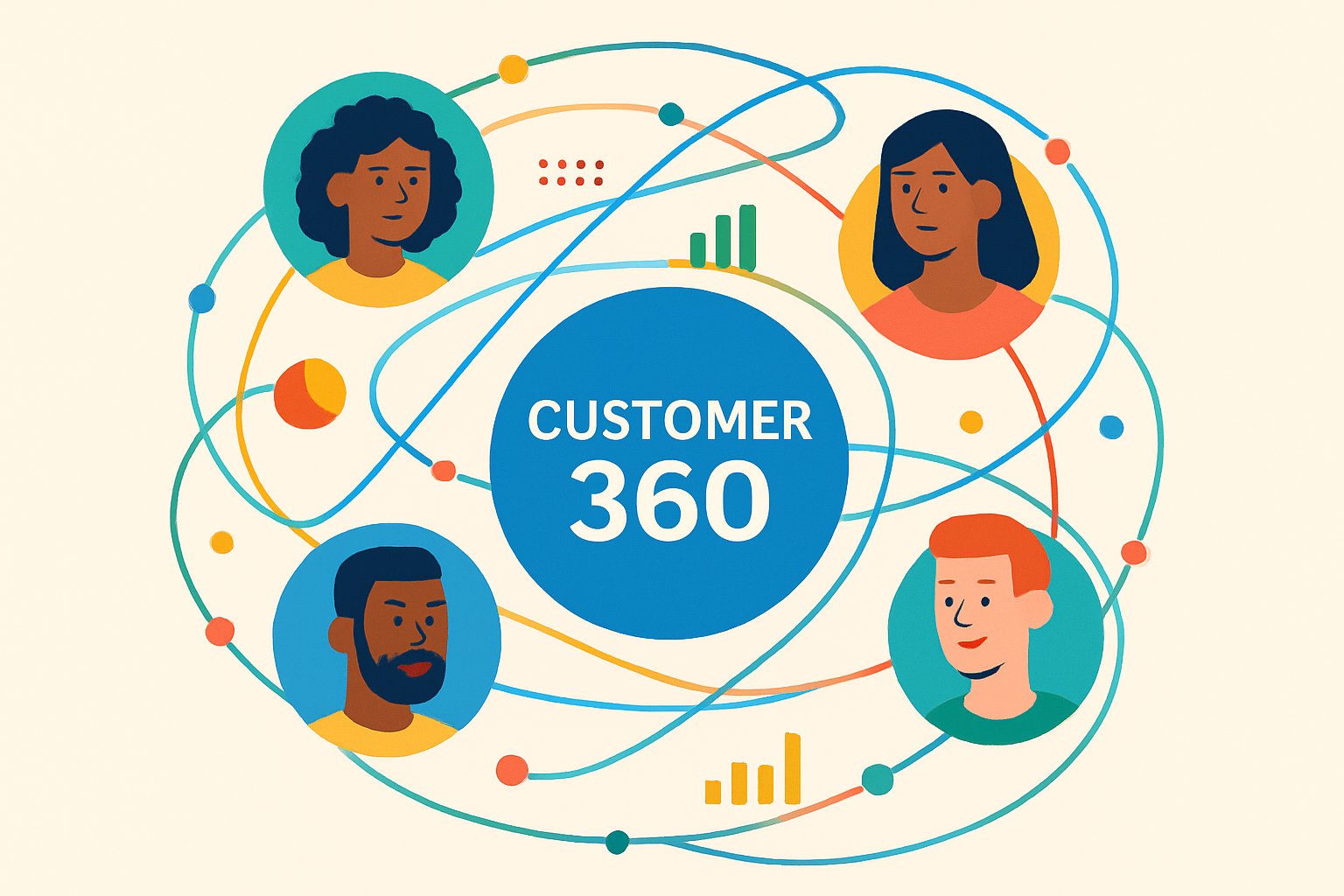
Rahul Auradkar, Salesforce EVP, summarized the pitch: “The Data Cloud Vector Database relieves the challenge of costly and complex processes to harness the value of unstructured data.” His statement captures the strategic pivot facing every modern CRM Data Strategy.
Vector Database Milestone Timeline
The road to general availability progressed quickly. Initially announced on 14 December 2023, the feature entered pilot in February 2024. Subsequently, Salesforce declared full release on 17 June 2024. Meanwhile, documentation now references a rebrand from Data Cloud to Data 360 dated 14 October 2025. Therefore, professionals should quote names accurately when reviewing sources.
Key timeline events include:
- Announcement: 14 December 2023 – vector database revealed
- Pilot start: February 2024 – limited customer access
- GA announcement: 17 June 2024 – production readiness
- Rebrand notice: 14 October 2025 – Data Cloud becomes Data 360
These milestones highlight Salesforce’s sprint toward integrated semantic search. Furthermore, they signal urgency for teams refining a forward-looking CRM Data Strategy. Consequently, early adopters gained time to test governance and cost models before widespread rollout.
Core Technical Workflow Steps
Successful deployment depends on understanding the pipeline. Initially, assets—PDFs, emails, call transcripts—enter ingestion flows. Subsequently, the system parses and chunks each file into semantic fragments. Vector embeddings are then generated using configurable models. Moreover, index objects store both vectors and metadata for hybrid search.
Salesforce supports native Hyper indexing plus integrations with Milvus. In contrast, external point solutions like Pinecone or Weaviate remain options outside the platform. However, unified governance inside Data 360 simplifies permissioning.
Ingestion To Indexing Steps
Architects typically follow five repeatable stages:
- Select content sources within customer 360 boundaries.
- Define chunk granularity for balanced recall and latency.
- Choose an embedding model aligned with domain language.
- Create a Search Index Configuration through UI or API.
- Run tests using vector-only and hybrid queries in Einstein Copilot.
Therefore, each implementation phase influences relevance, speed, and cost. Nevertheless, disciplined experimentation ensures alignment with overarching CRM Data Strategy goals.
The workflow summary underscores a vital takeaway. Precision in chunking and indexing improves rag performance while containing resource charges. Meanwhile, well-documented pipelines support audit requirements.
Governance And Cost Factors
Integrating sensitive unstructured data into prompts raises security stakes. Consequently, Salesforce introduced the Einstein Trust Layer for masking and consent enforcement. Nevertheless, compliance leaders must verify policies across regions, especially when Hyperforce deployments span jurisdictions. Additionally, export and federation options deserve attention to prevent vendor lock-in.
Cost transparency is another concern. Indexing, embedding generation, and query units follow usage-based pricing. Therefore, forecasting volumes early will protect budgets. Community posts on SalesforceBen warn of unexpected spikes when pilots scale.
Forecasting Usage Expenses Reliably
Teams can model likely spend using three variables:
- Average file size and chunk counts
- Expected daily query frequency via automation
- Retention period for vectors and citations
Moreover, tagging workloads by business unit improves chargeback visibility. Subsequently, finance partners can align allocations with observable benefits. Clear modeling sustains confidence in any expanded CRM Data Strategy.
In short, governance frameworks and financial oversight must mature alongside technical rollouts. However, disciplined planning converts potential risks into manageable trade-offs.
Competitive Market Context View
Vector databases now crowd a dynamic landscape. Pinecone, Zilliz’s Milvus, Weaviate, Qdrant, and RedisVector compete for developer mindshare. In contrast, Salesforce differentiates through native tie-ins with customer 360 objects, Flow Builder, and Tableau.
Industry observers note that integrated governance and UI convenience often outweigh pure benchmark leadership. Consequently, enterprises already invested in Salesforce see lower switching costs. Nevertheless, independent proof-of-concept benchmarks remain essential before settling procurement decisions.
Therefore, a balanced CRM Data Strategy might blend Salesforce’s store for core customer journeys while retaining specialized engines for advanced research workloads. Moreover, federation abilities within Data 360 accommodate such hybrid patterns.
The competitive review clarifies vendor strengths and gaps. Subsequently, buyers can tailor architectures without compromising agility.
Implementation Best Practices Guide
Project teams should begin with a narrow use case, such as knowledge-base grounding for Einstein Copilot. Furthermore, iterate on chunk size and embedding model selection. Developers must monitor recall, latency, and citation fidelity throughout sprints.
Professionals can enhance skills through the AI Project Manager™ certification. Consequently, certified leaders bring structured governance and risk frameworks to every phase.
Additional recommendations include:
- Enable hybrid search to combine keyword precision with semantic breadth for rag flows.
- Automate index refreshes via Flow Builder automation triggers.
- Log query metadata to refine security policies and budget forecasts.
These practices ensure controlled expansion aligned with enterprise objectives. Moreover, they reinforce the evolving CRM Data Strategy across departments.
The section demonstrates actionable playbooks. Therefore, organizations can progress confidently from pilot to production.
Salesforce claims its platform processes over 100 billion records daily. Meanwhile, analysts estimate 70–90% of enterprise data remains unstructured. Such scale statistics illustrate the urgency to operationalize vector retrieval. Consequently, melding structured and unstructured data inside the platform creates richer intelligence loops.
However, performance depends on careful configuration. Independent measurement of latency and relevance across varied corpora is still sparse. Nevertheless, early adopter anecdotes report meaningful agent accuracy boosts when prompts reference fresh support transcripts.
Strategic alignment therefore, hinges on evidence. Moreover, continuous feedback cycles will refine both embeddings and index hygiene. Every success incrementally strengthens the governing CRM Data Strategy.
Conclusion
Salesforce’s vector database marks a pivotal evolution for enterprise AI. Moreover, it fuses unstructured data, rag, and automation into everyday workflows, enriching customer 360 views. Governance layers and metered pricing still demand diligent oversight. Nevertheless, disciplined pilots, clear cost models, and certified leadership can unlock transformative value. Consequently, organizations refining their CRM Data Strategy should initiate proofs of concept now. Explore further expertise through the linked certification and accelerate informed innovation today.


