

AI CERTS
3 months ago
Marketing Personalization AI Boosts Amazon Personalize
This article unpacks how the Content Generator works. Moreover, it examines practical costs, risks, and governance steps. You will learn why Marketing Personalization AI matters for competitive retention. We reference developer docs, AWS pricing, and early customer metrics. Finally, you will see certification paths to sharpen strategic oversight. Let us dive into the technology powering personal messages at scale.
AWS Feature Set Overview
Amazon Personalize has always supplied collaborative filtering and contextual recommendations. However, the November 2023 release injected a managed Content Generator into batch pipelines. The module attaches a theme, such as “Rise and Shine,” to each recommendation set. Additionally, developers can return up to ten metadata fields with every call. LangChain support, delivered through AmazonPersonalizeChain, streamlines prompt construction against Bedrock or external models. Together, these features anchor Marketing Personalization AI inside existing AWS workflows. They extend classic relevance scoring with creative language generation. Consequently, the platform shifts from silent suggestions to persuasive narratives, setting the stage for workflow details.
Technical Workflow Explained Clearly
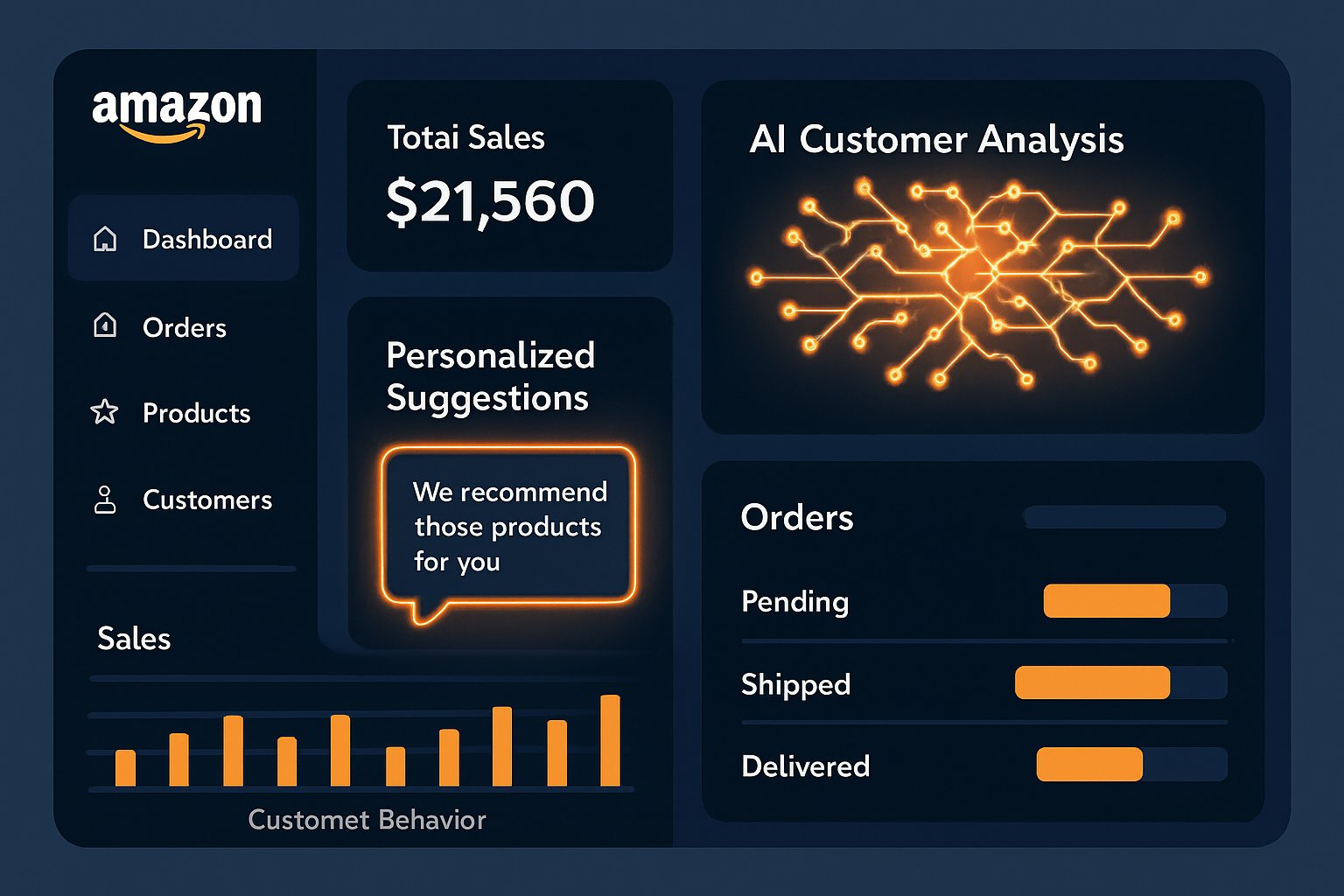
Engineering teams begin by uploading interactions, users, and items to Amazon Personalize datasets. Next, they train a recommender or campaign using chosen recipes. Subsequently, batch jobs fetch 50 top recommendations along with selected metadata. The batch result passes to the Content Generator, which consumes item titles and descriptions. Meanwhile, an LLM accessed through Bedrock proposes a concise, generative text tagline. Developers may invoke the prebuilt LangChain wrapper instead, chaining prompts, context, and output validators.
- Ingest data and metadata
- Train or update recommender
- Generate recommendations plus metadata
- Invoke Content Generator or LangChain
- Post-process and publish copy
Therefore, the full path remains event driven and serverless, limiting operational burden. These steps illustrate how infrastructure abstractions make Marketing Personalization AI approachable for lean teams. The next section explores use cases that capitalize on these mechanics.
Business Use Case Examples
Retailers often struggle to craft catchy carousel titles at scale. Content Generator solves that pain by turning breakfast products into uplifting morning slogans. Furthermore, streaming platforms like FOX Sports reported a 400% spike in post-event viewership starts. The company plans deeper adoption of Marketing Personalization AI for highlight reels and playlists. Email marketers also gain. Instead of static subject lines, campaigns now embed generative text aligned with each user’s cart. Consequently, open rates increase because recipients perceive thoughtful curation. B2B vendors tap the same pipeline to draft personalized pitch summaries that reference recent browsing.
- Statista values the generative AI market at US$66.9B for 2025
- Gartner expects 80% enterprise adoption of generative APIs by 2026
- FOX Sports cites 400% viewership growth from personalized collections
Each figure underscores surging demand for contextual recommendations and persuasive copy. Therefore, Marketing Personalization AI appears central to future loyalty programs. These examples confirm tangible revenue lifts. However, financial gains require clear cost planning, addressed next.
Cost And Scaling Considerations
Amazon Personalize pricing spans ingestion, training, recommendation hours, and inference. Training costs start near $0.002 per thousand interactions. Inference averages $0.15 per thousand recommendations on popular recipes. Moreover, adding an LLM call introduces Bedrock pricing, which varies by model family and token volume. Consequently, teams should profile both engine and generative text expenses during pilots. AWS allows selecting only needed metadata fields, reducing payload and token charges. Architects should monitor throughput because each batch can return fifty items and ten attributes. Therefore, cost scales predictably with active users, not sudden traffic spikes. Diligent metering keeps Marketing Personalization AI within marketing budgets. Fiscal prudence must coexist with ethical safeguards, explored in the following section.
Risks Privacy And Ethics
Generative systems sometimes hallucinate inaccurate claims about products. In contrast, mislabelled items can erode customer trust quickly. Additionally, hyper-targeting raises privacy concerns under GDPR and CCPA. Academic audits show GenAI assistants leaking profiling signals during customer experience flows. Bias presents another risk; stereotypes may slip into themes without review. Therefore, organizations must implement guardrails such as profanity filters, factual checks, and human approval loops. AWS recommends using relevance scores to suppress low confidence generative text. Professionals can deepen governance skills through the Chief AI Officer™ certification. Responsible design protects both brand equity and regulatory standing. Next, we outline an actionable implementation checklist.
Implementation Best Practice Checklist
Successful launches follow a disciplined sequence. Firstly, include rich item titles and descriptions in the item dataset. Secondly, enable metadata return fields during campaign creation.
- Define success metrics like open rate or add-to-cart uplift
- A/B test themes against control groups
- Monitor token spend each sprint
- Add bias and profanity filters
- Rotate exploration recommendations for diversity
Moreover, integrate LangChain validators to stop inappropriate outputs before publishing. Subsequently, share findings with analytics teams to refine prompts and segment logic. Following these steps accelerates Marketing Personalization AI deployment while limiting surprises. Finally, let’s assess market trends and strategic recommendations.
Market Outlook And Recommendations
Industry analysts forecast generative AI revenues to exceed US$350B by 2030. Meanwhile, personalization software remains a multi-billion niche within that larger wave. Competitors like Adobe and Salesforce embed similar suggestion engines, yet lack turnkey LangChain flows. Consequently, AWS gains differentiation by bundling infrastructure, models, and compliance tooling. Gartner predicts 80% enterprise adoption of production GenAI by 2026, reinforcing the urgency. Therefore, executives should roadmap Marketing Personalization AI pilots within the next fiscal year. Start with limited email campaigns, then expand to feed product detail pages and chatbots. Customer experience teams should partner with data science counterparts to monitor lift and sentiment. Moreover, negotiating committed spend tiers with AWS can secure discounting against surging volume. These actions prepare firms for increasingly conversational commerce channels. In summary, early movers deploying personalization AI stand to capture meaningful share and loyalty. The conclusion distills final insights and next steps.
Marketing teams face intense pressure to personalize without overwhelming resources. The AWS ecosystem now offers a managed route from data to persuasive stories. Throughout this article, we saw how Marketing Personalization AI merges recommendations with generative text securely. Moreover, thorough cost modeling and guardrails keep initiatives sustainable and compliant. Robust testing delivers measurable lifts in customer experience across web, mobile, and email programs. Consequently, early adopters report higher engagement and faster iteration cycles. To lead similar projects, consider earning the Chief AI Officer™ credential. Act now, pilot responsibly, and transform your brand dialogue with data-driven empathy.


