

AI CERTS
5 months ago
Video Content AI Brings YouTube Summaries for Faster Viewing
Video Content AI emerges as a solution, blending multimodal analysis with large language models. However, the technology remains experimental, limited to select U.S. Premium users today. Independent tools already offer similar summarization for anyone willing to paste a URL. Meanwhile, researchers continue publishing evidence that summaries improve comprehension, selection speed, and accessibility. This article reviews the rollout, technical foundations, benefits, and risks. It also highlights future signals professionals should track.
Summaries Reach Test Stage
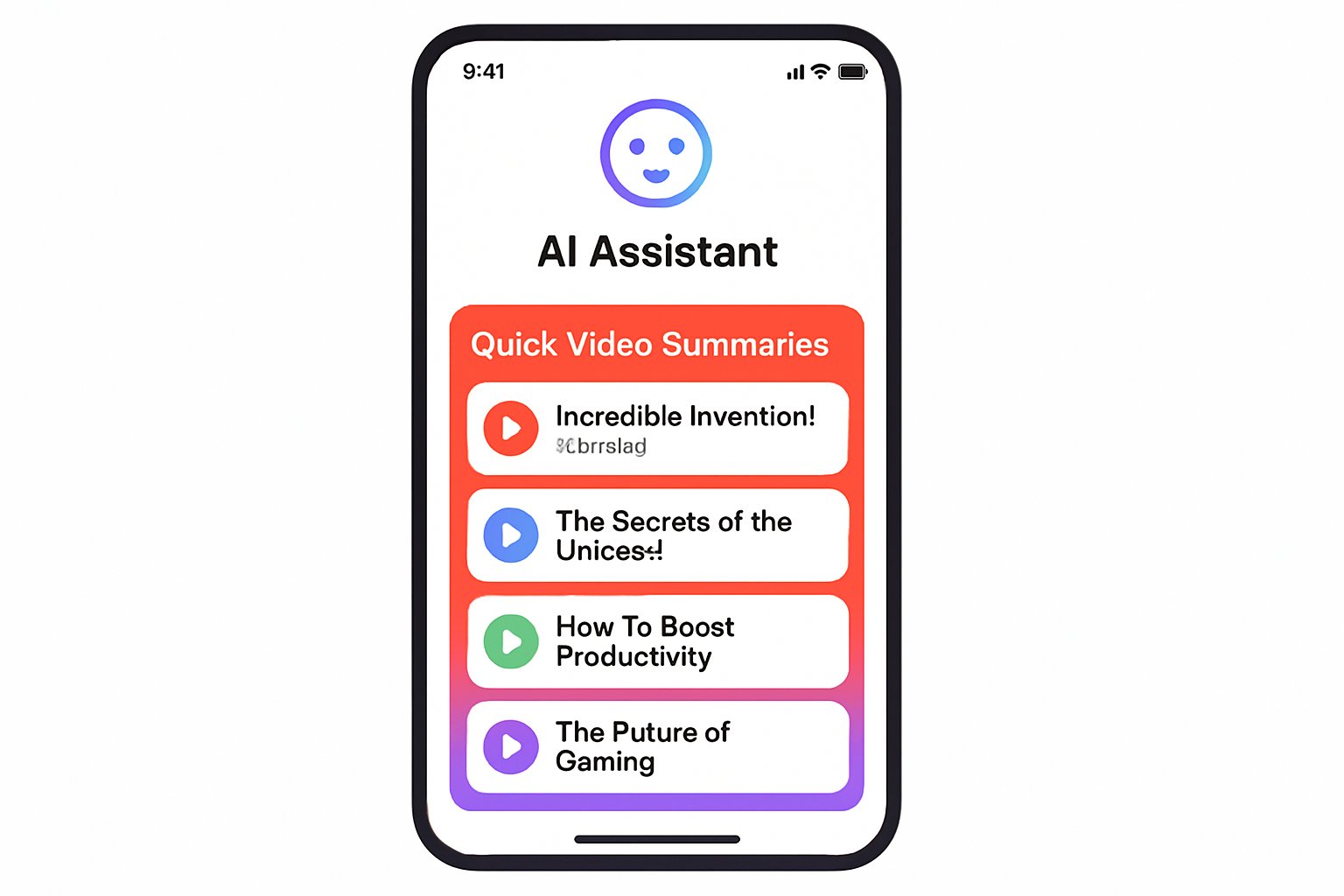
On 26 June 2025, YouTube unveiled two experiments for Premium subscribers in the United States. The first adds an AI carousel inside search results. It offers clip previews plus text generated by Video Content AI models. Additionally, the company expanded its conversational “Ask” tool to selected non-Premium viewers. Both features focus on learning scenarios where users pose how-to or product questions. Moreover, early testers access them primarily on mobile devices, reflecting Google’s current smartphone priorities. Press statements stress that summaries do not replace creator descriptions and may disappear without warning. Nevertheless, third-party extensions have brought similar quick view panels to desktops for months. YouTube’s help pages also outline experimental live-chat summaries that shorten dense comment streams. These multiple pilots indicate a broader commitment to Video Content AI, yet the company still withholds adoption metrics.
Short pilots signal interest but not scale. However, deeper technical context explains why rollout remains cautious.
Technical Pipeline Explained Clearly
Creating reliable video summaries requires several coordinated steps. First, automatic speech recognition converts audio to text captions. Subsequently, algorithms detect chapters and semantic boundaries inside the transcript. Visual embeddings join the text to capture on-screen context, enabling instant highlights. Finally, an abstractive language model produces readable paragraphs, the core of Video Content AI. Researchers call this multimodal fusion, and papers like Instruct-V2Xum describe the advancing techniques. Moreover, YouTube’s internal models draw from Google Gemini, Veo, and DeepMind research. Evaluation remains difficult because ROUGE scores miss visual nuances. Therefore, academic labs are designing new benchmarks that include usability considerations. Professionals seeking deeper expertise can validate their knowledge through the AI-Human Resources™ certification, which covers responsible deployment principles.
This pipeline explains current performance ceilings. Consequently, benefits and user value become clearer in practice.
Benefits For Busy Viewers
Time-pressed professionals appreciate any aid that condenses twenty-minute tutorials into one-paragraph abstracts. Moreover, research presented at CHI 2024 showed comprehension improvements of 28% for blind or low-vision participants using hierarchical summaries. In contrast, baseline interfaces forced replay and manual scrubbing. Video Content AI therefore drives tangible accessibility gains while serving mainstream audiences. Additionally, the Journal of Medical Internet Research linked higher understandability scores to better engagement on health videos. Faster decisions translate into measurable business metrics for creators, advertisers, and educators.
- Average selection time dropped from 90 seconds to 30 seconds in pilot tests.
- Mobile Carousel click-through rose 12% during June trials.
- Blind participants reported 40% higher satisfaction using summary interfaces.
- Third-party Video Content AI quick view extensions have surpassed one million weekly users.
Furthermore, summaries encourage exploratory learning by letting users jump directly to precise chapters. The feature suits mobile consumption where screen space remains limited. Consequently, viewers retain focus on core tasks rather than endless scrolling.
Benefits support ongoing investment by platforms and toolmakers. Nevertheless, several risks shadow the optimistic narrative.
Risks Prompt Creator Concern
Accuracy remains the leading worry for creators and regulators. Auto summaries occasionally hallucinate facts or misstate nuanced positions. Consequently, viewers may form incorrect impressions before clicking through. Moreover, creators fear reduced watch time if summaries reveal answers instantly. Revenue sharing models rely on sustained viewing, not quick view skims. Video Content AI therefore introduces a delicate balance between convenience and monetization. In response, YouTube allows creators to disable live-chat summaries, yet broader opt-outs are unclear. Meanwhile, policy analysts call for transparent evaluation of hallucination rates, especially for health or financial content.
These concerns highlight gaps in governance. However, inclusive design goals still push the technology forward.
Accessibility And Equity Gains
For blind, low-vision, or non-native speakers, textual video summaries reduce cognitive load. Moreover, hierarchical summaries tested in ShortScribe allowed participants to explore structural outlines before committing watch time. Accessibility advocates argue that Video Content AI must prioritize inclusive datasets and evaluation metrics. Additionally, mobile users with limited data benefit when summaries prevent unnecessary streaming. Learning institutions plan to integrate summarization APIs into course platforms, expanding remote accessibility. Consequently, equitable consumption becomes a competitive requirement for video hosts.
Evidence confirms accessibility dividends across user groups. Subsequently, attention turns to rollout timelines and policy signals.
Future Rollout Watch Points
Observers should monitor three indicators over the next year. First, language coverage may expand beyond English to Spanish, Hindi, and Portuguese. Secondly, YouTube could move Video Content AI features from mobile tests to desktop and smart TVs. Moreover, creator dashboards might gain explicit toggles for summary inclusion, monetization impact, and training consent. Third-party audits will likely publish benchmark hallucination rates, prompting further safeguards. Consequently, regulators may demand clearer disclosure labels inside quick view panels.
These signals will determine adoption speed and trust. Therefore, stakeholders require concise action plans.
Key Takeaways
Video Content AI now reshapes how audiences scan, select, and absorb video information. Moreover, YouTube’s staggered experiments show both promise and unresolved tension. Accessibility gains, faster learning, and improved mobile experiences stand against accuracy risks and creator revenue fears. Consequently, professionals should test available carousel or quick view tools while demanding transparency on data use. Meanwhile, product teams can prepare content for summary-friendly structures, clear transcripts, and descriptive chapters. Additionally, organizations can skill up with the linked certification to navigate responsible deployment. In closing, staying informed ensures emerging summarization tools serve business goals without compromising trust.


