

AI CERTS
7 months ago
Meta’s Wearable AI Assistants Redefine Smartglass Momentum
Moreover, EssilorLuxottica reported two million units sold by early 2025. This article unpacks the latest update, product roadmap, and emerging business implications. It also evaluates technology advances, privacy hurdles, and market forecasts. Therefore, professionals gain a concise yet comprehensive briefing for strategic planning. Each section follows newsroom rigor and tight readability rules.
Market Momentum Rapidly Builds
Interest in camera based glasses surged after the November 2024 Meta AI rollout. Subsequently, firmware v11 added contextual vision queries, pushing real engagement higher. IDC now tracks glasses as the fastest growing wearable subcategory.
EssilorLuxottica confirmed two million Ray-Ban Meta units shipped by February 2025. Meanwhile, capacity expansion targets reach ten million pairs annually by 2026. Such scale signals that Wearable AI Assistants are crossing the chasm.
Nevertheless, Meta still faces stiff competition from Snap, Xreal, and Apple rumors. In contrast, its partnership with Ray-Ban grants unmatched fashion credibility. Therefore, analysts anticipate continued momentum despite macro uncertainty.
Moreover, early adopters praise the assistant’s convenience, reinforcing confidence in Wearable AI Assistants as daily tools. Ray-Ban Meta sales prove meaningful consumer traction. However, competitive dynamics demand sustained innovation, leading naturally to new features.
Feature Set Expands Fast
Meta’s firmware cadence keeps enthusiasts engaged. Furthermore, December 2024 introduced live AI with continuous conversation. The update delivered true multimodal queries across voice and video streams.
April 2025 added on-device translation for four major languages. Consequently, vacationers can ask directions aloud and receive immediate captions in their ears. Such frictionless travel experiences drive word-of-mouth adoption.
Gen 2 hardware shipped in September 2025 with eight-hour typical battery life. Additionally, 3K video capture and faster charging improved content creation workflows. Wearers now carry lighter chargers and share clips faster on Messenger.
Therefore, the line evolved from simple selfie shades into capable Wearable AI Assistants. Multimodal interaction feels natural because users see what they ask about. These upgrades reinforce Meta’s iterative product philosophy.
Features keep stacking at a brisk pace. Subsequently, a new display tier emerged, expanding ambitions again.
Display Tier Officially Debuts
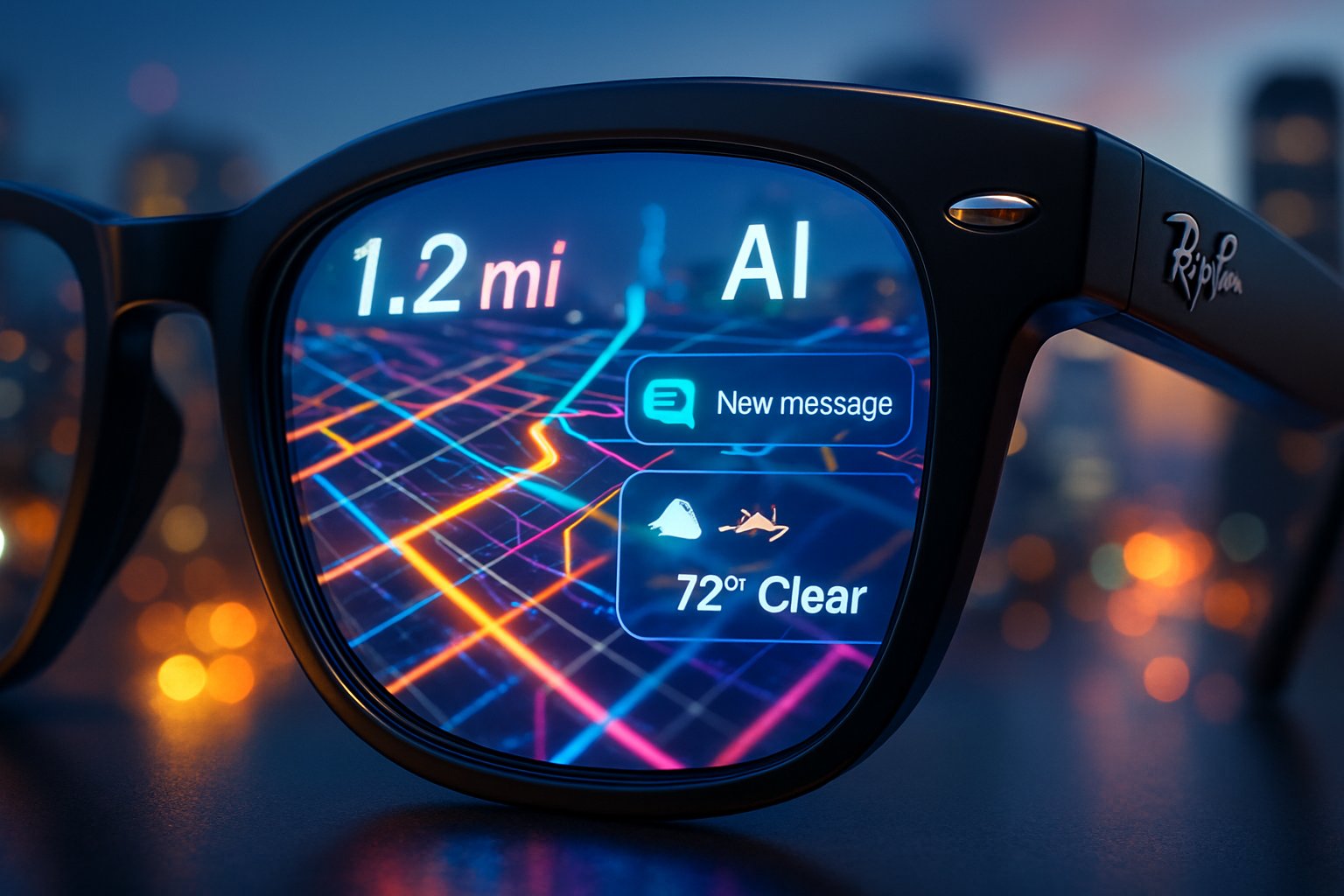
Meta Connect 2025 showcased Ray-Ban Display, blending a monocular screen with sleek frames. Moreover, the bundle ships with the Meta Neural Band, an EMG wrist controller. Pinch gestures silently scroll messages or maps projected in one lens.
In contrast, earlier models relied solely on voice input. Now, discreet control broadens office and transit use cases. Consequently, Wearable AI Assistants inch closer to full augmented reality.
Mixed-use battery lands around six hours, with a 30-hour case reserve. Travel influencers value those numbers because long filming days strain packs. However, reviewers will soon test real-world endurance.
Display glasses also extend translation to live captions floating inside the lens. This multimodal overlay helps language learners follow conversations without looking away. Therefore, the premium price at $799 feels justified for power users.
Display and Neural Band mark Meta’s most ambitious leap yet. Meanwhile, manufacturing capacity must rise to sustain demand, leading to the supply story.
Scale And Supply Chain
EssilorLuxottica handles Ray-Ban assembly and global retail distribution. Furthermore, its February 2025 report announced two million units shipped. Executives plan to reach ten million yearly capacity by 2026.
- Ray-Ban Meta Gen 2 starts at $379 retail.
- Display tier commands $799 but includes Neural Band controller.
- Battery life: eight hours Gen 2, six hours Display mixed use.
Moreover, Meta launched a holiday trade-in pilot to accelerate upgrade cycles. Consumers gained credits when moving from older glasses to newer hardware. Consequently, analysts expect revenue per user to climb over time.
Retailers such as Best Buy require demos before purchase, controlling expectations. In contrast, online buyers rely on influencer reviews and unboxing videos. Nevertheless, both channels report limited stockouts during peak weeks.
These logistics underscore Meta’s commitment to scaling Wearable AI Assistants rapidly. Therefore, production partnerships remain central to the strategy.
Supply is growing yet remains tight for premium variants. Subsequently, attention shifts toward concerns that could slow momentum.
Challenges And Concerns Persist
Smartglass adoption still battles privacy anxiety. However, camera LEDs and on-device processing have not silenced every critic. European regulators continue studying public-space recording rules.
Meanwhile, some users question the energy claims under heavy multimodal workloads. Independent reviewers report five to six hours during continuous travel vlogging. Therefore, Meta must optimise firmware to stretch runtime further.
Economic risks also linger. Reality Labs posts large losses, and hardware margins remain thin. Nevertheless, Meta sees Wearable AI Assistants as gateways to future ad platforms.
Competition from Apple or nimble startups could erode share quickly. Consequently, brand loyalty programs and frequent software features may protect incumbency. Professionals can enhance their expertise with the AI Sales™ certification to navigate this shift.
Challenges range from regulation to battery chemistry. In contrast, robust demand suggests upside if solutions arrive swiftly.
Strategic Outlook Moving Forward
Analysts predict iterative advances toward full augmented reality. Subsequently, Meta will refine sensors, optics, and on-device chips. Future Wearable AI Assistants may feature dual displays and enhanced edge processing.
Moreover, executives hint at offline translation modules for areas with spotty data. Such capability could open frontier travel markets and industrial field work. Hardware miniaturisation remains essential to keep frames stylish.
Meanwhile, expanded app ecosystems will encourage developers to build multimodal workflows. Consequently, commercial use cases like remote support and field audits may mature quickly.
Investors continue tracking unit sales and gross margin improvements. Therefore, production scale and component costs must align by 2026. Wearable AI Assistants that balance value, privacy, and design will dominate.
Strategic priorities include better batteries, richer software, and global compliance. Nevertheless, the current roadmap positions Meta for sustained leadership.
Conclusion And Next Steps
Meta’s Ray-Ban family illustrates how fast wearable computing can commercialise. Moreover, steady firmware drops and bold display innovation keep momentum alive. Cumulative sales, capacity expansion, and price segmentation all point toward mainstream acceptance. Nevertheless, privacy, battery life, and economic pressures remain critical watchpoints. Consequently, the companies that master secure translation, resilient hardware, and elegant design will thrive. For strategists, the rise of Wearable AI Assistants signals a pivotal platform shift. Additionally, upskilling can sharpen competitive advantage during this transition. Explore certifications and join the conversation on workplace transformation today.
Disclaimer: Some content may be AI-generated or assisted and is provided ‘as is’ for informational purposes only, without warranties of accuracy or completeness, and does not imply endorsement or affiliation.


