

AI CERTS
7 months ago
Perplexity’s Instant Buy Bets on AI Search Monetization
Professionals now ask whether in-chat purchasing will finally unlock durable revenue for generative answers. This report examines Perplexity’s experiments, metrics, and challenges while mapping the broader competitive terrain.
Market Shift Dynamics
Historically, search ads relied on blue links and outbound clicks. However, conversational agents compress research, comparison, and purchase steps inside one canvas. Therefore, AI Search Monetization strategies must adapt to attention staying inside the chat window. Advertisers also expect measurable performance despite the new layout. Meanwhile, consumers increasingly demand frictionless e-commerce journeys that respect privacy and context. In contrast, legacy funnels force repeated redirects, sign-ins, and cart pages.
Consequently, platforms able to integrate payments natively may capture incremental revenue and loyalty. Perplexity’s Instant Buy launch illustrates this thesis across the crucial holiday season. Analysts compare the shift to the 2000s transition from portals to pure search. Back then, experience changes enabled entirely new ad models to flourish. Similar economic upside motivates current conversational platform design decisions.
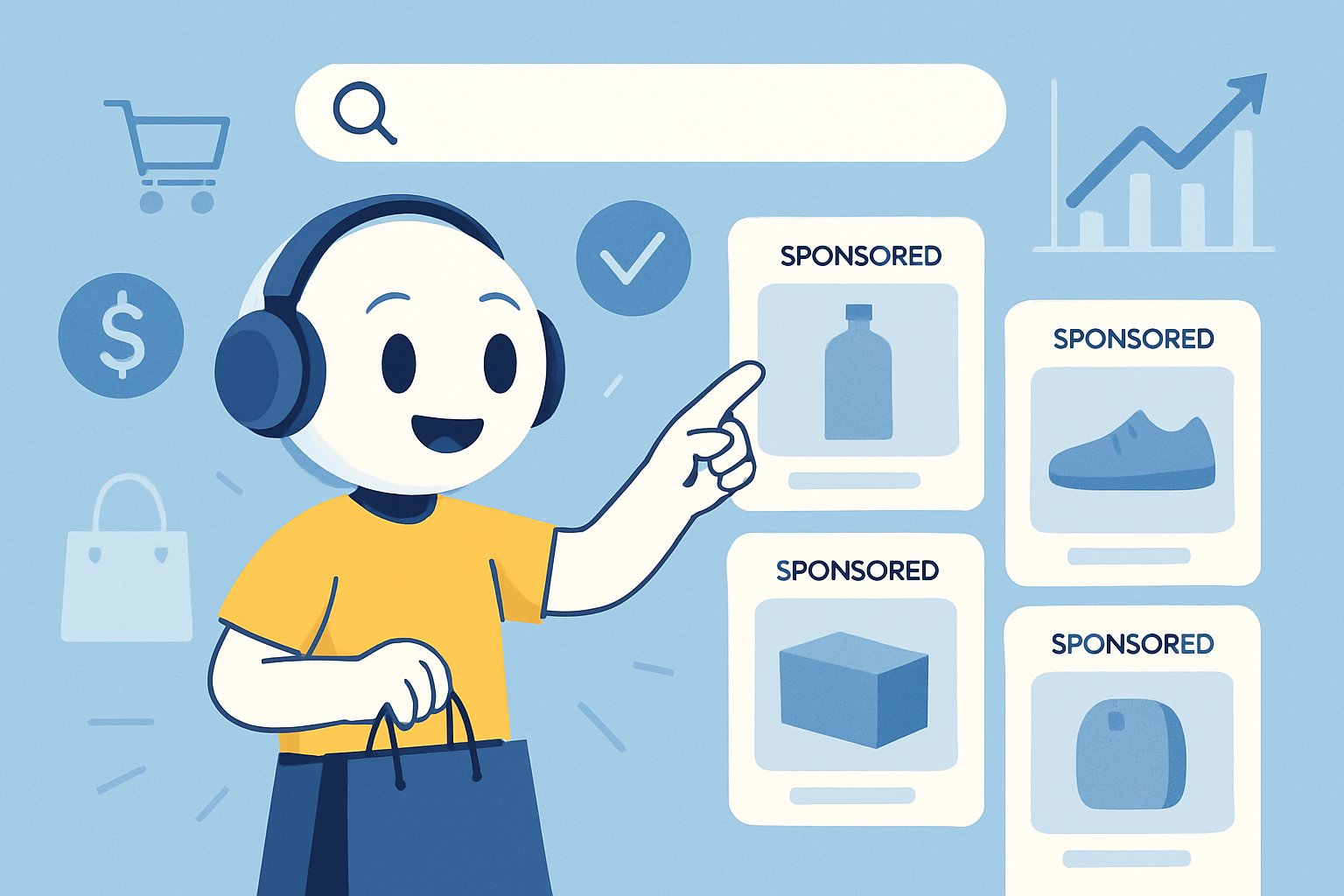
These market forces are reshaping search economics. Subsequently, Perplexity’s ad tests require closer scrutiny.
Perplexity's Ad Tests
Perplexity began trialing sponsored queries late in 2024 before broadening pilots in 2025. Moreover, the company inserted brand-backed follow-up prompts generated by its own model. Marketers paid on a CPM basis, not per click, according to Business Insider coverage. Nevertheless, executives told reporters that advertising represented less than 0.1% of total revenue. Engagement data showed roughly 40% of users clicking the suggested sponsored queries for deeper exploration. Additionally, Perplexity Pro subscribers received Perks, which surfaced discounts without cluttering the user interface. Ryan Foutty labeled the format “a brand advertorial” that remains contextually helpful. Consequently, early buyers such as Whole Foods and Indeed continued spending across successive flights. Campaigns currently run through direct deals rather than automated auctions. Consequently, buying requires manual coordination between brands and Perplexity sales teams. Industry observers predict that self-serve dashboards will arrive once inventory grows.
Advertiser appetite appears exploratory yet genuine. However, scale questions linger ahead of broader rollout.
Instant Buy Rollout
On November 25, 2025, Perplexity and PayPal unveiled Instant Buy for United States shoppers. Furthermore, buyers received 50% back up to $50 during the launch week promotion. The workflow keeps shoppers inside the same user interface from search to checkout. Merchants remain the merchant-of-record while PayPal handles fraud, disputes, and fulfillment notifications. Moreover, Perplexity displayed product cards highlighting specifications, reviews, and price assurances. Such compression aligns perfectly with AI Search Monetization goals by connecting intent with instant conversion. Reportedly, the system answers over 150 million weekly questions, offering sizable e-commerce traffic. Consequently, PayPal’s Michelle Gill framed the partnership as the next era of agentic commerce. Checkout flow occurs inside a modal overlay that surfaces order totals and shipping addresses. Testing shows the overlay loads in under two seconds on modern mobile networks. Speed matters because latency often predicts cart abandonment. Observers expect Android deep linking so completed orders sync with merchant loyalty programs. Such ecosystem hooks could raise repeat purchase rates over time.
Instant Buy shortens the buyer journey dramatically. Subsequently, analysts examine competitor strategies emerging simultaneously.
Holiday Promo Results
Preliminary data suggests redemption approached the 60,000 reward cap within days. In contrast, conversion metrics beyond the incentive window remain undisclosed by both firms. Nevertheless, Dmitry Shevelenko claimed strong merchant interest encouraged pipeline expansion. Therefore, sustained AI Search Monetization success will hinge on post-promotion stickiness, not flash discounts.
Early traction validates consumer curiosity. However, retention remains the critical unknown.
Competitive Landscape Moves
Google, Microsoft, and OpenAI are infusing similar shopping ads into generative answers. However, their scale dwarfs Perplexity, presenting both risk and validation. Google’s AI Overviews now displays e-commerce listings through Performance Max campaigns. Moreover, Bing integrates Shopify listings and Microsoft Cash Back inside chat results. In contrast, Perplexity positions its lean user interface as a cleaner alternative. Advertisers consequently gain different creative palettes spanning banners, dynamic cards, and sponsored queries. Therefore, media buyers must weigh reach against perceived bias and measurement maturity. AI Search Monetization strategies across platforms will likely diverge based on historical ad ecosystems. Apple is rumored to explore similar assistant shopping integrations for its devices. If that happens, conversational purchase options would reach hundreds of millions more consumers. Perplexity aims to differentiate through independent sourcing and transparent ranking disclosures. Marketers praise Google’s commerce search for reach yet criticize its crowded page layout. Therefore, a streamlined chat format may yield superior engagement despite smaller scale.
Competitive pressure accelerates experimentation pace. Subsequently, risk factors need balanced analysis.
Risks Critics Spotlight
Legal, ethical, and brand safety concerns shadow Perplexity’s growth. Publishers filed lawsuits alleging copyright infringement, demanding compensation or stricter licensing. Furthermore, academics warn that injected ads may skew answers, eroding perceived neutrality. User backlash on Reddit shows some subscribers dislike seeing e-commerce pushes inside research chats. Additionally, privacy advocates question data usage for targeting sponsored queries or checkout recommendations. Meanwhile, marketer skepticism persists around unclear attribution models and early revenue contribution. Nevertheless, Perplexity offers a publisher revenue sharing scheme to defuse legal tensions. AI Search Monetization therefore demands transparent disclosures and opt-out controls to sustain trust. Outside counsel suggest early settlement could limit statutory damages in copyright cases. However, the company remains confident in its fair-use defenses. Regulators worldwide are simultaneously drafting rules that could redefine liability for generative systems.
Risks could slow advertiser adoption. However, proactive governance may counteract negative sentiment.
Strategic Outlook Ahead
Funding rounds nearing nine billion dollars give Perplexity extended runway for innovation. Consequently, executives target diversified revenue streams spanning subscriptions, advertising, and in-chat commerce. Moreover, partnership breadth will likely expand beyond PayPal to logistics, loyalty, and additional payment rails. Professionals can enhance governance fluency with the AI Legal Strategist™ certification. Such credentials empower teams navigating policy, compliance, and emerging search monetization frameworks. In contrast, organizations lacking expertise may expose themselves to costly missteps.
- Clear ad labeling preserves trust.
- Robust analytics validate sponsored queries.
- Smooth user interface sustains engagement.
- Diverse merchant catalog boosts checkout reach.
Product roadmaps include deeper personalization built on optional preference sliders. Beta testers report that such controls improve answer relevance during complex research tasks. Meanwhile, the team is hiring economists to refine ad auction mechanics before open release. These levers shape sustainable growth prospects. Subsequently, stakeholders will monitor performance milestones and legal resolutions.
Perplexity’s shopping experiments exemplify the rapid fusion of answers, ads, and checkout. Moreover, Instant Buy shows how AI Search Monetization can move beyond traffic arbitrage toward closed-loop commerce. Sponsored queries, perks, and publisher sharing further illustrate a multilayer playbook. However, legal headwinds, bias concerns, and measurement gaps could temper momentum. Therefore, companies evaluating conversational channels should fortify legal frameworks and obtain specialized certifications. Explore advanced learning paths and keep tracking AI Search Monetization trends to stay ahead. Click to deepen expertise and transform your next e-commerce initiative into measurable success. Consequently, aligning strategy with emerging AI Search Monetization benchmarks can future-proof digital roadmaps.
Disclaimer: Some content may be AI-generated or assisted and is provided ‘as is’ for informational purposes only, without warranties of accuracy or completeness, and does not imply endorsement or affiliation.


