

AI CERTS
3 months ago
Indian Courts Fast-Track Justice With Judicial Language Tech
Moreover, the Supreme Court has already published thousands of translated documents on the e-SCR portal. Observers note that the momentum has accelerated since 2023. Consequently, policymakers frame the program as a core ingredient of broader digital justice. The following report examines the timeline, technology, workflow, benefits, and risks behind this ambitious effort.
Indian AI Rollout Timeline
Furthermore, formal adoption began in November 2019 with the unveiling of SUVAS at the Supreme Court. Subsequent pilots in Kerala, Delhi, and Bombay High Courts extended coverage to district benches. By August 2024, government replies recorded 36,271 judgments translated into Hindi and 17,142 into other regional languages.
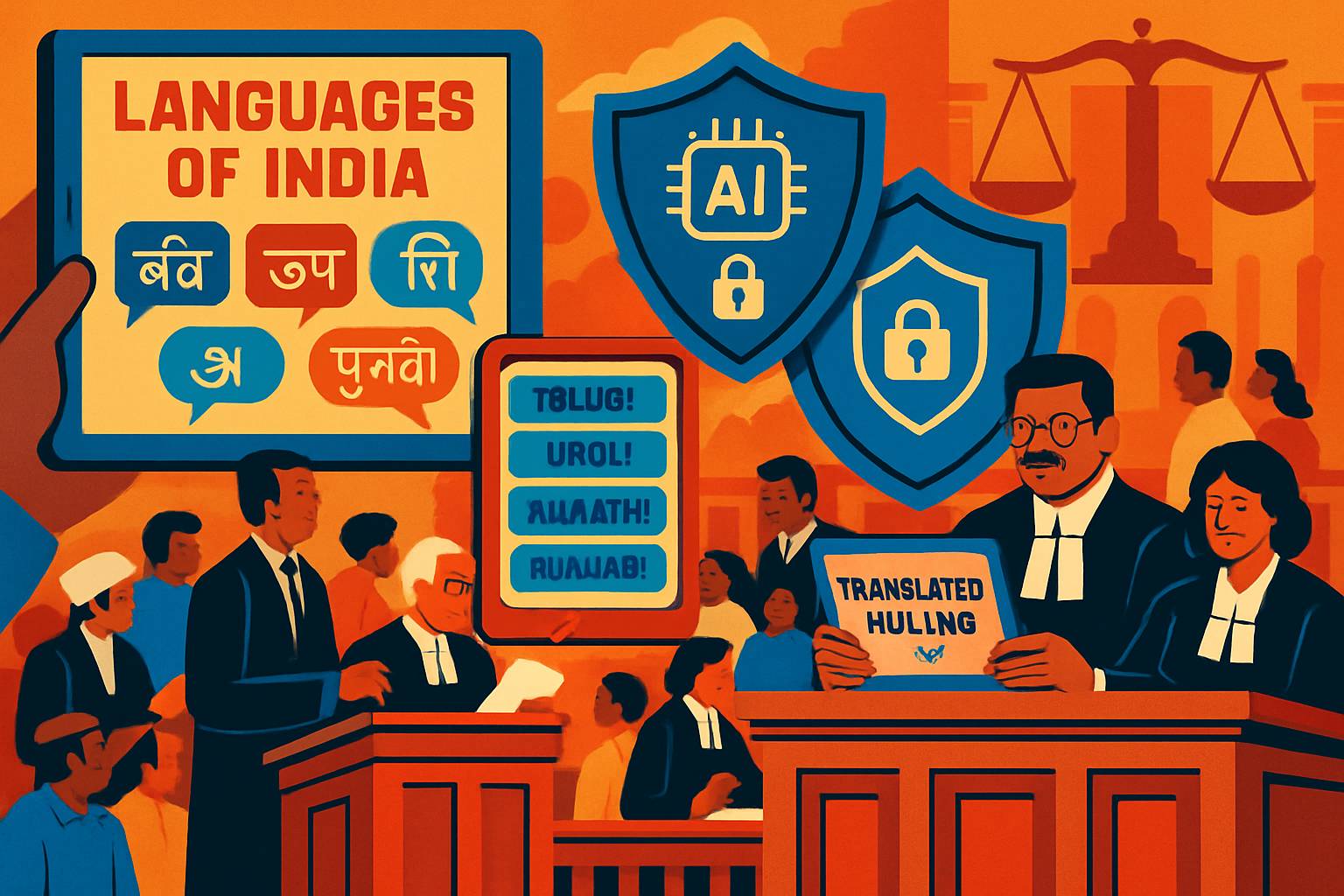
Court officials updated Parliament again in December 2024, noting 42,765 translations across 17 vernaculars. Nevertheless, every order carries a disclaimer that the authoritative text remains English. Judicial Language Tech continues to scale but remains under human oversight.
These milestones reveal rapid institutional commitment. Access targets expand yearly.
Meanwhile, understanding the tools explains how such volume is possible.
Core Translation Tools Used
Additionally, three main engines drive the initiative: SUVAS, Anuvaad, and Anuvadini. Each system employs neural machine translation models tuned to legal corpora. In contrast, general consumer translators lack domain-specific glossaries, causing higher error rates.
Moreover, SUVAS translates between English and ten regional languages, including Malayalam and Urdu. Anuvadini, developed by AICTE, powers Kerala High Court projects. EkStep Foundation supports Anuvaad, which several states evaluate for legislation drafts.
Judicial Language Tech knits these platforms together through the e-SCR and e-HCR portals. Consequently, search results display authoritative English and reviewed vernacular side by side. This twin-view design upholds transparency and improves accessibility.
Interoperable engines underpin scale and consistency. Domain tuning reduces mistranslation risk.
Nevertheless, workflow management determines quality, which we examine next.
Operational Review Workflow Steps
Before publication, every translation passes a multi-stage inspection. Firstly, machine output is generated inside a secure NIC environment. Secondly, a panel of judges and language experts verifies terminology, citations, and formatting.
Subsequently, the committee approves posting on the e-SCR portal with a conspicuous disclaimer. Therefore, users understand that the official English text governs any legal enforcement. This workflow reflects the cautious ethos guiding Judicial Language Tech deployment.
- Machine translation produced by SUVAS/Anuvadini.
- Initial automated quality checks identify ambiguous legal terms.
- Human reviewers edit phrasing, confirm citations, and log changes.
- Final approval granted by an AI Translation Committee judge.
- Disclaimer added; files uploaded to e-SCR and e-HCR portals.
Streamlined steps balance speed with accountability. Human oversight anchors trust.
Next, we assess the tangible benefits for end users.
Key Benefits For Litigants
Moreover, accurate vernacular texts improve courtroom preparation for lawyers unfamiliar with English precedents. Legal aid volunteers can now provide advice without translating documents manually. Consequently, citizens experience faster comprehension and reduced counsel costs.
Statistics reported to Parliament illustrate scale:
- 36,324 judgments rendered in Hindi by December 2024.
- 42,765 judgments issued across 17 regional languages.
- Kerala High Court recorded 5,136 district translations using Anuvadini.
Judicial Language Tech Impact
Furthermore, the program enlarges educational accessibility for law schools outside metropolitan clusters. Professors assign translated judgments, enabling debates in mother tongues. In contrast, earlier syllabi relied on limited digests.
Judicial Language Tech also advances digital justice goals by merging language equity with open data. Accordingly, litigants possessing smartphones can search case law without intermediaries. This increased accessibility supports constitutional promises.
Translated rulings cut procedural friction and promote inclusive legal discourse.
However, potential flaws require robust safeguards, explored next.
Principal Risks And Safeguards
Despite progress, translation quality can falter on complex legal idioms. Misinterpretation of a single clause could influence bail or land disputes. Therefore, courts insist that English versions retain primacy.
Meanwhile, hallucinations or citation errors remain possible within neural systems, including SUVAS. Consequently, human review logs corrections and creates auditable trails. External audits can strengthen trust by measuring accuracy statistically.
Data protection challenges also surface. Judges often redact personal identifiers before publication. Nevertheless, privacy advocates urge encryption and retention limits under forthcoming legislation.
Professionals can enhance compliance awareness through the AI Security Compliance™ certification. Such training supports robust Judicial Language Tech governance.
Quality, privacy, and authority remain active risk fronts. Continuous audits and skill building mitigate exposure.
Subsequently, scaling plans reveal how leadership addresses those concerns.
Likely Future Expansion Plans
Government replies indicate plans to translate older case law dating back to 1950. Therefore, storage and compute resources will require upgrades. Courts may also invite state agencies to translate statutes into regional languages.
Moreover, the e-Courts Phase III budget earmarks funds for open APIs. Expanded analytics could track digital justice indicators across districts. These interfaces can let third-party developers build Judicial Language Tech dashboards. Consequently, local law clinics could integrate alerts for new translated rulings.
In contrast, policy analysts warn that expansion without standard glossaries may fragment terminology. Harmonised dictionaries and feedback loops remain essential. Judicial Language Tech committees are drafting such resources.
Roadmaps point toward deeper automation and wider linguistic coverage. Success depends on parallel investment in governance.
Finally, we summarise the key insights.
Consequently, India’s judiciary now stands at a linguistic crossroads. Judicial Language Tech has already translated tens of thousands of rulings, boosted accessibility, and energised digital justice. Ongoing audits, training, and policy updates will shape public trust. Nevertheless, the program’s human-in-loop design offers resilience against machine errors. Stakeholders should monitor evolving standards and contribute domain expertise. Finally, professionals seeking deeper governance skills can explore the linked certification and support responsible innovation.


