

AI CERTS
6 months ago
ByteDance, ZTE debut Mobile AI Assistant shift
Analysts view the move as a strategic pivot from app-centric AI to device-embedded intelligence. Moreover, the announcement arrives amid a surge of agentic voice platforms across China’s smartphone market. Early reactions were positive; ZTE shares jumped almost ten percent on the news. Nevertheless, industry experts caution that privacy safeguards and product maturity require close scrutiny before mass adoption.
Partnership Signals Market Shift
ZTE gains fresh differentiation by embedding ByteDance’s Doubao model deep within its prototype firmware. Meanwhile, ByteDance expands the Doubao model beyond Douyin and web chatbots. The company now targets everyday smartphones, seeking new data sources and revenue channels. Moreover, on-device integration positions ByteDance closer to user intent moments, a space long dominated by Apple and Google. In contrast, ByteDance insists it will stay hardware-agnostic, aiming for a broad OEM footprint across China and eventually overseas. Gan Lin, a Doubao engineer, remarked that ChatGPT’s debut reignited ambition for richer assistants after Siri’s 2011 launch. Therefore, the collaboration signals a larger platform reshuffle.
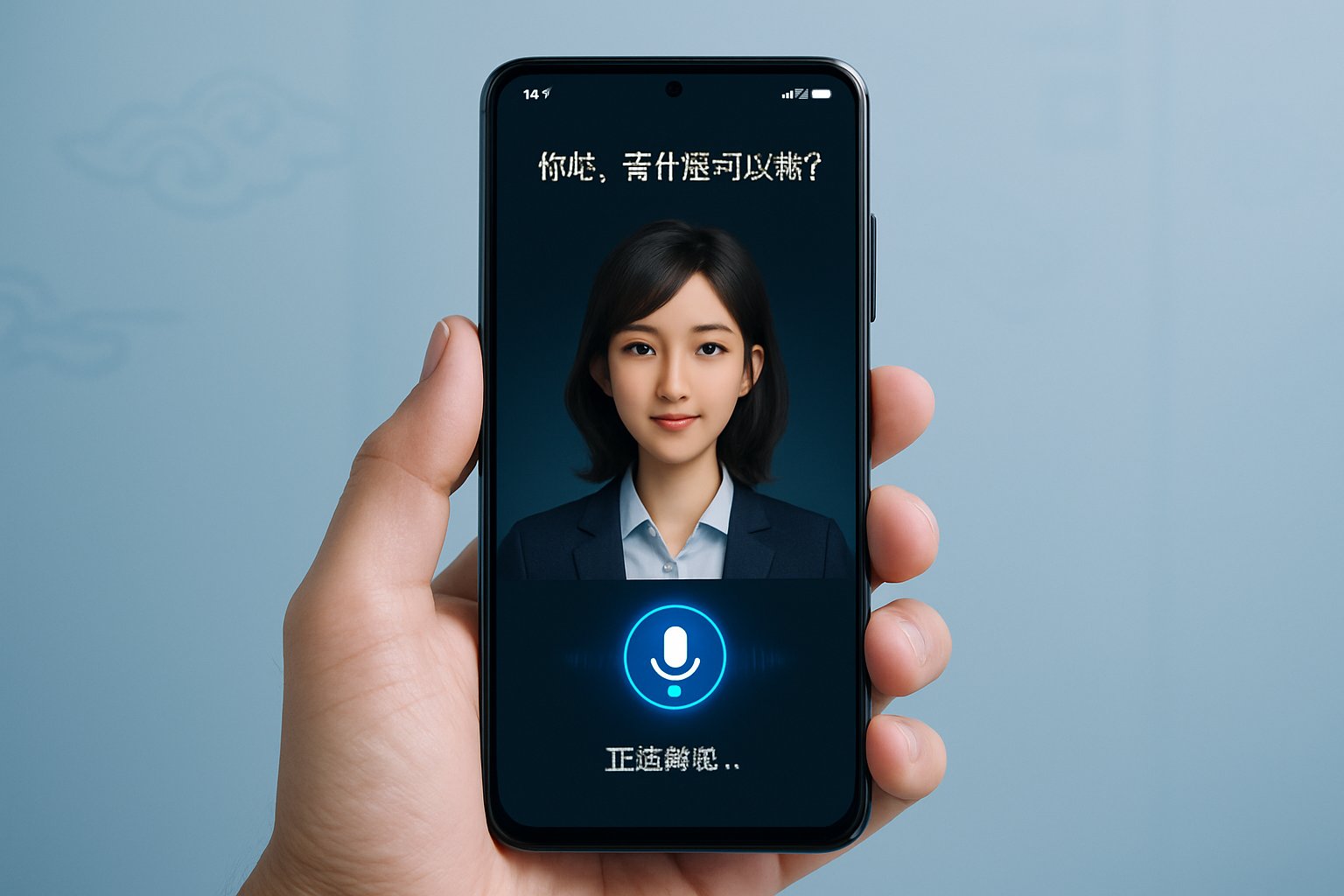
These dynamics underscore an expanding competitive battleground. However, broader adoption depends on securing additional handset partners and developer support. Subsequently, attention shifts to real-world performance and privacy assurances.
Early Hardware Prototype Insights
The nubia M153 engineering sample retails at RMB 3,499, or roughly US$495. Additionally, the phone houses Qualcomm’s Snapdragon 8 Elite Gen 5, which includes a powerful NPU for on-device inference. A dedicated side key invokes the Mobile AI Assistant instantly from any screen. Moreover, ZTE’s firmware exposes system APIs that let the assistant edit photos, transcribe calls, and complete purchases. Nevertheless, both firms warn that camera tuning and battery optimization remain unfinished. Early users serve effectively as beta testers.
Key prototype facts:
- Price: RMB 3,499 (~US$495)
- Chipset: Snapdragon 8 Elite Gen 5
- Monthly Doubao users: 159 million (October 2025)
- ZTE stock jump: ≈10% after launch
These specifications highlight capable hardware yet signal an iterative roadmap ahead. Consequently, the next production wave will determine whether perceived performance gaps shrink.
Robust Market Growth Forecasts
Counterpoint Research expects more than 400 million GenAI smartphones to ship during 2025. Furthermore, ABI Research projects even faster expansion through 2027 as on-device NPUs improve. Therefore, suppliers race to position compelling assistants. ByteDance’s Mobile AI Assistant could ride this tailwind if it secures broad OEM adoption. Moreover, domestic demand remains strong because global LLM services face restrictions inside China. Local models, including Doubao, Huawei Pangu, and DeepSeek, easily comply with national content rules.
Analysts outline three immediate growth drivers:
- Consumer appetite for streamlined voice tasks
- OEM need for brand differentiation
- Operator interest in higher ARPU via AI calling
Collectively, these factors create fertile ground. However, supply-chain limits around memory bandwidth and thermal management may throttle aggressive rollouts. Consequently, real-time performance will be a deciding purchase factor.
Key Technical Design Choices
ByteDance opts for hybrid inference. On-device execution handles latency-sensitive prompts, while heavier generation flows to cloud clusters. Additionally, encrypted local memory stores personalized context to boost answer relevance. In contrast, Apple promises more on-device autonomy for privacy. Moreover, ZTE’s network team experiments with in-network AI orchestration for fraud detection and 5G New Calling.
This layered integration demands tight cooperation among chipset vendors, ISPs, and regulators inside China. Consequently, success hinges on standardized APIs and transparent security audits. Nevertheless, ByteDance insists the Mobile AI Assistant can reach other Android skins with minimal adjustments.
These architecture choices balance latency, cost, and privacy. Subsequently, independent penetration testing will validate the firm’s claims.
Privacy And Regulation Questions
OS-level access grants immense power. However, it simultaneously invites scrutiny from watchdogs focused on data governance. ByteDance states that user memories remain encrypted and opt-out toggles exist. Nevertheless, privacy advocates demand external audits, especially given ByteDance’s content moderation history in China. Moreover, ZTE assures carriers that sensitive voice packets can stay within domestic networks.
Regulators recently tightened rules around algorithmic recommendation and biometric usage. Therefore, the Mobile AI Assistant must pass compliance checks under evolving standards. Additionally, rival OEMs may lobby to prevent any single LLM from dominating core device experiences.
These challenges spotlight the necessity for rigorous oversight. Consequently, transparent disclosure will influence consumer trust and enterprise procurement.
Strategic Business Impact Outlook
ByteDance now controls a potential distribution layer rivalling app stores. Furthermore, richer context could feed targeted ads or premium assistant tiers. Meanwhile, ZTE positions its devices and carrier software as turnkey AI endpoints. Consequently, both firms diversify revenue streams beyond traditional hardware margins.
Industry observers predict cascading effects:
- Advertising models may shift toward intent-driven prompts
- Developers will chase new assistant plug-ins
- Operators can bundle AI telephony services
- Workflows inside enterprises may integrate voice agents
Professionals can enhance their leadership capability with the AI Project Manager™ certification. Moreover, mastering governance frameworks will prove valuable as integration complexity increases. The evolving landscape thus rewards cross-disciplinary skill sets.
These business vectors promise fresh monetization pathways. Subsequently, executives should monitor contractual power dynamics among platforms, OEMs, and carriers.
Essential Skills For Leaders
Strategists must understand LLM product lifecycles, privacy law, and telecom standards. Additionally, fluency in deployment pipelines and user-experience research will help teams deliver resilient Mobile AI Assistant solutions. Therefore, continuous education remains critical while vendors iterate rapidly.
Skill clustering reduces project risk and accelerates time-to-market. Consequently, structured certifications provide measurable competence baselines.
This capability focus prepares organizations for sustained AI competition. However, cultural adoption will still decide ultimate success.
These talent priorities close the loop between technology and strategy. Subsequently, HR departments should reassess internal training budgets.
Conclusion And Next Steps
ByteDance and ZTE have ignited fresh momentum around agentic voice on smartphones. Moreover, hybrid architecture, local encryption, and network orchestration define a promising yet complex blueprint. The Mobile AI Assistant now stands at the crossroads of market expansion and regulatory diligence. Consequently, success will rely on additional OEM deals, verified privacy controls, and compelling user experiences across China and beyond.
Industry professionals should track roadmap updates and pursue advanced credentials. Therefore, consider enrolling in the linked certification to guide responsible AI initiatives and seize emerging market leadership.
Disclaimer: Some content may be AI-generated or assisted and is provided ‘as is’ for informational purposes only, without warranties of accuracy or completeness, and does not imply endorsement or affiliation.


