

AI CERTS
3 months ago
Deep Learning Advances Maritime Security Anomaly Detection
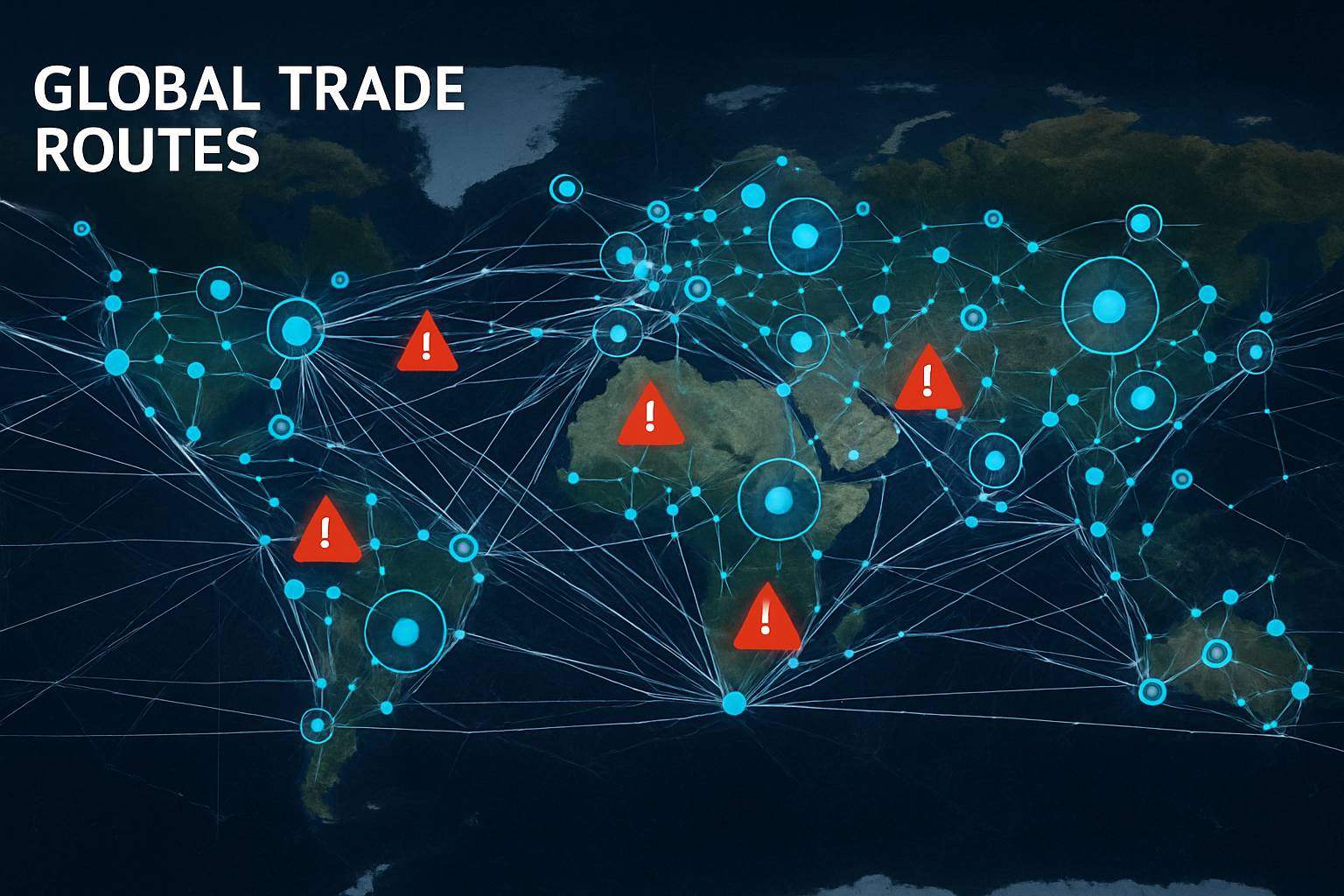
Deep Learning fuses satellite imagery, AIS reports, radar hits, and open data.
Moreover, Anomaly Identification models flag deceptive routes before ships reach sensitive waters.
This feature explains how algorithms, vendors, and policymakers reshape sea control economics.
Readers will also see the skills and certifications needed to join this transformation.
However, false positives, data spoofing, and legal hurdles still limit automated response.
The following sections detail market momentum, technical advances, operational gaps, and ethical stakes.
Ultimately, informed teams can harness these insights for safer, smarter oceans.
Market Forces Drive Adoption
Commercial and defense budgets for surveillance are rising sharply.
Grand View Research valued the broader market at USD 24.3 billion in 2024.
Additionally, DataIntelo places AI-specific Maritime Domain Awareness revenue near USD 1.47 billion.
Both reports forecast healthy double-digit growth through 2030.
Planet Labs secured multiple seven-figure NATO deals for daily ocean monitoring in 2024.
Furthermore, Windward reported corporate demand spikes after a 52 percent rise in AIS deception incidents.
Key figures illustrate the accelerating spend:
- Market size: USD 24.3 billion surveillance sector, 6.9 percent CAGR (Grand View Research).
- AI MDA niche: USD 1.47 billion, 18.5 percent CAGR forecast (DataIntelo).
- Windward logged 3,300 manipulation cases across almost 1,000 vessels in 2024.
- Planet scans 170 million km² land and sea each day, feeding partner analytics.
These numbers confirm Maritime Security as a strategic priority.
Consequently, buyers expect scalable, accurate alerts rather than pilot prototypes.
Such expectations depend on robust AI techniques, discussed next.
Core Multimodal AI Techniques
No single sensor captures every maritime threat.
Therefore, fusion sits at the heart of modern platforms.
Core pipelines merge AIS, optical imagery, SAR, RF, and acoustic inputs.
Deep Learning networks process each modality, then share embeddings for joint inference.
CNN detectors locate hulls in optical frames even under haze.
Meanwhile, SAR cuts through clouds, enabling nighttime vessel spotting.
Transformers and LSTM models ingest synchronized AIS time series for Vessel Tracking predictions.
Moreover, Graph Neural Networks model interactions between ships, ports, and chokepoints.
This topology helps Anomaly Identification systems discount normal convoys yet flag suspicious rendezvous.
Multimodal design strengthens Maritime Security resilience to spoofing and weather.
However, model selection still influences downstream anomaly performance, as the next section shows.
Anomaly Models In Action
Anomaly Identification splits into supervised and unsupervised camps within Maritime Security.
Supervised methods demand labeled illicit events, which remain rare.
Consequently, unsupervised autoencoders and GANs dominate operational rollouts.
Liang et al. used a WGAN-GP encoder to score trajectory images with F1 above 0.9.
Furthermore, LSTM autoencoders reconstruct AIS patterns and trigger high reconstruction errors for deviating ships.
Recent transformer approaches integrate temporal attention, enhancing long-range Vessel Tracking context.
Windward’s behavioural engine flagged a shadow tanker before an illegal ship-to-ship transfer off Fujairah.
Meanwhile, Starboard linked cable damage off Svalbard to a vessel previously spoofing identity.
Such episodes highlight Maritime Security gains when analytics reach analysts quickly.
Model choice matters, yet data integrity matters more.
Therefore, understanding stakeholders is essential.
Key ecosystem actors are profiled below.
Key Players And Contracts
Planet Labs anchors the imagery supply chain.
Its daily PlanetScope scans feed SynMax, Theia, and governmental Anomaly Identification dashboards.
Will Marshall cites customer urgency to “scan and locate new threats across large areas”.
Windward dominates behavioural analytics, offering risk scores to insurers, navies, and port states.
Additionally, Spire, HawkEye 360, and ORBCOMM contribute space-based AIS and RF geolocation feeds.
On the customer side, NATO, US Coast Guard, and OFAC procure fused platforms for sanctions enforcement.
Consequently, contract announcements have shifted from pilots to multi-year framework deals.
These actors shape Maritime Security standards, data pipelines, and pricing.
However, technical debt and adversary adaptation challenge deployment, as outlined next.
Operational Challenges Persist Today
Spoofing tactics evolve faster than rule sets.
In contrast, deep models can overfit to past deception signatures and miss new tricks.
Explainability also lags, complicating evidence chains during prosecutions.
Moreover, distribution shift emerges when models trained in calm tropics face Arctic sea states.
False positives consume analyst bandwidth, eroding trust in Maritime Security dashboards.
Vendors answer with continuous learning loops, Vessel Tracking feedback, and probability scoring thresholds.
Nevertheless, independent benchmarks remain scarce, hindering apples-to-apples comparisons.
Future gains demand validated metrics and transparent workflows.
Policy discussions address those requirements next.
Policy And Ethical Impacts
Governments welcome faster interdiction, yet civil liberties groups request auditing.
Therefore, agencies must balance security imperatives with proportionality.
Evidence admissibility still requires raw sensor provenance alongside algorithmic flags.
Furthermore, trade financiers fear collateral delays when false positives detain legitimate cargo.
Standardised appeal processes and model explainability could mitigate such costs.
International cooperation also matters for cross-border investigations and data sharing agreements.
Consequently, organisations such as the IMO explore guidance on responsible AI usage.
Ethical governance will shape public trust in Maritime Security advances.
Meanwhile, individual professionals can strengthen readiness through targeted learning.
Upskilling options appear below.
Upskilling For Future Readiness
Demand for Maritime Security specialists who blend signal processing and policy insight is booming.
Deep Learning architects, data stewards, and maritime analysts top recruitment lists.
Professionals can enhance expertise through industry certifications.
Consider the AI Prompt Engineer™ program for applied model design skills.
Moreover, port authorities now sponsor hybrid courses on Vessel Tracking analytics and Anomaly Identification.
Graduate researchers should publish reproducible notebooks to bridge academic and vendor practice.
Continuous learning ensures talent keeps pace with adaptive threats.
Consequently, workforce growth bolsters the entire security ecosystem.
Deep Learning and multimodal fusion are rewriting maritime threat detection playbooks.
Rising budgets, proven case studies, and expanding satellite coverage signal enduring momentum.
Nevertheless, data quality, explainability, and policy alignment remain critical watchpoints.
Stakeholders who master anomaly workflows today will shape tomorrow’s Maritime Security architecture.
Therefore, invest in skills, scrutinise vendor metrics, and maintain human oversight.
Begin by exploring relevant certifications and joining the conversation on responsible ocean intelligence.
Start now by reviewing the AI Prompt Engineer™ pathway and safeguard global commerce.


