

AI CERTS
3 months ago
Commercial Risk Rising as Dynamic Pricing Tests Customer Loyalty
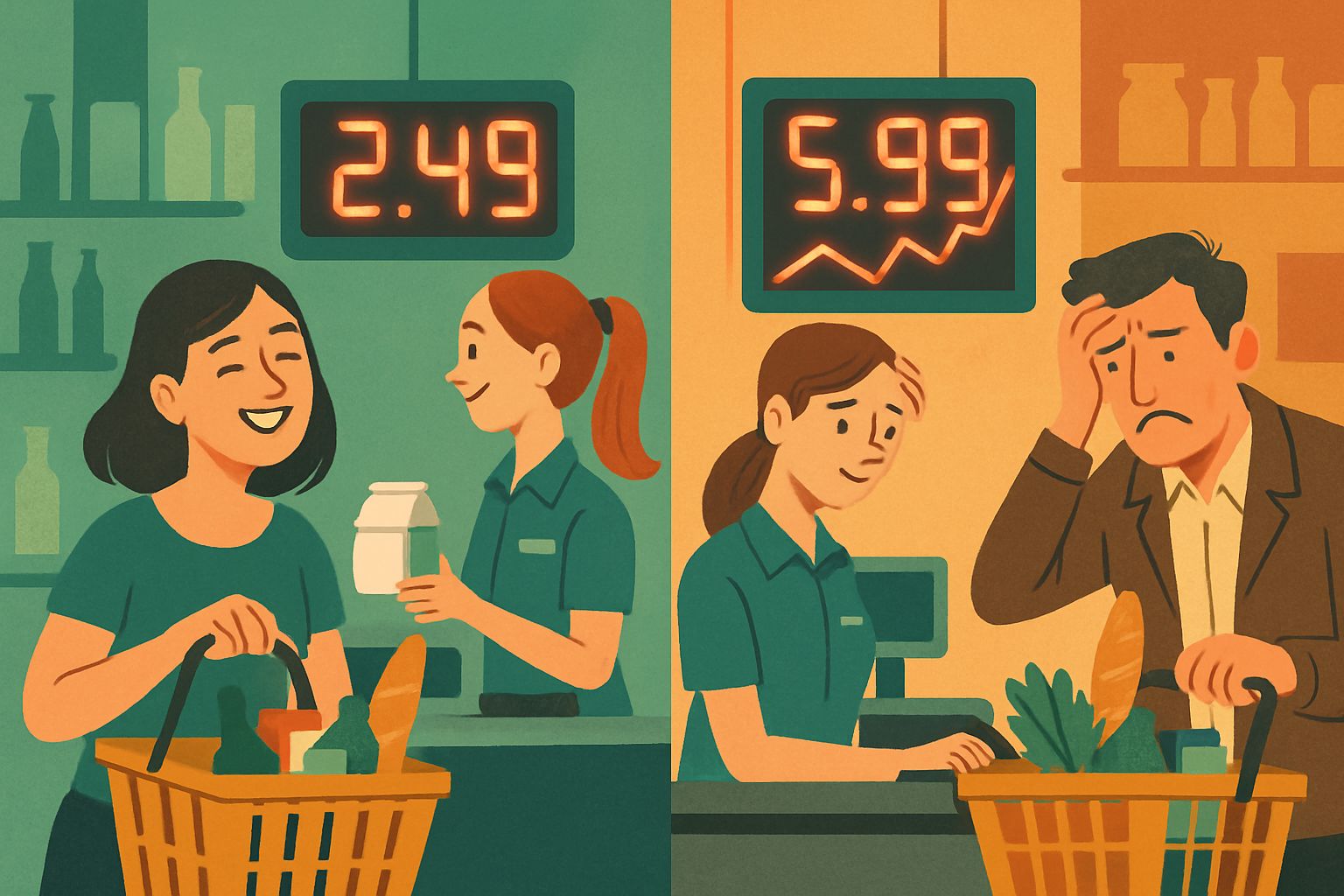
Moreover, recent hearings, market data, and consumer backlash suggest a pivotal crossroads.
Consequently, business leaders must weigh Commercial Risk against the lure of Dynamic Pricing efficiency.
Fairness-aware research now shows profits can coexist with equitable outcomes when governance exists.
Nevertheless, many pilots ignore these findings, prioritizing speed over safeguards.
Balancing Loyalty Versus Revenue
Dynamic Pricing typically maximises demand based on time, supply, and rival moves.
In contrast, customers value stable expectations when deciding repeat purchases.
Per Sjöfors warns that unrestrained price jumps alienate buyers and spur churn.
Therefore, the immediate margin uptick can mask long-term Commercial Risk tied to shrinking baskets.
Meanwhile, Capterra polling shows 52 percent equate Dynamic Pricing with price gouging.
Consequently, Customer Loyalty deteriorates before executives notice falling lifetime value.
These insights spotlight a tension between fast cash and durable relationships.
However, regulators are amplifying that pressure.
Regulators Intensify Pricing Scrutiny
Across sectors, watchdogs now dissect algorithmic margins with forensic zeal.
For example, the UK CMA investigated Ticketmaster after the Oasis ticket surge.
Hayley Fletcher noted fans lacked transparent seat information under fluctuating algorithms.
Subsequently, legal action remains possible if disclosures stay vague.
Meanwhile, U.S. senators pressed Kroger about electronic shelf labels enabling Dynamic Pricing.
Delta even pledged it will avoid personalised fares, fearing Commercial Risk of congressional backlash.
Therefore, compliance costs mount alongside reputational stakes.
FTC subpoenas have reached several pricing vendors, demanding algorithm training records.
Consequently, suppliers now draft audit logs before closing enterprise deals.
In contrast, earlier contracts rarely mentioned explainability.
Regulatory headwinds elevate pricing stakes beyond spreadsheets.
Consequently, market forecasts display growth yet volatility.
Market Growth Yet Volatile
Vendor reports place Dynamic Pricing software revenues near three billion dollars this year.
Moreover, analysts expect double-digit CAGR through 2030 for optimisation tools.
- WiseGuy report: USD 3.08B market value in 2024.
- Projected USD 3.56B in 2025, 7-15 % CAGR.
- CivicScience survey: 62 % equate surge pricing with gouging.
Nevertheless, adoption rates differ by industry due to consumer sentiment and budget constraints.
Unexpected surges can trigger Pricing Failure when shoppers flee instead of paying premiums.
Market models rarely discount Commercial Risk inside retention calculations.
Consequently, spreadsheets may exaggerate net present value.
GMI forecasts value at nearly nine billion by 2035.
However, those projections assume stable consumer trust without major policy shocks.
Growth projections entice boards, yet loyalty gaps widen.
In contrast, recent case studies reveal concrete breakdowns.
Failure Scenarios Emerging Rapidly
Wendy’s experienced online outrage after announcing menu board experiments.
Subsequently, executives clarified that no real-time surges would hit fries or burgers.
Ticketmaster’s Oasis event became a textbook Pricing Failure, adding fees as demand spiked.
Media coverage framed the debacle as price gouging dressed in code.
Furthermore, surveys reveal 62 percent would reduce visits if restaurants adopt surge tactics.
Therefore, ignoring Customer Loyalty courts severe Commercial Risk beyond marketing budgets.
Airlines voiced similar worries; American Airlines noted individualized fares could damage credibility.
Therefore, even seasoned adopters tread carefully despite decades of revenue management expertise.
Public missteps illustrate the fragile trust equation.
However, structured safeguards can turn risk into opportunity.
Mitigation Paths For Firms
Pricing teams can embed hard caps and floors within optimisation engines.
Additionally, clear labels like "Dynamic Price" reduce surprise.
- Establish price ceilings linked to inflation metrics.
- Publish real-time dashboards for frontline staff and customers.
- Run A/B tests measuring churn, sentiment, and lifetime value shifts.
Moreover, offering loyalty discounts preserves baseline value perceptions.
Firms may also guarantee lowest prices for enrolled members, sheltering Customer Loyalty.
Technologists propose fairness-aware algorithms that limit group disparities while keeping profits.
Privacy-preserving data methods further lessen Commercial Risk from regulatory penalties.
These tactics align profit motives with social expectations.
Consequently, leadership must codify guardrails.
Guardrails And Transparency Needed
First, companies should pilot openly and track churn alongside revenue.
Second, they must publish clear FAQ pages explaining algorithm logic and limits.
Additionally, teams can upskill through the AI Marketing Professional™ certification.
Such learning embeds ethical design principles, reducing Pricing Failure likelihood.
Finally, quarterly reviews should assess Commercial Risk exposure across segments.
Subsequently, dashboards can flag anomalies before headlines appear.
Ongoing governance converts reactive firefighting into proactive assurance.
Therefore, strategic planning must extend beyond 2025.
Strategic Roadmap For 2026
Executives should integrate loyalty metrics into every pricing OKR.
Moreover, board committees can assign explicit accountability for algorithm fairness.
Scenario planning must weight Commercial Risk against upside in each demographic.
In contrast, static price holdouts should still monitor competitive erosion.
Subsequently, firms can blend time-based offers with fixed member rates, preserving Customer Loyalty.
Meanwhile, cross-functional teams can test opt-in personalization under privacy safeguards.
Companies should also simulate shocks, testing how caps respond to extreme demand surges.
Furthermore, dashboards must visualise real-time elasticity shifts to guide marketing campaigns.
These roadmap elements create balanced, transparent propositions.
Consequently, organisations enter 2026 prepared for shifting oversight.
Algorithmic price engines will continue spreading across industries.
However, recent events prove that revenue wins fade when loyalty declines.
Data, regulation, and expert testimony converge around one theme: unmanaged Commercial Risk devastates lifetime value.
Therefore, leaders must embed transparency, fairness, and strong guardrails within every pricing sprint.
Moreover, continuous learning through certifications empowers teams to execute these safeguards at scale.
Act now to audit policies, train staff, and protect profitability before consumers and regulators decide for you.
Meanwhile, early adopters that balanced margin and empathy already report stronger loyalty indices.


