

AI CERTS
3 hours ago
Panasonic Rebuilds Plants to Meet Explosive AI Battery Demand
However, fresh capital alone will not ease looming grid shortfalls. This article dissects the capital plan, technology roadmap, and market implications for infrastructure teams. Furthermore, it explains why rack-level storage now sits beside GPUs on every procurement checklist.
Capital Reallocation Move Signals
Investors heard clear numbers at the briefing. Panasonic redirected roughly ¥350 billion toward data-center energy projects inside its Energy division. Additionally, another ¥150 billion flows into its Industry unit for complementary systems. Together, these pools form a ¥500 billion war chest dedicated to AI infrastructure. Therefore, the reallocation marks the firm’s largest single bet outside automotive batteries. Kazuo Tadanobu labeled the ¥950 billion sales target a baseline, not an aspiration. In contrast, some competitors still debate whether AI Battery Demand will persist past 2028. However, contract coverage above 80 percent suggests the thesis already stands validated.
Gartner forecasts show power shortages restricting forty percent of AI campuses by 2027, bolstering the case. Consequently, capital markets rewarded the decisive pivot with a three-percent share uptick post announcement. These figures confirm that Panasonic now treats data-center energy as a core franchise. Moreover, the financing scale rivals earlier electric-vehicle gambits. Attention now shifts from budgets to concrete factory blueprints.
Global Factory Overhaul Plan
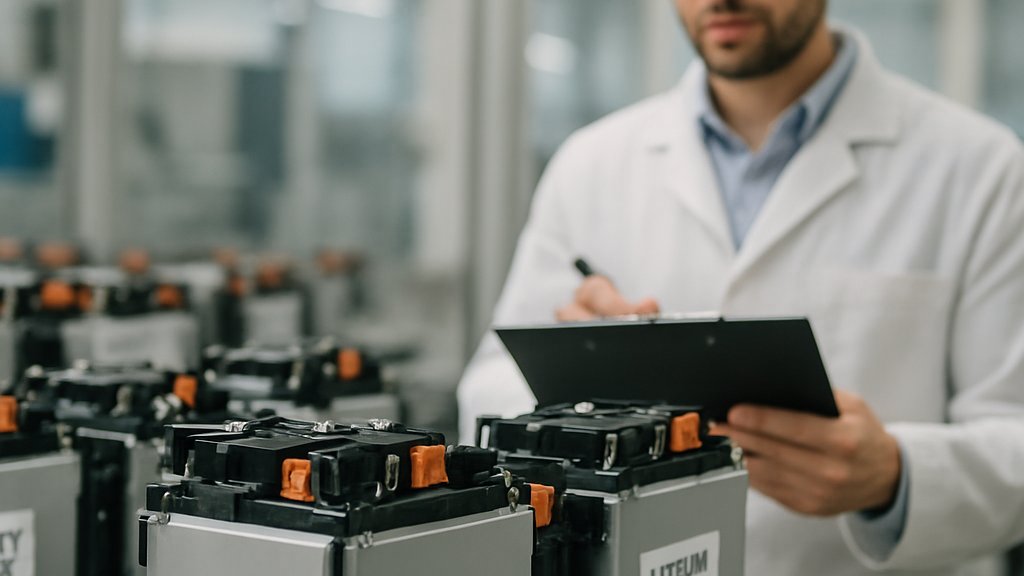
Execution hinges on rapid industrial conversion across three regions. First, legacy automotive cell lines in Japan will shift toward high-rate cylindrical formats. Secondly, a new module assembly hub in Mexico will integrate those cells into rack enclosures. Meanwhile, U.S. mass production lands at the Kansas plant during fiscal 2028. The company expects the Midwestern site to serve hyperscaler fleets needing low-latency logistics.
Consequently, analysts forecast the location could influence future AI Battery Demand projections. In contrast, greenfield gigafactories would have faced multiyear permitting delays. This industrial conversion strategy trims capital intensity and accelerates time to revenue. Furthermore, regional diversity cushions geopolitical supply shocks.
- Japan lines: triple output by FY2029.
- Mexico modules: go live FY2027.
- Kansas pilot: Q2 FY2028 commissioning.
- Rack units: 1.2 million annual capacity meets AI Battery Demand.
Collectively, the facilities push combined capacity well beyond eight gigawatt-hours. Moreover, the staggered rollout hedges schedule risk. The timeline, however, merits deeper inspection.
Kansas Conversion Timeline Details
Construction documents place Kansas plant structural work start in early 2027. Subsequently, tooling arrives six months later via relocated EV lines. Company leaders plan operator training parallel to commissioning to compress ramp curves. However, supply chain tightness for formation equipment may shift dates by a quarter. IEA data shows component backlogs averaging 26 weeks during 2025-2026. Consequently, executives added a contingency buffer inside public guidance. Kansas milestones appear aggressive yet achievable given brownfield advantages. Future disclosures will test that confidence. Attention now turns to the technology stack itself.
Rack Backup Adoption Escalates
AI inference clusters exhibit violent, millisecond power swings. Therefore, centralized UPS chains struggle to stabilize those spikes. Rack-level data center batteries step in with microsecond response times. Moreover, the modules support peak shaving and power storage that slashes utility demand charges. ORv3 designs allow the packs to share busbars with GPU trays. The vendor claims its lithium-ion chemistry maintains safety under 45-degree ambient rooms. Additionally, Gartner’s 40-percent shortage warning underscores why adoption is accelerating. Hyperscaler engineers now specify rack backup during initial campus designs, not as a retrofit.
Consequently, AI Battery Demand converges with broader infrastructure demand for resilient power storage. Colocation providers fear being priced out as hyperscalers lock multiyear allotments. Rack integration has shifted from experiment to default baseline within twelve months. Nevertheless, storage chemistry choices remain fluid. That dynamic fuels interest in hybrid architectures.
Supercapacitor Hybrid Strategy Roadmap
Supercapacitors discharge faster than batteries but store less energy. The vendor will mass produce hybrid racks pairing both devices during FY2027. Furthermore, the scheme addresses both transient spikes and sustained outages. Analysts expect the approach to lengthen battery lifespans by reducing depth-of-discharge events. In contrast, pure battery arrays cycle harder and degrade sooner. AI Battery Demand therefore influences even component-level design decisions. Hybrid roadmaps promise efficiency plus reliability. However, they deepen material procurement complexity. Supply allocation pressures illustrate that challenge next.
Allocation Pressure Builds Fast
Orders already cover more than four years of planned output. Consequently, remaining capacity for enterprise buyers looks thin amid escalating AI Battery Demand. Corporate filings indicate 80 percent of volumes are under contract through FY2029. Meanwhile, secondary markets have started quoting premiums for early delivery slots. Data center batteries suppliers Vertiv and Eaton voice similar backlog figures. Industrial conversion efforts elsewhere may lag, keeping inventories tight into the next decade. IEA modeling shows total global infrastructure demand for digital power could exceed 1,000 TWh.
Therefore, AI Battery Demand faces supply, permitting, and material constraints simultaneously. Kansas plant expansion partly mitigates U.S. shortfalls but cannot address European needs. Nevertheless, robust policy support could accelerate rival projects and diversify risk. Early commit strategies grant hyperscalers leverage yet expose enterprises to volatility. Moreover, procurement teams must now secure storage years before compute orders. Professionals can boost planning skills through the AI Supply Chain™ certification.
Key Takeaways Forward Path
Panasonic’s decisive pivot highlights exploding infrastructure demand for resilient electricity. Capital reallocation, industrial conversion, and regional footprints compress time to market. Therefore, AI Battery Demand now anchors multi-billion forecasts through decade’s end. Unchecked AI Battery Demand could outpace recycling infrastructure within five years. Rack-level data center batteries complement grid upgrades yet cannot replace transmission growth. Moreover, hybrid supercapacitor designs promise both speed and longevity.
Allocation pressure signals that proactive sourcing will define competitive positioning. Consequently, technology leaders should engage suppliers early and hedge chemistry bets. Finally, teams should invest in skill development to navigate complex power storage logistics. Explore the certification link above and transform procurement strategies today.
Disclaimer: Some content may be AI-generated or assisted and is provided ‘as is’ for informational purposes only, without warranties of accuracy or completeness, and does not imply endorsement or affiliation.


