

AI CERTS
3 hours ago
AI Framework Unification: Ending Complexity Debt With Dapr
Moreover, it packages state, identity, observability and vendor-neutral LLM plumbing behind one sidecar abstraction. That approach aims to replace Disconnected Tools and shadow scripts with governed building blocks. Platform leaders evaluating agent architectures need clear data on costs, benefits, and guardrails. This article delivers that analysis and outlines practical next steps.
Debt From Disconnected Tools
Early agent pilots stitched random APIs, creating Disconnected Tools islands that nobody owned. Consequently, incidents grew, and undocumented patches piled up inside the Shadow IT Corner. Complexity debt ballooned because each microfix added hidden coupling. Therefore, architects began exploring AI Framework Unification to centralize decisions and recover governance.
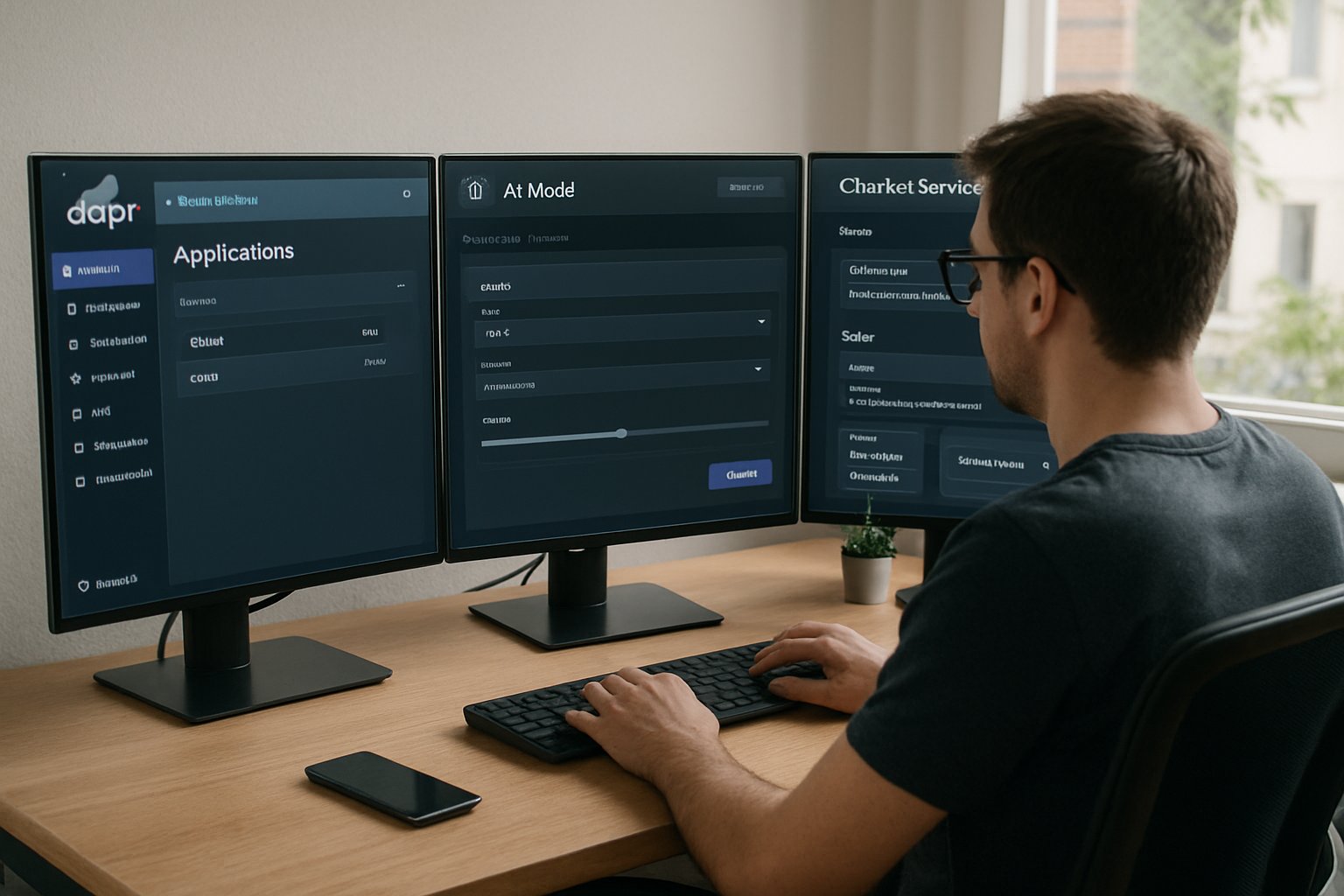
Complexity debt thrives on fragmented stacks. However, unified approaches promise cleaner operating models. The next section details how Dapr Agents delivers that promise.
Enter Dapr Agents Now
Dapr Agents emerged from the Floki project and now ships as an official CNCF sandbox effort. March 23, 2026 marked v1.0 general availability, showcased on the KubeCon Europe keynote stage. Additionally, GitHub shows roughly 650 stars, 1,037 commits, and only 14 open issues. Monthly PyPI downloads hover near 8,000, signaling community momentum beyond hobby prototypes. Therefore, enterprises eye the framework as a stable nucleus for AI Framework Unification.
Momentum signals a maturing solution. Consequently, decision makers demand details on production guardrails.
Core Production Guardrails Explained
Dapr Agents bundles four critical capabilities.
- Durable workflows that persist state across crashes.
- Stateful virtual actors with scale-to-zero efficiency.
- Built-in SPIFFE identity and automatic mTLS encryption.
- End-to-end tracing exported via OpenTelemetry.
Moreover, each capability inherits Dapr’s sidecar reliability patterns and secure SPIFFE identities. These building blocks reduce ad-hoc retries and tracing hacks common inside the Shadow IT Corner. Mark Fussell notes that the guardrails keep agents alive through timeouts and node failures. Together they advance AI Framework Unification by embedding operational discipline at the runtime layer.
Guardrails transform fragile code into resilient services. However, durability alone rarely completes the Consolidated Infrastructure journey. The next part examines infrastructure consolidation benefits.
Toward Consolidated Infrastructure Goals
Large enterprises already operate dozens of data stores and pipelines. Dapr Agents exposes connectors to more than 30 databases, vector stores, and message buses. Consequently, teams can swap backends without rewriting agent logic, accelerating Consolidated Infrastructure adoption. Furthermore, vendor-neutral LLM components let architects switch from OpenAI to Mistral with two YAML lines. Such interchangeability drives system Resilience during commercial outages or cost fluctuations. Therefore, AI Framework Unification becomes realistic, not aspirational.
Pluggable components compress migration timelines. Nevertheless, every abstraction introduces new trade offs, as the next section explains.
Driving Enterprise Resilience Metrics
Resilience metrics such as mean time to recover improve when failures restart in milliseconds. Benchmarks published by maintainers claim thousands of idle actors fit on a single CPU core. In contrast, traditional threads waste memory while sitting idle. Moreover, scale-to-zero semantics cut cloud spend for sporadic workloads. Yet, adopting sidecars requires operational familiarity and observability tooling alignment. Additionally, language support outside Python still lags, creating another Shadow IT Corner risk. Therefore, leaders must pilot workloads, collect latency distributions, and update SLOs before broad rollout.
- Benchmark agent concurrency.
- Validate persistent state recovery.
- Audit mTLS configurations.
- Monitor cost against baselines.
Professionals can sharpen skills via the AI Data Robotics™ certification. Such training aligns staff around AI Framework Unification and controlled rollout playbooks.
Measured pilots ensure factual capacity gains. Consequently, teams can draft roadmaps with fewer surprises.
Roadmap And Next Steps
Analysts expect ecosystem growth as Java, Go, and .NET SDKs mature over 2026. Meanwhile, commercial vendors like Diagrid plan managed offerings and deeper observability dashboards. Moreover, early adopters such as ZEISS Vision Care prepare public case studies on complexity debt reduction. Subsequently, independent benchmarks will either validate or challenge the "thousands of agents" claim. Therefore, organizations should schedule phased adoption aligned with quarterly objectives. Committing to AI Framework Unification demands cross-team governance boards and common security baselines. Nevertheless, the payoff includes reduced Disconnected Tools sprawl and stronger Resilience posture.
Dapr Agents offers a credible roadmap. In contrast, complacency risks mounting complexity costs.
Dapr Agents tackles the hardest production hurdles facing modern agent platforms. Durable workflows, virtual actors, and secure identities collectively retire fragile glue code. Consequently, complexity debt shrinks and teams refocus on business value. Nevertheless, sidecar onboarding, language gaps, and new abstractions demand sober evaluation. Measured pilots, certified skills, and clear SLOs mitigate those adoption risks. Furthermore, AI Framework Unification aligns scattered initiatives under one governed architecture. Professionals should launch a proof of concept next quarter and capture resilience metrics early. Explore the certification above and join the community to shape this emerging standard.


