

AI CERTS
3 months ago
Meta’s Internal AI Reorganization Sparks High-Stakes Power Shift
Yet layoffs, public criticism, and shifting reporting lines have fueled talk of a Power Structure Dismantle. Industry veterans watch closely because Meta’s moves signal how global platforms will chase artificial general intelligence. Meanwhile, researchers worry about independence, benchmarking integrity, and Data Labeling Faith amid accelerated product deadlines. This article unpacks the timeline, financial logic, cultural tensions, and governance questions shaping Meta Strategy. By mapping key events and voices, professionals can better gauge the firm’s next moves.
Timeline Highlights And Overview
June 2025 marked the opening salvo. Meta disclosed a roughly $14.3 billion purchase of 49% of Scale AI. Moreover, the deal parachuted 28-Year-Old Billionaire Wang into a newly minted chief AI officer role. Bloomberg framed the checkbook diplomacy as Zuckerberg’s boldest bet since the metaverse pivot.
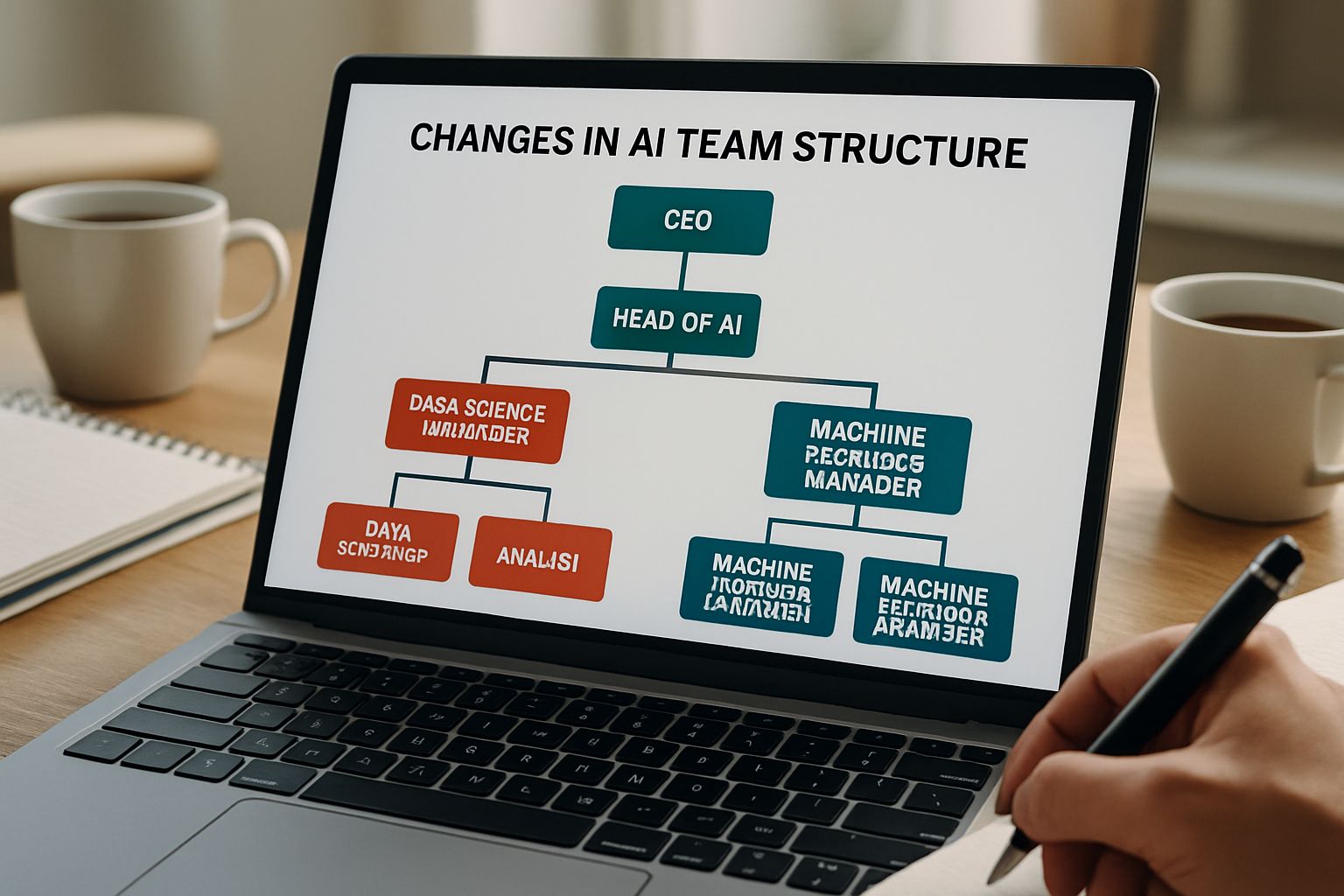
October 22, 2025 saw the first shockwave. An internal memo, signed by Wang, cut about 600 posts from Meta Superintelligence Labs. Consequently, legacy infrastructure teams shrank while an elite “TBD” lab stayed untouched. Observers interpreted the pruning as an early Power Structure Dismantle inside the vast AI division.
Subsequently, Yann LeCun announced his departure in November 2025 after decades steering FAIR. The famed researcher criticized Llama 4 benchmarking and questioned Wang’s experience during a Financial Times interview. In January 2026 LeCun amplified the critique, alleging the GenAI group was sidelined. His comments extended the narrative of fragmenting authority.
These milestones reveal a rapid rhythm of hiring, cutting, and dissent. However, the larger Meta Strategy now faces closer scrutiny, as the next section explains.
Meta Strategy Under Scrutiny
At face value, the Internal AI Reorganization aimed to sharpen execution. Therefore, Zuckerberg centralized model research, data pipelines, and deployment under a single accountable leader. This configuration mirrored practices at OpenAI and Google DeepMind. Nevertheless, critics argue it sacrifices experimental breadth for short-term delivery.
Supporters counter that Meta lagged frontier labs and required decisive realignment. Moreover, the firm lacked Data Labeling Faith before the Scale merger. Scale AI’s tooling promises consistent annotation quality that underpins supervised training. Consequently, Wang’s arrival stitched model development more tightly to curated datasets.
Zuckerberg also believes a flatter chain of command accelerates risky bets. In contrast, LeCun’s academic mindset preferred loose federations of autonomous labs. The resulting philosophical gulf fuels every headline about internal friction.
Meta’s blueprint positions speed over open-ended curiosity. The coming financial section clarifies how that trade-off translates to dollars.
Financial Stakes Context Clarified
Meta’s 2025 capital expenditure guidance touched the high tens of billions. Additionally, supercomputer leases and bespoke data centers swallowed significant share of that outlay. The Scale AI stake alone represented almost 10% of Meta’s 2024 free cash flow. Consequently, investors treat the program as existential, not exploratory. The Internal AI Reorganization thus carried multibillion-dollar implications.
Bloomberg described the transaction as Zuckerberg “opening the checkbook” to match rival war chests. Meanwhile, analysts applaud the acquisition’s embedded Data Labeling Faith because it derisks downstream quality. Furthermore, owning 49% of Scale AI gives Meta recurring influence without full consolidation burden. This hybrid structure balances optionality and control.
- Stake size: ~49% of Scale AI, cost ≈ $14.3 billion.
- MSL layoffs: ~600 roles out of 3,000, a 20% reduction.
- Projected AI capex 2025: “tens of billions” according to earnings guidance.
These figures underscore how financial gravity shapes every engineering chart. However, money alone cannot silence the research community, as the next section shows.
Research Community Response Signals
LeCun’s exit punctuated simmering academic unease. Moreover, several FAIR veterans reportedly joined Anthropic and Mistral after the October memo. Insiders claim the Internal AI Reorganization limited exploratory grants and travel budgets. Consequently, some researchers labeled the new governance “top-down venture building” rather than science.
Nevertheless, Wang defends the pivot in internal town-halls. He argues that a cohesive roadmap prevents duplicated work and improves benchmark reliability. Furthermore, the 28-Year-Old Billionaire stresses that Data Labeling Faith requires seamless feedback between annotation and model tuning. Despite friction, the Internal AI Reorganization streamlines bug escalation across data pipelines. That statement resonates with applied scientists who fight noisy datasets daily.
External academics hold divergent opinions. In contrast, some applaud Meta’s willingness to open-source Llama despite corporate pressure. Others fear the Power Structure Dismantle may shrink the very openness driving adoption. Public perception therefore remains fluid.
Community sentiment swings between optimism and distrust. The operational impact section now evaluates measurable consequences.
Operational Impact Analysis Insights
Inside MSL, engineering squads now follow a strict quarterly OKR cadence. Therefore, release trains for Llama updates shifted from six to four months. Meanwhile, consolidation removed overlapping data infrastructure, saving millions in cloud egress fees. Yet morale surveys show mixed scores after the Internal AI Reorganization.
Staff told Axios that promotion calibrations favored people aligned with Wang’s Meta Strategy deliverables. Consequently, specialists in long-horizon robotics left or transferred. However, front-end teams shipping AI features to WhatsApp gained headcount. Such redistribution reflects an intentional Power Structure Dismantle targeting noncritical paths.
Professionals can enhance their expertise with the AI Foundation™ certification.
Operational metrics prove the shake-up delivered efficiency yet introduced cultural debt. Ultimately, the Internal AI Reorganization will be judged by both latency metrics and patent output. Governance implications emerge next.
Governance And Future Outlook
Corporate governance analysts ask whether oversight kept pace with accelerated spending. Moreover, board committees track concentration of authority after the Internal AI Reorganization. Andy Stone’s March 2026 denial sought to calm speculation about Wang’s status. Nevertheless, repeated rumors suggest information asymmetry between leadership and rank-and-file.
Regulators could view the 28-Year-Old Billionaire’s influence as emblematic of unchecked founder control in Big Tech. Furthermore, labor authorities watch the Power Structure Dismantle for possible collective dismissal violations. Therefore, Meta must balance agility with transparent process to avoid legal friction. Zuckerberg’s next earnings call may reveal concrete guardrails.
Governance will decide whether bold bets translate into durable advantage. The final section distills actions readers should consider.
Key Takeaways Action Steps
Meta’s story illustrates how ambition, money, and youth collide inside hyperscale companies. Consequently, every stakeholder must study the Internal AI Reorganization for lessons on strategic centralization. Professionals should monitor Data Labeling Faith metrics, especially annotation throughput and error rates. Meanwhile, investors ought to assess whether Meta Strategy delivers faster feature velocity without eroding culture.
- Track quarterly model release cadence for evidence of sustained velocity.
- Compare churn rates among FAIR alumni for culture health signals.
- Review capex notes for rising data center commitments.
These steps support informed decisions in a volatile market. Therefore, consider deepening domain skills via the earlier mentioned AI Foundation™ certification.
Meta’s AI saga remains unfinished, yet clear patterns have emerged. First, gigantic investments can shift organizational gravity in months, not years. Second, leadership concentration invites blistering debate about research independence. Third, operational wins appear real, though morale costs persist. Nevertheless, the Internal AI Reorganization gives Meta a single throat to choke when milestones slip.
Consequently, outsiders will judge success by visible product rollouts and employee retention alike. With scrutiny mounting, professionals should stay educated, network widely, and acquire certifications that verify modern AI fluency. Explore the linked AI Foundation™ program today and strengthen your resilience in the new age of superintelligence.
Disclaimer: Some content may be AI-generated or assisted and is provided ‘as is’ for informational purposes only, without warranties of accuracy or completeness, and does not imply endorsement or affiliation.


