

AI CERTS
3 hours ago
Child Safety Hardball: Australia’s Bold Under-16 Social Media Ban
This article unpacks the legal framework, enforcement mechanics, industry response, and wider policy echoes. Readers will also find guidance on professional upskilling in governance and online safety. Moreover, the story illustrates how national rules can ripple across global technology markets. Understanding these dynamics arms executives with foresight and risk mitigation strategies. Transition into the debate begins now.
Australia Enacts Tough Law
Australia’s SMMA amendment entered force after twelve months of fevered policy design. Lawmakers fixed sixteen as the non-negotiable threshold despite industry pleas for thirteen. Consequently, designated services must take reasonable steps to keep minors off their platforms. Stakeholders realised Child Safety Hardball had moved from slogan to statute.
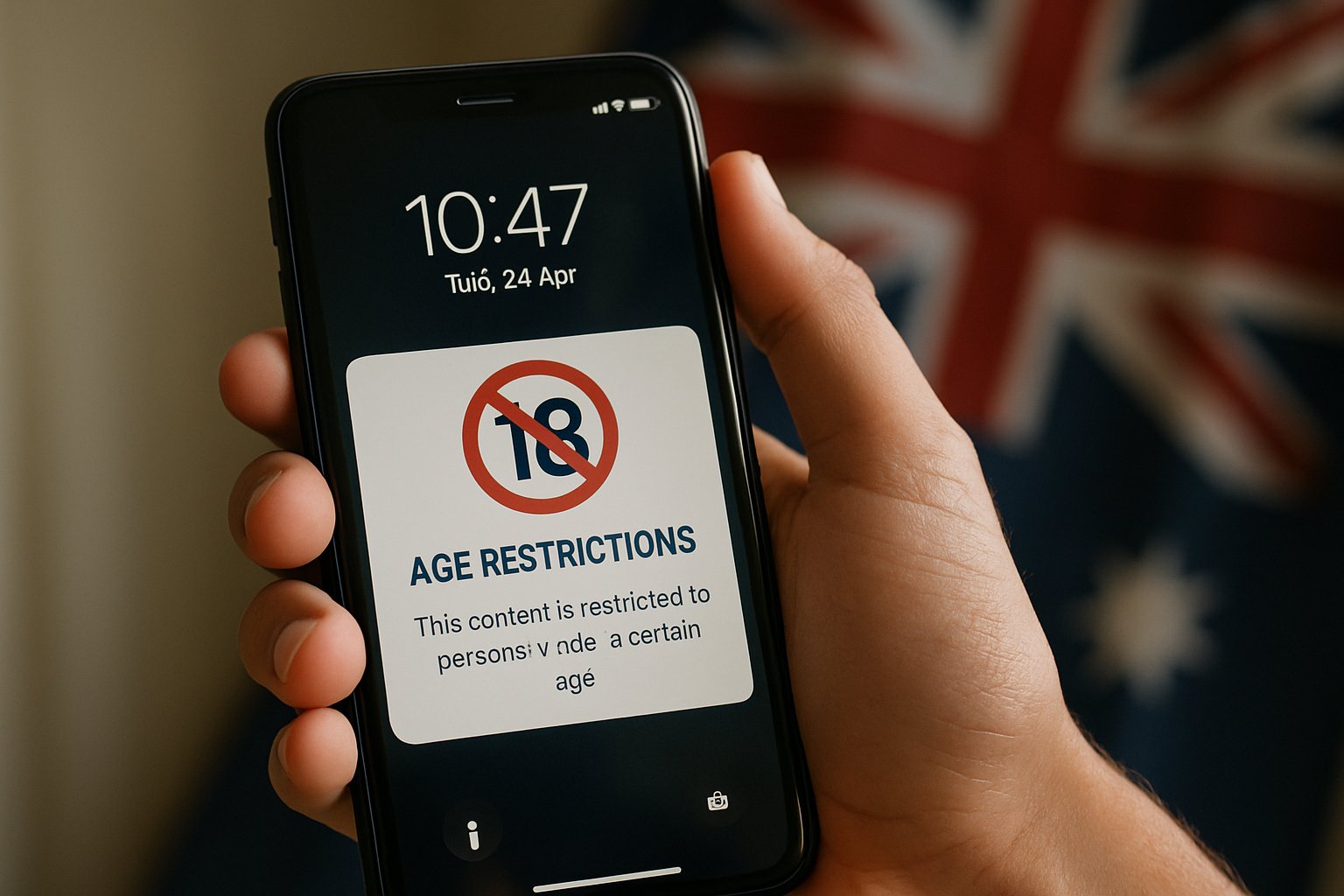
The eSafety Commissioner leads oversight, issuing notices, audits, and potential infringement proceedings. Penalties can climb toward A$49.5 million per systemic breach. Nevertheless, children or parents face no direct sanction under the statute.
Guidance encourages layered age assurance such as inference, biometric estimation, and voluntary document checks. In contrast, compulsory government identification remains prohibited to protect privacy. Therefore, platforms juggle accuracy goals with data-minimisation imperatives.
These provisions illustrate Australia’s legislative resolve. However, implementation complexities soon dominated headlines.
Platforms Under Legal Fire
eSafety’s first compliance report, published 31 March 2026, jolted Silicon Valley awake. It flagged Facebook, Instagram, Snapchat, TikTok, and YouTube for significant compliance gaps. Moreover, investigators revealed about five million Australian accounts had been deactivated.
However, minors continued bypassing checks by creating new logins or deploying VPNs. Consequently, the regulator shifted from Legal Action Enforcement. Information-gathering notices now probe the efficacy of each age assurance layer.
Platforms insist they act in good faith yet cite technological limits. Meta told TIME, “Accurately determining age online is a challenge for the whole industry.” Nevertheless, Platform Liability under the SMMA remains absolute.
- Approximate deactivations: 4.7-5 million accounts across services
- Meta disclosed 150,000 Australian Facebook users aged 13-15 pre-law
- Instagram estimated 350,000 teens in the same cohort
- TikTok reported roughly 200,000 Australian users aged 13-15
- Penalties: up to A$49.5 million per breach
Regulatory momentum signals escalating Legal Action Enforcement. Next, we examine technical tactics and their flaws.
Enforcement Tools And Tests
Age assurance technology underpins compliance promises. Platforms layer inference models, facial estimation, and document verification to boost accuracy. Additionally, appeals processes let flagged users prove adulthood through banking or credit data.
However, each technique carries error margins that worsen near boundary ages. Yoti’s facial model misclassifies some 16-year-olds as younger, prompting wrongful lockouts. Meanwhile, document checks raise privacy alarms and storage liability.
Consequently, Platform Liability debates intensify as false rejections climb. Industry groups argue that mandated precision is mathematically impossible. Nevertheless, the law requires “reasonable steps,” not perfection. Every rejected login becomes fresh evidence of Child Safety Hardball in practice.
Technical fragility complicates robust compliance. Rights discussions therefore occupy centre stage.
Rights And Privacy Debate
Civil society organisations mounted constitutional challenges within weeks of commencement. Reddit and the Digital Freedom Project allege disproportionate free-expression burdens. Moreover, the Australian Human Rights Commission questions necessity and proportionality.
Litigants emphasise that teens rely on mainstream platforms for civic participation. In contrast, forced migration to fringe forums could heighten radicalisation risks. Mental Health researchers warn of isolation when social ties vanish overnight.
Government lawyers counter that Child Safety Hardball saves minors from predatory grooming. Furthermore, regulators frame the ban as a design accountability milestone, not censorship. High Court directions hearings continue through mid-2026.
Legal arguments will test Australia’s authority against expressive rights. Global echoes are already evident.
Global Policy Ripple Effect
Foreign regulators monitor Canberra’s gambit with fascination. Policy analysts label this export wave “Child Safety Hardball on tour”. Indonesia, Canada, and several US states consider similar thresholds. Consequently, Australia occupies a Global Spotlight in digital policy circles.
European Union officials, meanwhile, weigh harmonising the Digital Services Act with stricter youth safeguards. Moreover, companies fear a compliance splinter net, where each jurisdiction imposes different proof-of-age tests. Global Spotlight status therefore accelerates international standard talks.
Multinational counsel highlight Legal Action Enforcement risks extending beyond Australia as precedents accumulate. Platform Liability could soon become a universal boardroom metric. Consequently, investors demand clearer disclosures on teen user ratios and verification spend.
International interest amplifies pressure on firms. The domestic Mental Health narrative also shapes perception.
Mental Health Impact Debate
Public health data links heavy social media use to anxiety, depression, and disrupted sleep. Therefore, supporters argue the ban will ease adolescent Mental Health burdens. However, some psychologists caution that sudden exclusion may deepen loneliness.
Researchers call for longitudinal studies comparing regulated and unregulated cohorts. Meanwhile, eSafety plans to publish wellbeing metrics alongside compliance findings. Mental Health outcomes will influence future parliamentary reviews.
Wellbeing evidence could validate or undermine Child Safety Hardball. Executives must prepare adaptable strategies.
Strategic Roadmap For Compliance
Boards are recalibrating risk registers to address escalating Legal Action Enforcement threats. Regular audits of age-gate effectiveness now appear on quarterly agendas. Moreover, cross-functional teams track litigation to anticipate costly injunctions.
Experts urge companies to implement privacy-preserving biometric models and robust appeal workflows. Additionally, transparent reporting fosters trust with regulators and investors. Consequently, Platform Liability exposure shrinks when evidence demonstrates reasonable steps. Adopting proactive safeguards signals commitment to Child Safety Hardball principles before subpoenas arrive.
Professionals can upskill via the AI Policy Maker™ certification. Moreover, regulatory literacy strengthens negotiation positions during consultations. Global Spotlight on Australia makes such expertise commercially valuable.
Robust governance mitigates uncertainty. Nevertheless, stakeholders must watch court verdicts and enforcement outcomes.
Child Safety Hardball now confronts corporate risk officers daily.
Conclusion
Australia’s under-16 ban signals a decisive shift in platform governance. Consequently, Child Safety Hardball has redrawn compliance maps, intensified Platform Liability, and propelled the nation into the Global Spotlight. Legal Action Enforcement remains imminent, while Mental Health evidence will shape future revisions. Moreover, international regulators study the model, foreshadowing wider adoption. Professionals eyeing leadership roles should master the emerging rulebook. Therefore, earning credentials like the AI Policy Maker™ certification equips teams to navigate turbulent policy waters. Engage now, refine strategies, and transform regulatory pressure into competitive advantage.


