

AI CERTS
3 hours ago
Hitem3D 2.0: 3D Foundation Models for Production-Ready Printing
However, independent validation remains essential before large scale deployment. Therefore, we present balanced analysis for engineers, procurement leads, and business strategists. The discussion references multiple sources and includes actionable adoption guidance. Finally, certification options such as the linked AI Marketing Strategist program appear where relevant.
Global Market Forces Accelerate
Grand View Research projects the 3D printing sector to top USD 168.9 billion by 2033. Meanwhile, ResearchAndMarkets expects AI-in-manufacturing to hit USD 155 billion by 2030. Together, those forecasts signal a compound opportunity for automated design and fabrication pipelines.
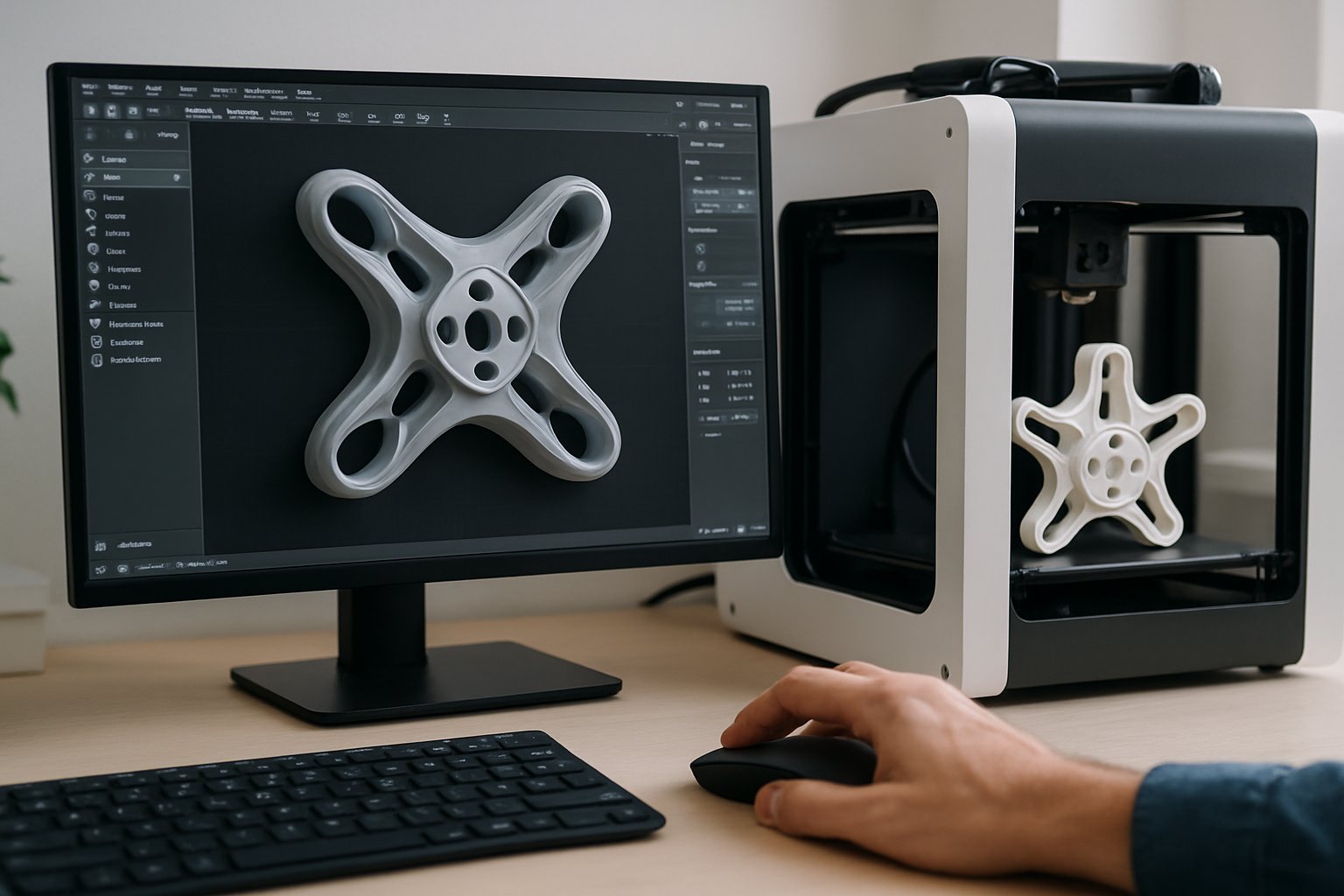
In contrast, manual model cleanup still consumes hours per part across many shops. Consequently, any tool that reduces repair costs wins executive attention quickly. 3D Foundation Models promise that benefit by learning geometry, materials, and process constraints jointly.
Hitem3D positions its upgrade squarely at that nexus of cost and speed. Furthermore, on-demand fulfilment through the vendor’s global service deepens the value proposition. These market drivers set the stage for the product dive that follows.
Market projections underscore urgent demand for automated, reliable 3D asset creation. Consequently, Hitem3D’s timing appears calculated for maximum impact heading into 2026.
Inside Hitem3D 2.0 Launch
Math Magic unveiled Hitem3D 2.0 in March 2026 through coordinated blog posts and press releases. Additionally, the company published an OpenClaw Skill, turning the generator into a callable microservice. Therefore, enterprises can insert image-to-part routines inside existing agent pipelines with minimal code.
The upgrade introduces a 1536³ Pro texture tier, multi-view reconstruction, and automated retopology. Moreover, outputs span GLB, OBJ, FBX, STL, and USDZ, which common slicers readily ingest. Semantic segmentation labels enable multi-material printing on systems like Bambu Lab X1C.
Crucially, every claim links to production readiness rather than consumer novelty. Nevertheless, official benchmarks remain sparse, leaving independent labs to verify real-world throughput. Thus, the company claims its 3D Foundation Models deliver consistent topology regardless of camera angle.
Key Specification Snapshot Detail
- 1536³ Pro tier safeguards micro-surface detail for color or resin manufacturing.
- Structure-aware texture pipeline synchronizes UV growth with geometry nodes.
- Relief engine embosses logos or serial numbers automatically during retopology.
- Watertight mesh export targets Cura, PrusaSlicer, and Bambu Studio.
- OpenClaw Skill allows scripted generation at enterprise API scale.
These specifications illustrate an ambition to collapse several manual steps into a single request. However, ambitious specs demand equally rigorous validation, which industry stakeholders still await.
Structure-Aware Texture Breakthrough Drives
Texture and geometry alignment has plagued prior image-to-3D systems. Often, surfaces looked believable onscreen yet failed under printers due to mismatched layers. Hitem3D’s integrated pipeline claims to solve that mismatch.
Moreover, the structure-aware generator grows color data while building the volumetric grid. Consequently, texture seams shrink and micro-details carry into the relief engine without distortion. SecureResearch analysts call the approach a leap beyond slapped-on materials.
3D Foundation Models underpin this advance by learning spatial priors across millions of training shapes. In contrast, earlier pipelines treated texture synthesis as a disconnected postprocess. Additionally, the resulting watertight mesh better resists delamination in multi-color prints.
Integrated generation tightens alignment, raising print precision and visual fidelity simultaneously. Therefore, the breakthrough could redefine quality baselines for automated part design.
Print Workflow Advantages Unlock
Every manufacturing engineer values time. Hitem3D targets that metric through automated retopology, semantic segmentation, and scaling presets. Consequently, prototype cycles may shorten from days to hours, according to company demos. Early adopters report that 3D Foundation Models shrink average job quoting time as well.
Furthermore, multi-material segmentation feeds directly into four-color FDM or resin workflows with minimal edits. Automated supports plus the relief engine remove extra CAD passes for embossing part numbers. Meanwhile, slicer-ready outputs reduce manual wall checks, limiting mesh repairs to edge cases.
Math Magic claims up to 60% labor reduction across typical consumer product runs. However, no audited study yet corroborates that figure across independent service bureaus. Nevertheless, early testers on Reddit report smoother toolpath generation, albeit with occasional thin walls.
Workflow gains look promising, especially for small-batch houses chasing precision and speed. Yet, real output metrics must confirm those early anecdotes before boardrooms commit budgets.
Risks Require Due Diligence
Generative outputs still face legal and technical uncertainties. For example, non-manifold edges occasionally escape the retopology pass despite mesh promises. Moreover, licensing of training data remains opaque, exposing users to potential IP conflicts.
In contrast, traditional CAD workflows track part lineage with established contracts. Therefore, risk officers will demand transparent audit logs and reproducible print tests. Additionally, inconsistent user metrics raise questions about commercial maturity.
Community makers also note variable precision when dealing with hair-thin organic details. Consequently, professional teams should validate tolerances on both FDM and resin machines. A structured pilot helps uncover hidden failure modes before full rollout. Nevertheless, poorly tuned 3D Foundation Models can still output thin walls that break mid-print.
Neglecting these diligence steps could reverse promised savings quickly. Therefore, balanced assessments must precede vendor contracts and long-term integration work.
Strategic Adoption Guidance Roadmap
Enterprises eyeing Hitem3D should begin with a limited scope proof. Select three representative parts covering mechanical, organic, and branded surfaces. Furthermore, track time spent on repair, slice, and post-processing against legacy baselines.
Subsequently, document dimensional accuracy and surface precision using calipers and microscopy. Include relief engine outputs in tests to capture embossed fidelity. Meanwhile, measure failure rates across multiple printers to evaluate mesh robustness.
Consider API load tests if integrating into autonomous agent chains. Moreover, negotiate SLAs covering uptime, model privacy, and retraining windows. Professionals can deepen their strategic edge through the AI Marketing Strategist™ certification.
Consequently, combined technical and commercial skills accelerate ROI from emerging 3D Foundation Models initiatives. These steps create a repeatable roadmap that safeguards budgets while maximizing innovation throughput.
Guided pilots and skills development transform curiosity into verified business outcomes. Therefore, disciplined adoption can capture speed without introducing unacceptable risk.
Conclusion
Hitem3D 2.0 demonstrates how 3D Foundation Models are maturing into industrial engines. Moreover, the structure-aware pipeline and relief engine promise measurable precision gains. However, inconsistent metrics and legal opacity still mandate cautious verification. Consequently, leaders should pilot limited parts, track print data, and refine integration before scaling. Meanwhile, upgrading staff skills through strategic certifications strengthens negotiation and implementation agility. Embrace disciplined testing, then leverage 3D Foundation Models to accelerate differentiated product delivery.


