

AI CERTS
3 hours ago
Nuclear Math Behind AI Energy Crisis
Readers will learn why gigawatts, not headline reactor counts, determine real risk. Moreover, the piece outlines where corporate procurement, government targets, and expert scepticism intersect. Ultimately, leaders must navigate competing timelines, costs, and technology bets while keeping servers—and economies—running.
Surging Digital Power Loads
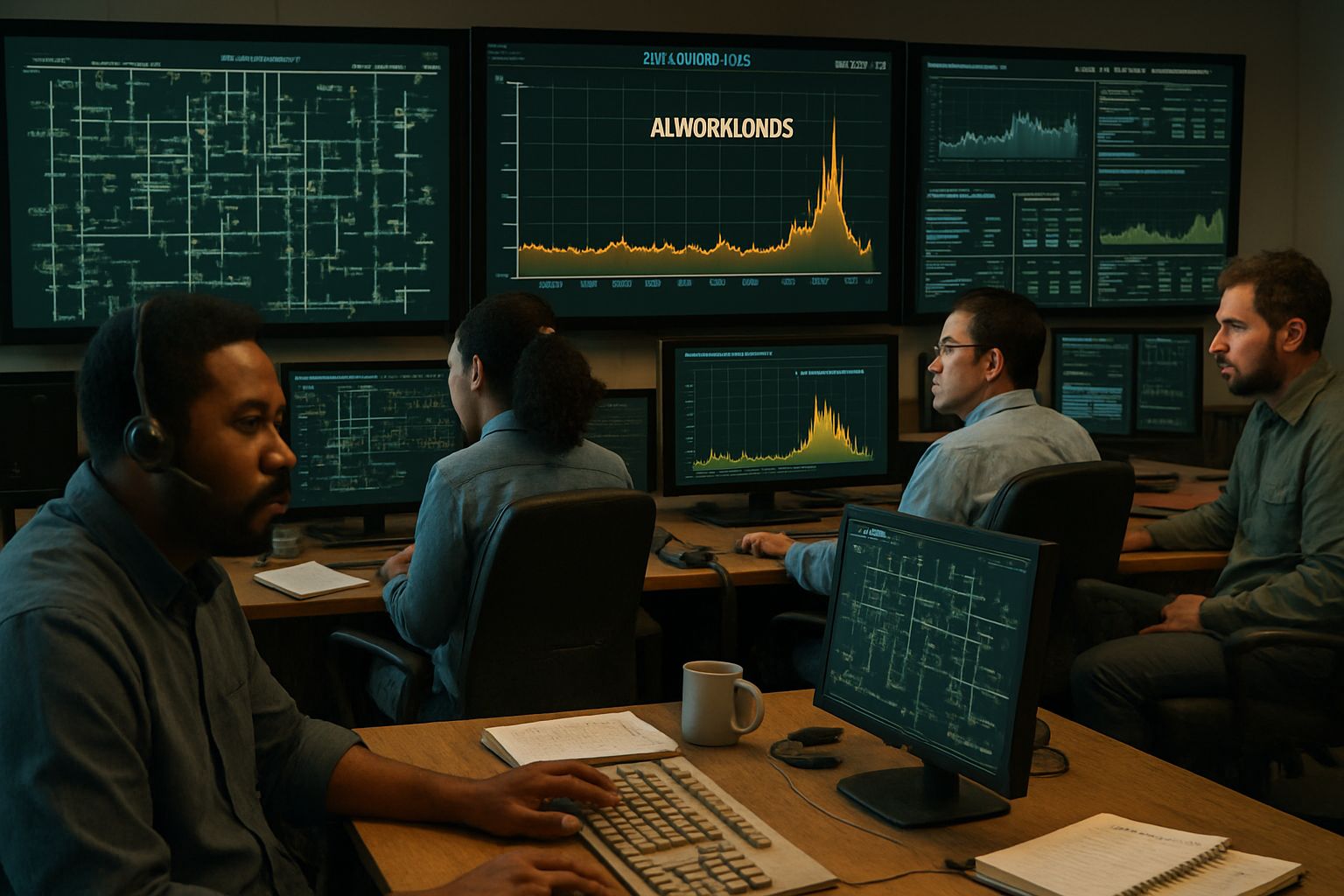
Goldman Sachs projects United States power demand from data centers could jump 160-175% by 2030. Furthermore, BloombergNEF forecasts 106 GW of national data-center load by 2035. These numbers eclipse historical growth rates and intensify concerns over grid resilience. Meanwhile, the Department of Energy warns that electrification and AI may combine into a perfect capacity storm.
Analysts already label the situation an AI Energy Crisis. Goldman estimates 85-90 GW of additional nuclear would be required only to cover new data-center consumption. Consequently, planners must compare large light-water reactors, advanced designs, gas peakers, renewables, and battery storage under aggressive timelines.
The scale shock sets the context for the next section. Nevertheless, gigawatt statistics alone rarely persuade policymakers. A clear conversion to reactor units offers more tangible benchmarks.
Nuclear Capacity Conversion Math
Many headlines simplify capacity gaps into tidy reactor counts. However, the arithmetic depends on chosen reactor sizes. Large units average roughly 1 GW each. Small modular reactors (SMRs) range between 50 MW and 300 MW, while Natrium prototypes sit near 345 MW.
- 90 GW gap / 1 GW LWR ≈ 90 reactors
- 90 GW gap / 0.345 GW Natrium ≈ 260 modules
- 58 GW gap / 0.48 GW mid-size ≈ 120 reactors
Therefore, any claim of “120 reactors” implies mid-size assumptions rather than firm policy directives. Moreover, capacity factor must enter the equation. Nuclear plants often exceed 90% capacity factors, reducing nameplate needs relative to intermittent alternatives.
These calculations illustrate how the AI Energy Crisis narrative morphs with each engineering choice. Subsequently, corporate buyers add another layer of complexity.
Corporate Buyers Shape Supply
Tech giants sign multibillion-dollar nuclear deals to hedge rising power risk. Meta secured up to 6.6 GW in advanced-reactor offtakes. Additionally, Amazon inked a 1.92 GW agreement linked to the Susquehanna plant. Microsoft financed a potential Three Mile Island restart.
Such power-purchase agreements provide revenue certainty, thereby lowering financing hurdles for new projects. In contrast, public utilities often struggle to absorb full construction risk alone. Moreover, these contracts send strong signals to equipment suppliers and regulators.
Corporate activism reframes the AI Energy Crisis from an abstract grid problem into a boardroom priority. Consequently, regulators now weigh private timelines alongside regional planning studies before approving major builds.
Policy Drives Reactor Ambition
The U.S. Department of Energy wants to triple national nuclear capacity by 2050. Meanwhile, interim milestones target 35 GW by 2035 and a sustained 15 GW annually after 2040. Furthermore, international forums echo similar expansion calls; the latest IEA projection aligns with a global nuclear doubling scenario.
Support mechanisms include production tax credits, loan guarantees, and fast-track licensing for SMRs. Nevertheless, watchdogs remind lawmakers that recent Vogtle units ran years late and billions over budget.
Government ambition thus underpins private market action. However, policy alone cannot silence critics who question economics, timelines, and waste strategies.
Critics Question Nuclear Feasibility
The World Nuclear Industry Status Report exposes persistent cost overruns and schedule slips. Moreover, analysts note that utility-scale solar plus storage prices continue falling. In contrast, nuclear supply chains still face bottlenecks in specialised steel, skilled welders, and safety-grade electronics.
Independent experts argue diversified portfolios can mitigate the AI Energy Crisis faster. They cite IEA projection scenarios where renewables, flexible gas, and demand response deliver near-term relief.
Nevertheless, nuclear supporters counter that high capacity factors complement always-on data centers. Consequently, a blended approach often emerges in integrated resource plans.
The debate leads naturally to physical infrastructure challenges, including thermal management.
Grid Impacts And Cooling
Concentrated clusters of hyperscale data centers strain local substations, transmission, and water resources. Additionally, hundreds of megawatts of server farms require sophisticated cooling systems. Consequently, siting new reactors near plentiful water or adopting advanced air-cooled condensers becomes decisive.
Furthermore, rising ambient temperatures tighten cooling margins for both reactors and servers. Therefore, planners increasingly evaluate combined heat-and-power layouts or direct steam integration. Meanwhile, SMR vendors promote micro-reactors that recycle waste heat to improve overall site efficiency.
Effective cooling solutions directly influence permitting timelines. Moreover, resilient designs help secure community acceptance, a non-negotiable factor during an AI Energy Crisis.
Strategic Skills For Leaders
Energy decision-makers now require cross-disciplinary fluency spanning finance, engineering, and policy. Professionals can enhance their expertise with the AI+ Human Resources™ certification. Moreover, graduates learn to align workforce planning with accelerated infrastructure rollouts.
Consequently, organisations gain talent capable of steering complex capital projects. Meanwhile, leaders possessing nuclear literacy, grid analytics, and AI workload forecasting can better navigate the unfolding AI Energy Crisis.
These competencies close the article’s analytical loop. However, final reflections will ground the discussion in actionable insights.
Key Takeaways: The capacity gap translates into 60-260 reactors, depending on size assumptions. Government programmes and private PPAs both accelerate builds. Yet, sceptics highlight cost, schedule, and cooling hurdles while alternative resources mature.


